Sod is priced per pallet, and you convert it to a price per square foot by dividing the pallet price by the square feet that pallet covers in your market. A pallet covers 400 to 600 square feet depending on the farm, so the same pallet price can be a different per-square-foot price in two cities. Before you compare two quotes, check what each one includes: sod only, sod plus delivery, or sod plus delivery plus installation.
Most people think about their lawn in square feet. Most sod is sold by the pallet. That gap is where quotes get confusing, and it is why "which one is cheaper" is not always the easy question it sounds like.
The short answer
Divide the pallet price by the pallet's coverage. A pallet that costs $300 and covers 450 square feet works out to about $0.67 per square foot for the sod itself. Then add whatever the quote leaves out, usually delivery and installation, before you compare it with anyone else's number.
Why we price by the pallet
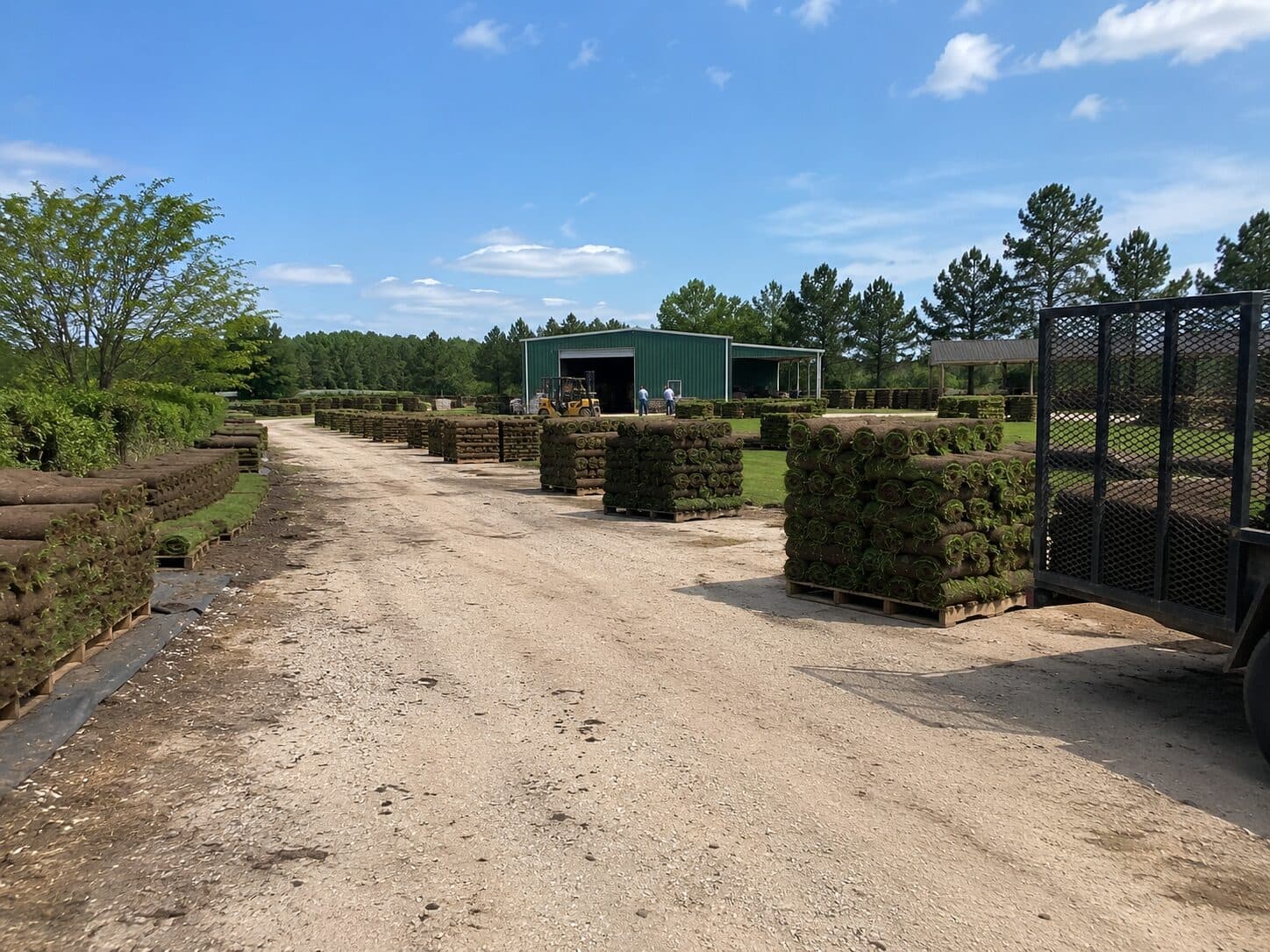
Sod is cut fresh against your order and stacked on a pallet at the farm. The pallet is the unit that gets harvested, loaded, and delivered, so it is the unit that gets priced. Your quote shows the per-pallet price for your ZIP code, the number of pallets your yard needs, a flat $200 delivery charge on any order with sod, and installation as its own line if you add it.
That is different from how many people first search for sod. They ask "how much is sod per square foot," and some suppliers quote that way. Neither approach is wrong. They just need translating before you can compare them.
The conversion, step by step
- Find your pallet coverage. It varies by market, because it varies by farm. Many of our markets run 450 square feet per pallet, Florida markets typically run 400, and a few run 500 or 600. How many square feet does a pallet of sod cover? explains why, and the coverage for your area shows with your ZIP code.
- Divide the pallet price by that coverage. That gives you the per-square-foot price of the sod alone.
- Add delivery. Ours is a flat $200 on the order, so spread it across the total square feet.
- Add installation, if you want it. It is priced per pallet, so divide it the same way.
Now you have a real per-square-foot number that you can hold up against any other quote.
The same pallet, three different answers
Here is the part that trips people up. Take one pallet price and run it through three different coverages:
- At 400 square feet: $300 divided by 400 is $0.75 per square foot.
- At 450 square feet: $300 divided by 450 is about $0.67 per square foot.
- At 500 square feet: $300 divided by 500 is $0.60 per square foot.
Same pallet price. A 25 percent swing in the per-square-foot cost, purely from how much sod the farm stacks on a pallet. So if a friend in another city tells you what they paid per pallet, that number does not travel. The per-square-foot number is the one that travels.
Three kinds of quote, and why they do not match
When two quotes look far apart, the usual reason is that they cover different things.
- Material only. Just the sod. This is the lowest number and the easiest to quote per square foot. Delivery and labor are extra.
- Delivered. Sod plus getting it to your driveway. Some suppliers fold delivery into the per-square-foot price, some list it separately, and some price it by distance. Ours is a flat $200 on any order with sod, however many pallets, in every market. What does sod delivery cost? covers that.
- Installed. Sod, delivery, and a crew laying it. This is the highest number and the one most often quoted per square foot by landscapers. How much does sod installation cost? shows how we price it per pallet.
A $0.60 per square foot material quote and a $1.50 per square foot installed quote are not competing. One is a pallet of grass on your driveway and the other is a finished lawn.
Putting two quotes on the same footing
Write both quotes out as a total for your yard, with every line spelled out:
- Sod for the full square footage, including the 5 to 10 percent cut-and-fit overage that How many pallets of sod do I need? explains.
- Delivery, as a dollar figure, not a phrase like "included."
- Installation, if you are having it done, and what that rate covers.
- Anything extra: soil, hauling old grass away, sales tax where it applies.
Then divide each total by your square footage. Now "which one is cheaper" has an honest answer. Our sod calculator does the pallet math for you once you know your square feet.
The "cheaper per square foot" trap
Two more things hide inside a low per-square-foot number.
Coverage. A supplier who quotes per square foot may deliver a pallet that covers less than you assumed. If you counted pallets yourself from a 450 number and the farm cuts 400, you run out of sod in the last strip of the yard. We quote from the smallest pallet any farm in your market uses, so you never receive less than the coverage you were quoted.
Freshness. Sod that has been cut for days is cheaper to sell and harder to keep alive. Ours is harvested against your order, with a goal of 24 hours from cut to delivery. How fresh is your sod? explains why that matters more than a few cents per square foot.
The full picture of what sod costs by grass type is in How much does sod cost?.
The bottom line
Pallet price divided by pallet coverage gives you the per-square-foot price of the sod. Add delivery and installation before you compare it with anyone else. And make sure the other quote covers the same square feet, the same freshness, and the same finished result, or you are not comparing prices at all.
Check your ZIP code to see the per-pallet price and pallet coverage for your area, or call 1-866-886-2763 and the team will run the per-square-foot math with you.