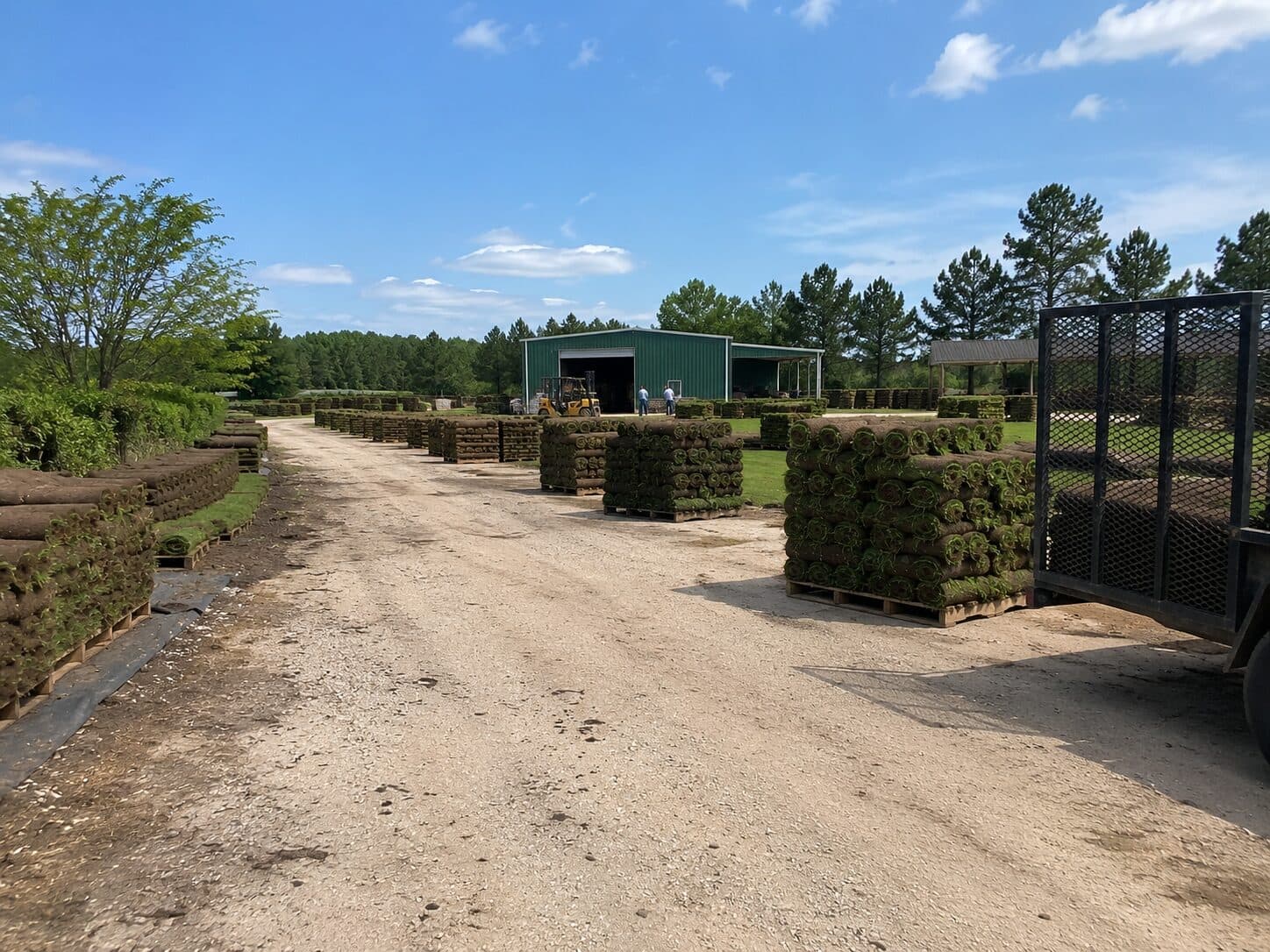
Most USA Sod farms cut 450 square foot pallets. Florida farms typically cut 400, and some farms run 500 or 600, so a pallet is not a standard unit nationwide. Compare suppliers on price per square foot rather than price per pallet. Your quote uses the real pallet size for your market and assumes the smallest where farms disagree, so your order cannot come up short.
This is the question that decides how much you spend, and it has a more interesting answer than most people expect.
The short answer
Most of our farms cut 450 square foot pallets. That is the single most common size and a reasonable number to plan against.
But it is not universal, and the difference matters.
Why it varies
A pallet of sod is not a standardized unit like a gallon or a pound. It is however much grass a particular farm stacks on a pallet, and farms genuinely differ:
| Pallet size | Where you tend to see it | |---|---| | 400 sq ft | Florida farms | | 450 sq ft | The most common size across our network | | 500 sq ft | Common in a number of markets | | 600 sq ft | A smaller number of farms |
So a homeowner in Orlando and a homeowner in Charlotte can both order "one pallet" and receive meaningfully different amounts of grass.
Why this matters when comparing prices
Here is where people get caught out.
If you are comparing a price per pallet between two suppliers, or between two regions, you may not be comparing the same amount of grass. A pallet that looks cheaper may simply be smaller.
The comparison that actually works is price per square foot. Divide the pallet price by the pallet's coverage and you get a number you can compare honestly.
That is also, incidentally, how most people think about their yard. You know roughly how many square feet you have. You have no intuition at all for how many pallets that is.
You do not have to track this yourself
Once your ZIP code is in, your quote uses the pallet size on file for the farms serving your market. You order square footage, and the pallet math happens behind the scenes.
One detail worth knowing, because it works in your favor: where a market has farms that disagree on pallet size, we assume the smallest one. We do not know at quote time which farm will cut your order, and assuming the smallest is the only assumption that cannot leave you short in the last strip of the yard.
Working out how many pallets you need
Step one: measure the area. For squares and rectangles, multiply length by width. A 20 foot by 50 foot yard is 1,000 square feet. For irregular shapes, break the space into rectangles and triangles, measure each, and add them up.
Step two: add five to ten percent. You will lose sod to cuts around sprinkler heads, walkways, flower beds and curves. Every yard does.
Step three: let the calculator do the pallets. The free Online Sod Calculator converts your square footage into pallets.
As a rough sanity check, at 450 square feet per pallet:
| Yard size | Roughly | |---|---| | 900 sq ft | 2 pallets | | 1,800 sq ft | 4 pallets | | 4,500 sq ft | 10 pallets | | 9,000 sq ft | 20 pallets |
Add your overage on top of the measured area before dividing, not after.
Why running short is worse than ordering long
If you order ten percent over, worst case you have some leftover sod and a free afternoon patching thin spots elsewhere in the yard.
If you order short, you stop mid-project with a strip of bare dirt and wait for another delivery, which for a small quantity costs far more per square foot than the extra you would have ordered. It is not a close call.
If your yard is awkward
Curved beds, islands, slopes and odd angles are exactly where homeowner estimates go wrong, and curves in particular get rounded off generously.
If that describes your yard, consider an on-site measurement where we offer it. In most markets it is $99, with a few markets priced from $75 to $199, and the fee is credited toward your sod order, so it effectively costs nothing if you go ahead.
The bottom line
Plan on roughly 450 square feet per pallet, know that Florida runs smaller and some markets run larger, and compare suppliers on price per square foot rather than price per pallet.
Then let your quote handle the exact math. Enter your ZIP code to see real pallet sizes and pricing for your area, or call 1-866-886-2763.