Measure your lawn in square feet, add 5 to 10 percent for waste, and let the pallet math happen at quote time. A pallet is not a fixed size, so counting pallets yourself is the step that goes wrong. Break an awkward yard into rectangles, measure each one, and add them together. If you cannot measure it safely or the shape defeats you, an on-site measurement is $99 in most markets where we offer it, and the fee is credited against your order.
This is the most common question we get on the phone, and almost everybody asks it the wrong way round. They ask how many pallets they need. The useful question is how many square feet they have.
Start with square feet, not pallets
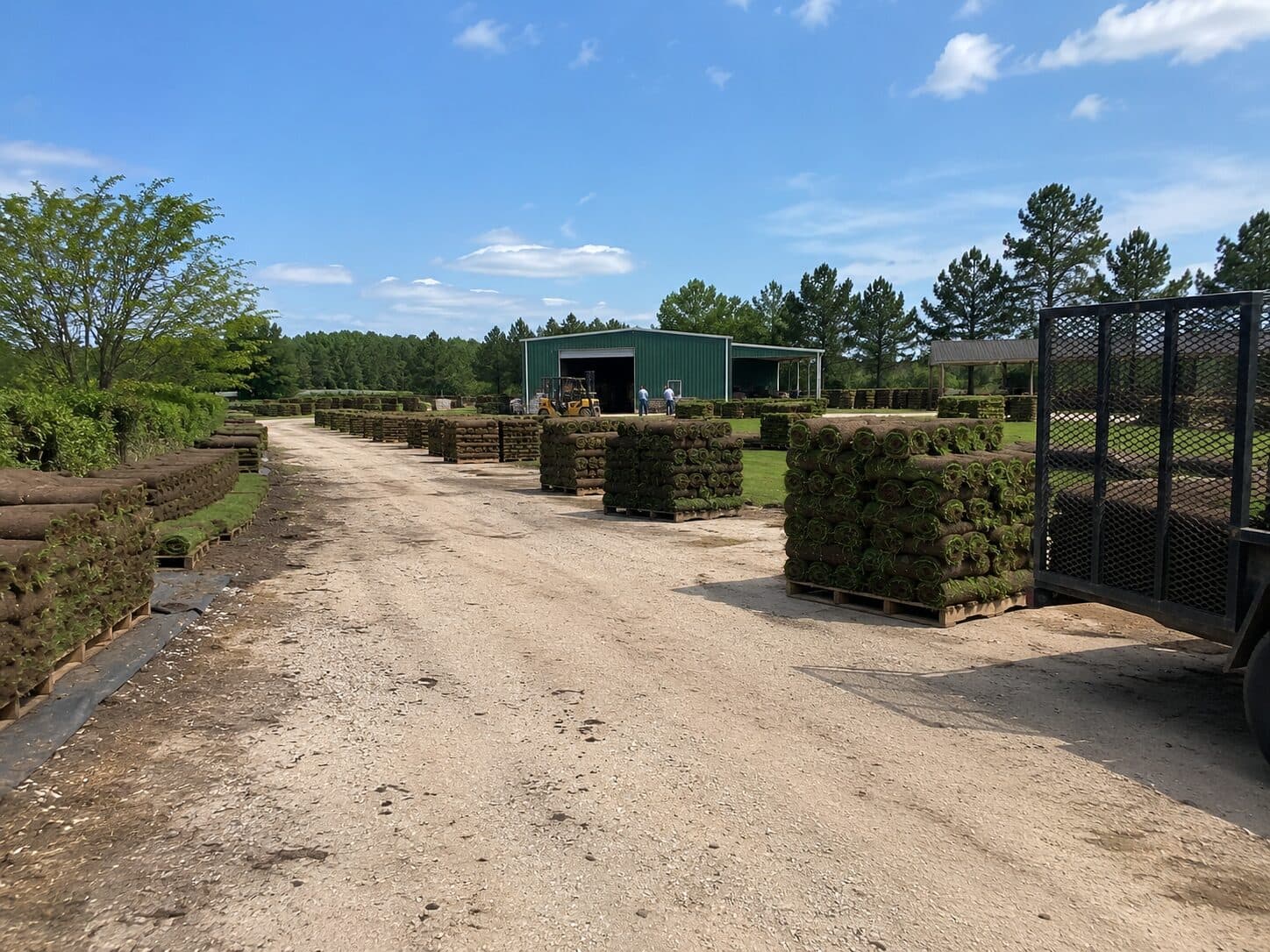
A pallet is not a standard unit. Most of our farms cut 450 square foot pallets, Florida farms typically cut 400, and some farms run 500 or 600. So "three pallets" means different amounts of grass in different markets.
Square footage is the number that does not move. Get that right and the rest is arithmetic somebody else can do for you.
Measuring a simple yard
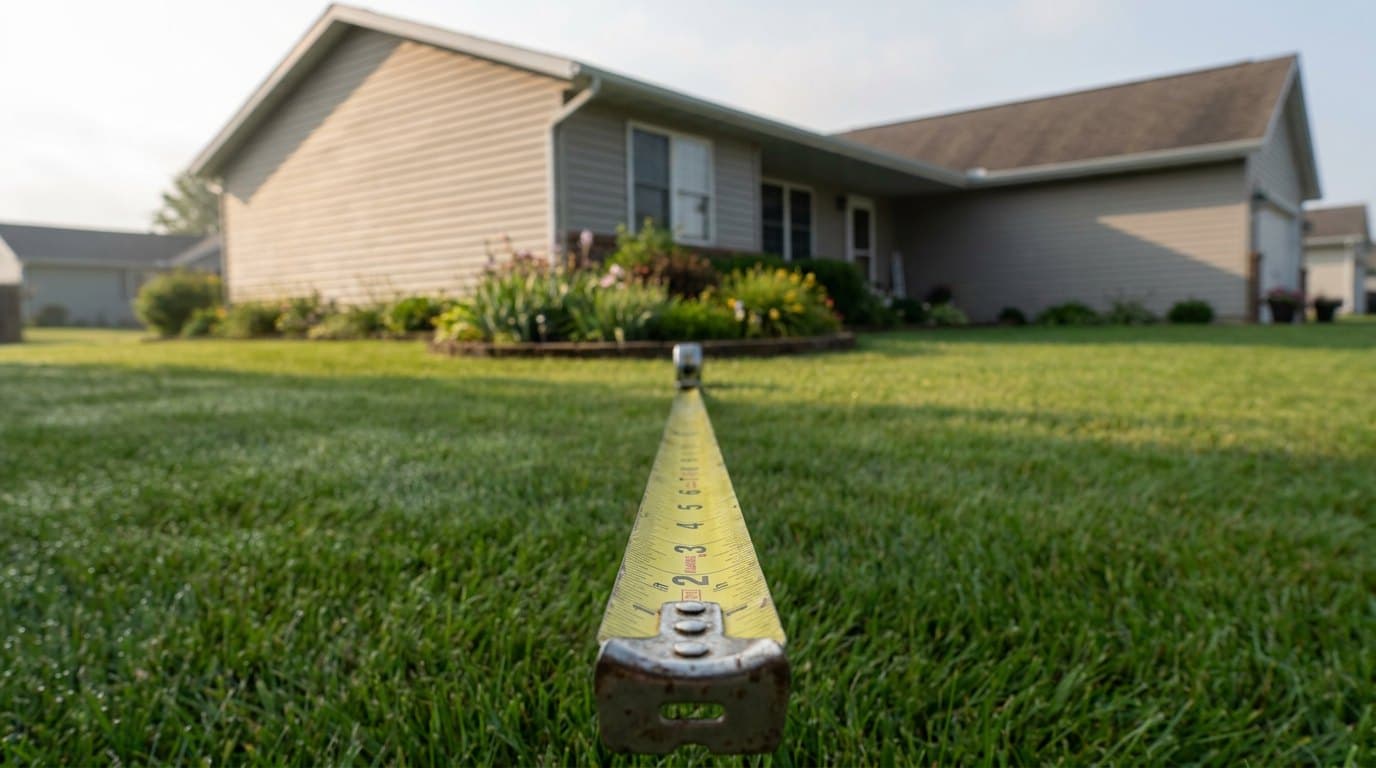
If your lawn is roughly a rectangle, this takes two minutes:
- Measure the length in feet.
- Measure the width in feet.
- Multiply them.
A lawn 40 feet long and 25 feet wide is 1,000 square feet. That is the whole method.
Use a tape measure if you have one. If you do not, pacing works better than people expect. Walk the edge at a normal stride and count. For most adults a stride is close to three feet, so 15 paces is roughly 45 feet. Pacing will not be exact, but it gets most people close enough to quote against, and we can check the number with you.
Measuring an awkward yard
Very few yards are actually rectangles. There are flower beds cut into them, a driveway down one side, a curve along the front.
Break it into rectangles. Do not try to measure the whole shape at once. Split it into two or three blocks that are each roughly square, measure each one, and add the results together.
For a triangular corner, measure the two straight sides, multiply them, and halve it.
For a curved edge, measure to the middle of the curve rather than to its furthest point. The bits you overestimate and the bits you underestimate tend to cancel out.
Subtract anything you are not covering. Beds, patios, the shed, the driveway. Measure those separately and take them off the total.
Then add 5 to 10 percent
Always order slightly more than you measured.
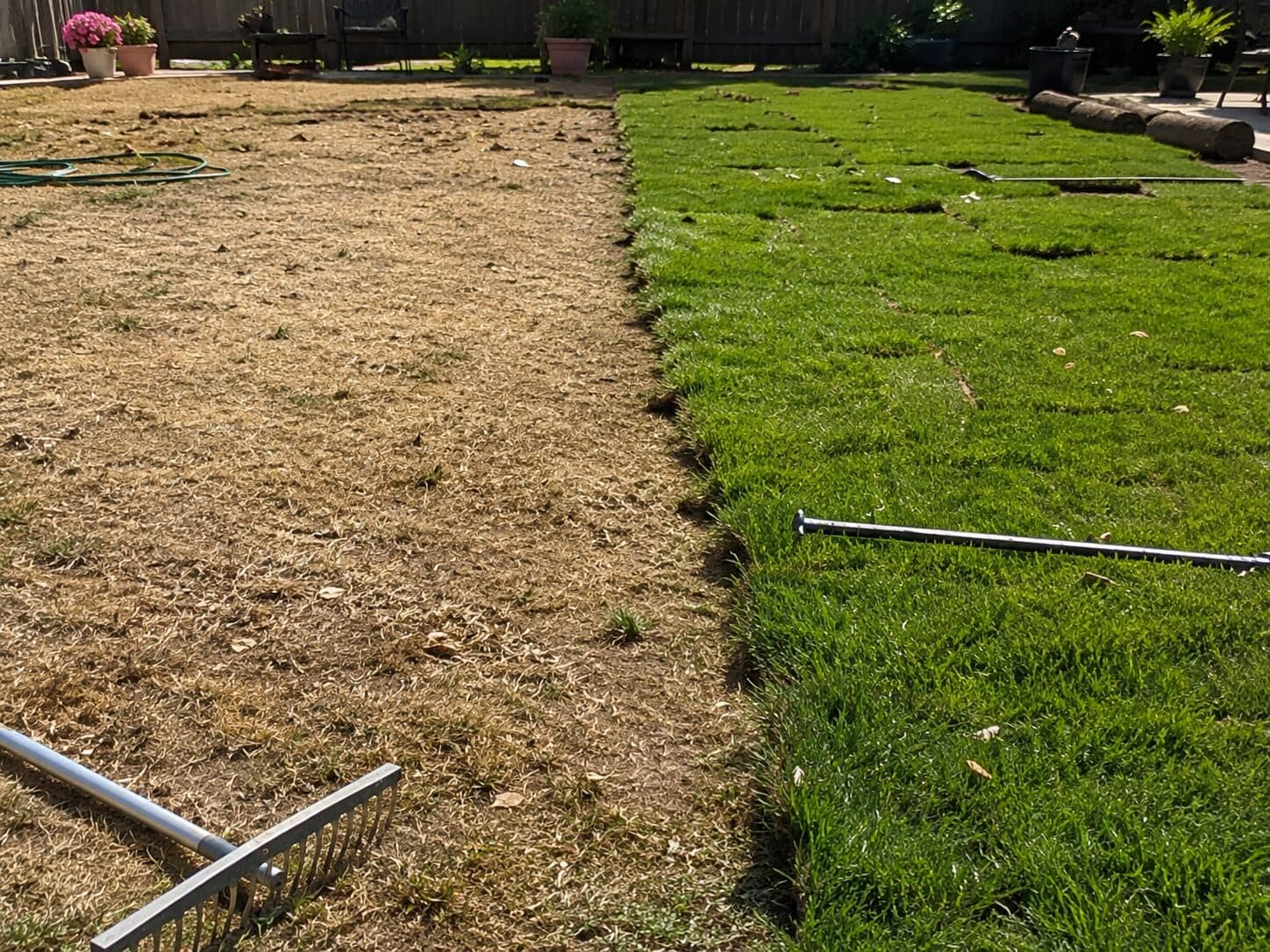
Sod gets cut to fit. Around curves, along a driveway edge, around a tree ring, you will trim pieces and the leftover pieces are not always reusable. The industry rule of thumb is 5 percent for a simple rectangular lawn and 10 percent for anything with curves, beds or lots of edges.
Running short is much worse than running slightly over. Sod is a living product cut to order. If you come up two pieces short on a Saturday afternoon, the next cut may not be for days, and by then your first pallet has been down long enough to establish while the last strip has not. You end up with a visible seam that takes a season to blend.
Why we do not ask you for a pallet count
Once your ZIP code is in, your quote uses the pallet size on file for the farms serving your market. You give us square footage. We do the pallet math.
Where a market has farms that disagree on pallet size, we assume the smallest one, because we do not know at quote time which farm will cut your order and assuming the smallest is the only assumption that cannot leave you short.
If you cannot measure it yourself
Some yards genuinely defeat a tape measure. Steep slopes, heavy tree cover, a property line nobody is certain about, or simply a job too big to walk.
An on-site measurement is $99 in most markets, though a few price it differently depending on local crew coverage, from $75 at the low end to $199 at the high end, and it is not offered in every market. The fee is credited toward your sod order. Somebody comes out, measures the area properly, and confirms what the ground actually needs before anything is cut. Check the figure for your ZIP rather than assuming.
It is also the right call when the number matters more than usual. If you are laying 5,000 square feet, a 10 percent measuring error is 500 square feet of grass, worth a great deal more than the measurement fee.
The short version
- Measure in square feet, not pallets.
- Break awkward shapes into rectangles and add them up.
- Subtract beds, patios and driveways.
- Add 5 to 10 percent for trimming waste.
- Give us the square footage and let the pallet size for your market do the rest.
If you have a number and want it checked before you order, call us and read it out. That conversation takes about a minute and it is free.