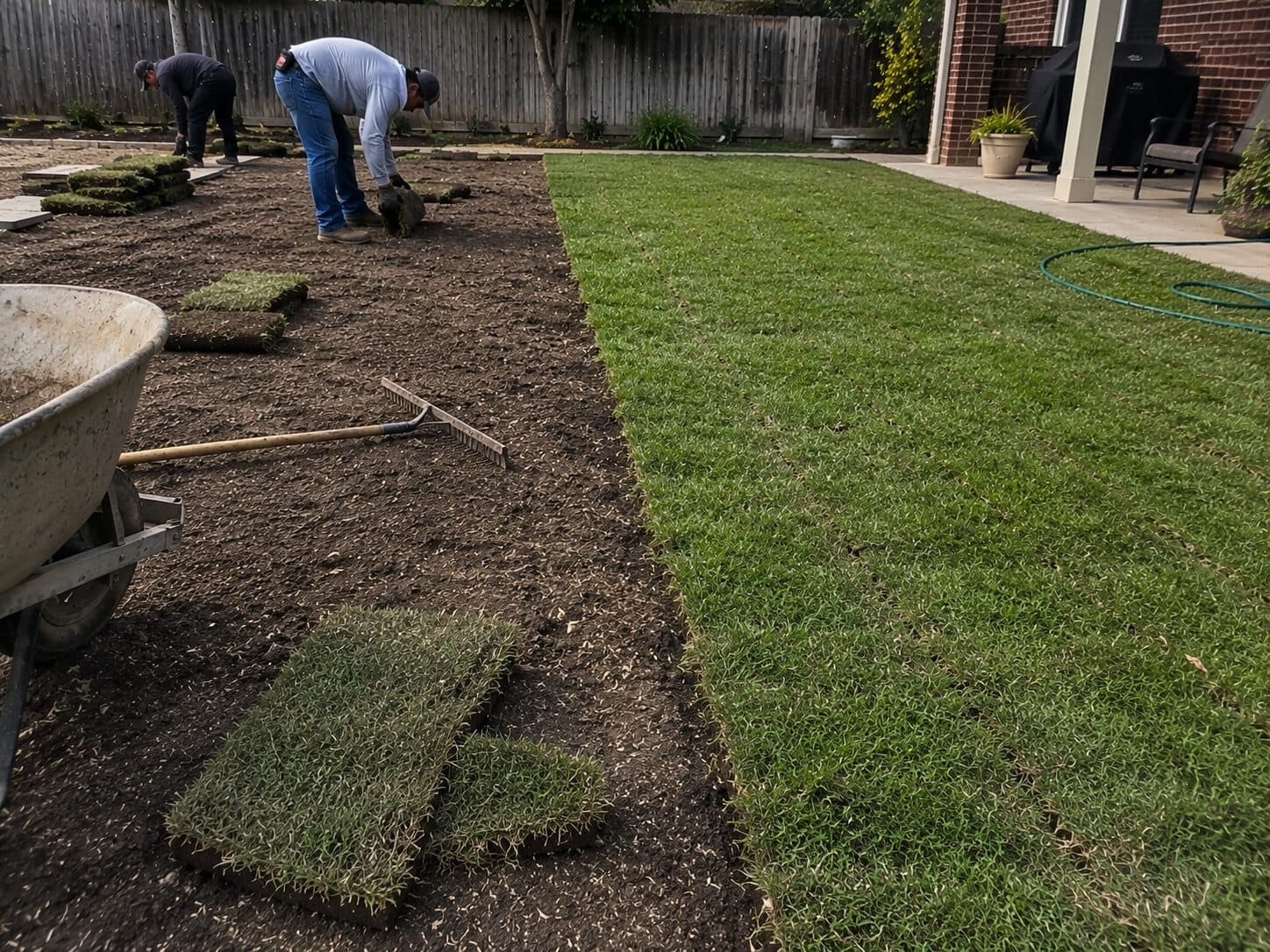
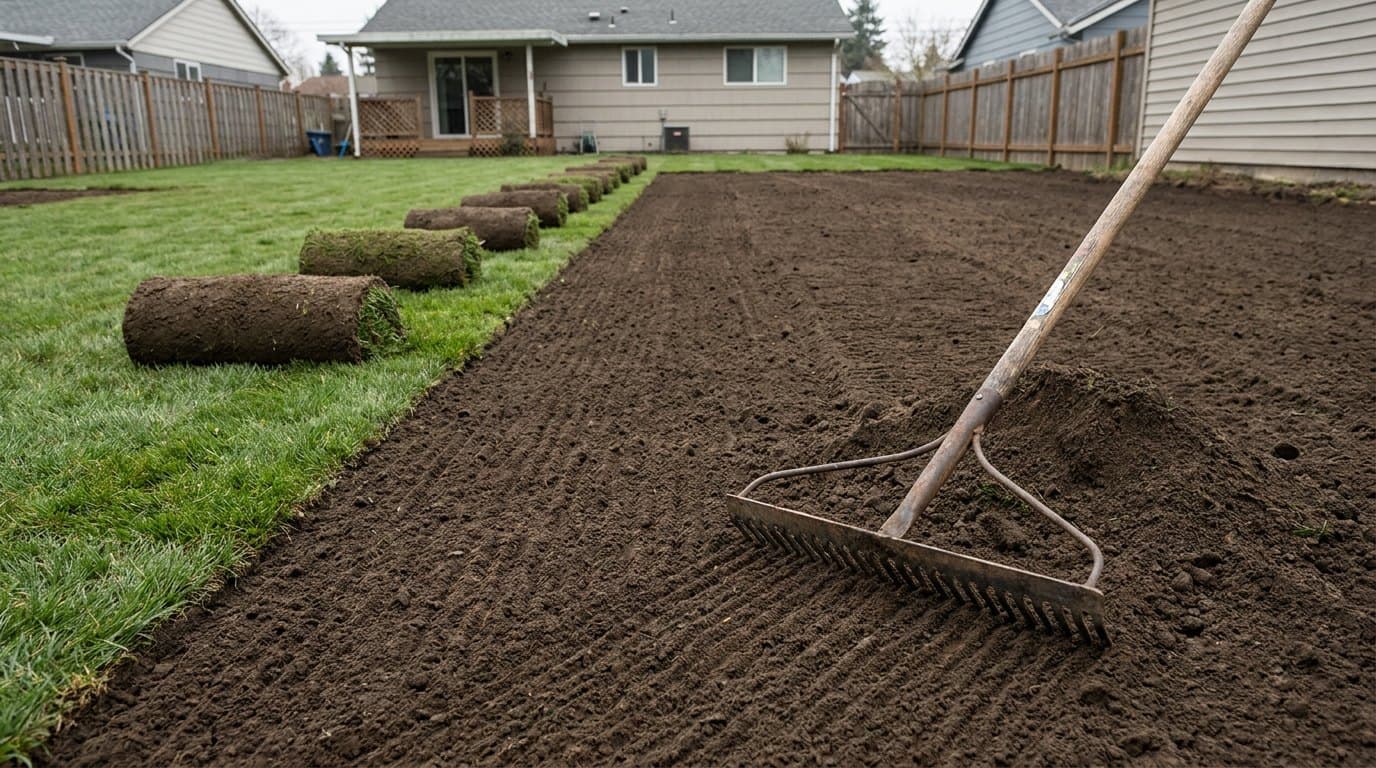
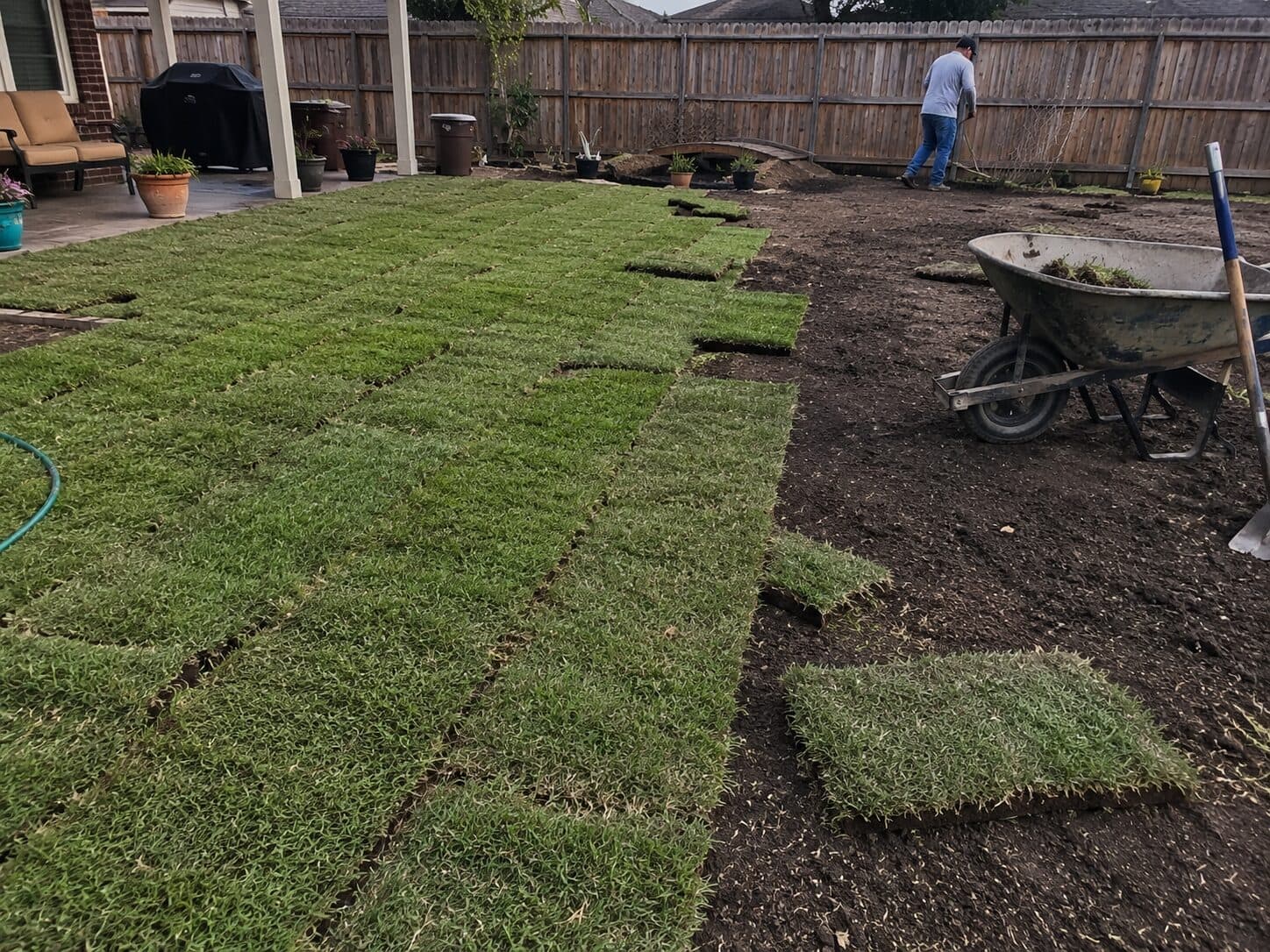
Usually not. Sod needs firm contact with loose, clean soil, and most yards already have that once the old grass is off and the surface is raked. Topsoil is for fixing a specific problem: filling low spots, correcting a grade that runs toward the house, or covering ground so compacted or rocky that roots cannot get into it. Where it is needed, one to two inches spread and leveled is normal. Adding a thick layer of topsoil to soil that was already fine does not help the sod and can make the surface soft and uneven.
This question comes up on almost every install call, and the honest answer disappoints people who were expecting to be sold something.
What sod actually needs
Sod arrives with its own soil and its own roots. It is not a seed that has to germinate. It is a living mat that has to knit into whatever is underneath it.
For that to happen it needs three things:
- Contact. The underside of the sod has to touch soil across its whole area. Air gaps are where sod dries out and dies.
- Loose soil. The top inch or two has to be broken up enough for new roots to push into. Roots will not enter a surface that has been driven over and packed hard.
- An even surface. Low spots hold water and rot the grass. High spots get scalped by the first mow.
Notice that none of those requirements is "new soil". They are requirements about the condition of the soil you already have.
When you genuinely do need topsoil
There are four situations where it earns its cost.
The grade is wrong. If water runs toward your house, toward a patio, or pools in the middle of the lawn, laying sod over it just puts grass on a drainage problem. Topsoil is how you rebuild that grade before anything goes down. This is the best reason to buy it.
You have low spots. Old stump holes, settled trenches where a utility line went in, ruts from equipment. Fill and level them first, because a dip that looks minor on bare ground looks obvious under grass and gets worse every time you mow.
The ground is compacted or rocky. This is common on new construction, where heavy machinery has been over the same ground for months. If a screwdriver will not push into the soil with hand pressure, roots will not get in either. Sometimes tilling fixes it. Sometimes you need to bring in soil.
There is no real soil there at all. Builder's fill, heavy clay subsoil, or the sand and rubble left behind after a demolition. A couple of inches of proper topsoil gives the sod something to root into while it establishes.
When you do not need it
If you are replacing an existing lawn in a yard that already grew grass, you very probably do not need topsoil.
Strip the old grass, break up the surface, rake it level, and you are ready. The soil that grew the last lawn will grow the next one.
Adding a deep layer over ground that was already fine creates its own problems. A thick, loose layer settles unevenly over the following months, so a lawn that went down flat develops dips. It also puts a distinct boundary between two different soils, and roots are slower to cross that boundary than to grow through consistent ground.
How much, if you do need it
For leveling and improving a surface, one to two inches spread evenly is the normal range. For rebuilding a grade or filling genuine holes, it is whatever the low point requires.
Spread it, rake it, and then firm it lightly before laying. Soil that has not been settled will settle later, under the grass, where you cannot fix it.
The prep that matters more than topsoil
If you only do three things, do these.
Remove the old grass. Do not lay new sod on top of a living lawn. It blocks contact with the soil, and the old grass underneath decomposes into a soft, uneven layer.
Break up the surface. Rake or till the top inch or two so it is loose and crumbly.
Level and firm it. Rake it flat, then walk it or roll it lightly so it is firm underfoot but not hard. Then lay the sod on the same day if you can.
If you want topsoil, we can add it
We sell topsoil alongside sod in the markets where we deliver it, and it is straightforward to add to an order so it arrives at the same time rather than in a separate trip.
It is a call-to-add item rather than something you check a box for online, and that is deliberate. How much you need depends on what you are correcting, and it is a two-minute conversation to get right instead of a guess that leaves you with three yards too many.
Call us with your square footage and what the ground currently looks like, and we will tell you whether you need it at all.