Remove the old grass completely before laying sod. New sod laid over a living lawn never makes contact with the soil, and the grass underneath decomposes into a slimy, airless layer that the new roots cannot get through. Strip it with a rented sod cutter set just under the root layer, a flat spade for small patches, or a non-selective herbicide followed by raking out the dead mat. Then rake, loosen the top inch or two, level, firm, and finish an inch below hard edges.
Laying new sod over the old lawn looks like a shortcut. It is the surest way we know to lose a whole pallet.
The short answer
Never lay sod over a living lawn. Take the old grass out first, then prep the bare soil.
What happens if you skip it
Sod is a living mat that has to push roots into real soil within the first two weeks. Put it over an existing lawn and that cannot happen. The old grass blocks soil contact, then starts to decompose. It heats up, goes slimy, and forms a layer with no air in it. The new roots reach that layer and stop.
From the top, the sod looks fine for a week or two. Then it browns at the seams and lifts up like a rug.
Three ways to take the old grass out
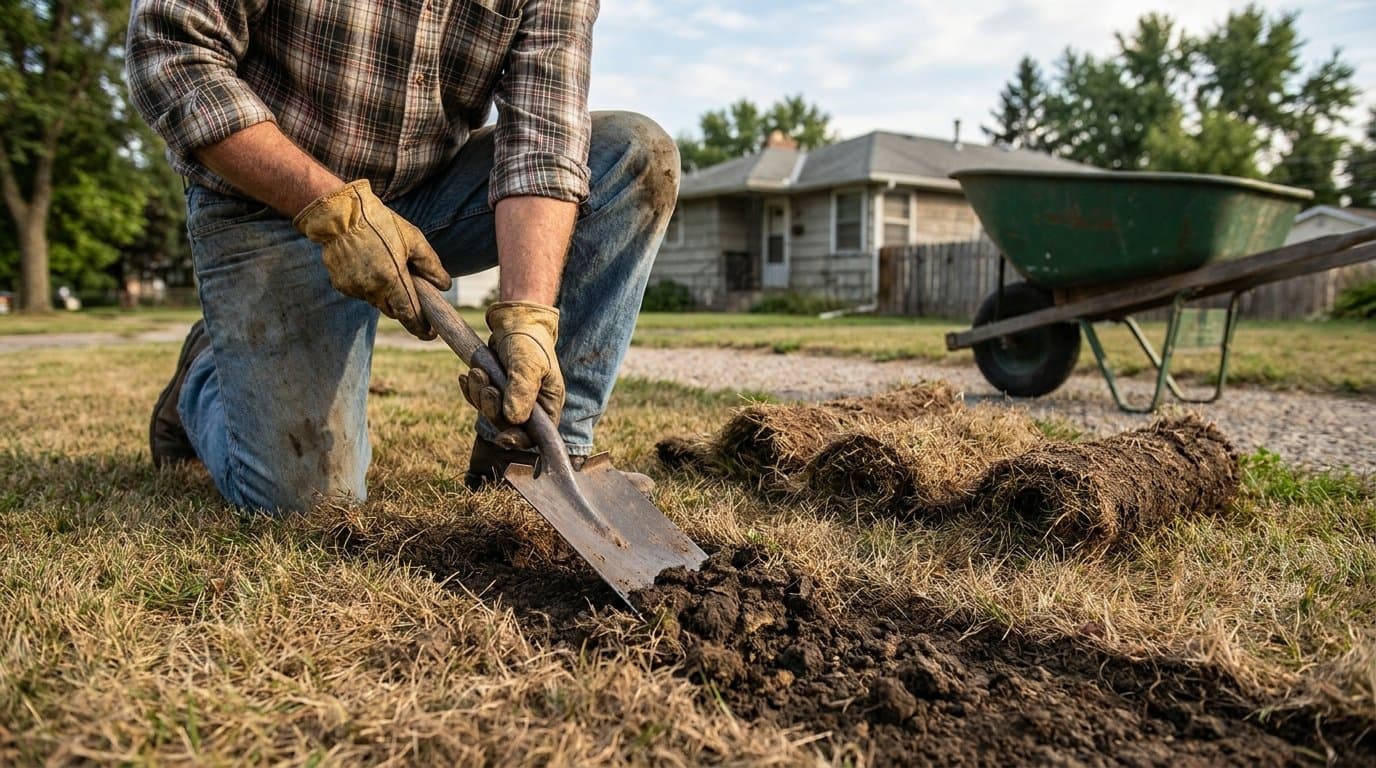
A rented sod cutter. The way to go for anything bigger than a small patch. Set the blade just under the root layer, about 1 to 2 inches deep, and it peels the old lawn up in strips you can roll and haul off. It turns a day of digging into an hour or two.
A flat spade or manual sod kicker. For a small area, a sharp flat spade does the same job by hand. Cut strips, slide the blade under the roots, and lift. Slower, same result.
A non-selective herbicide. Spray the old lawn with glyphosate and wait until it is fully brown, usually a week or two. Then rake or cut out the dead mat. It is the slow option, and it does not let you skip removal. A dead mat under new sod causes the same problems as a living one.
Whichever you pick, get everything out: grass, roots, and thatch. What you want at the end is bare dirt.
Prep the bare ground
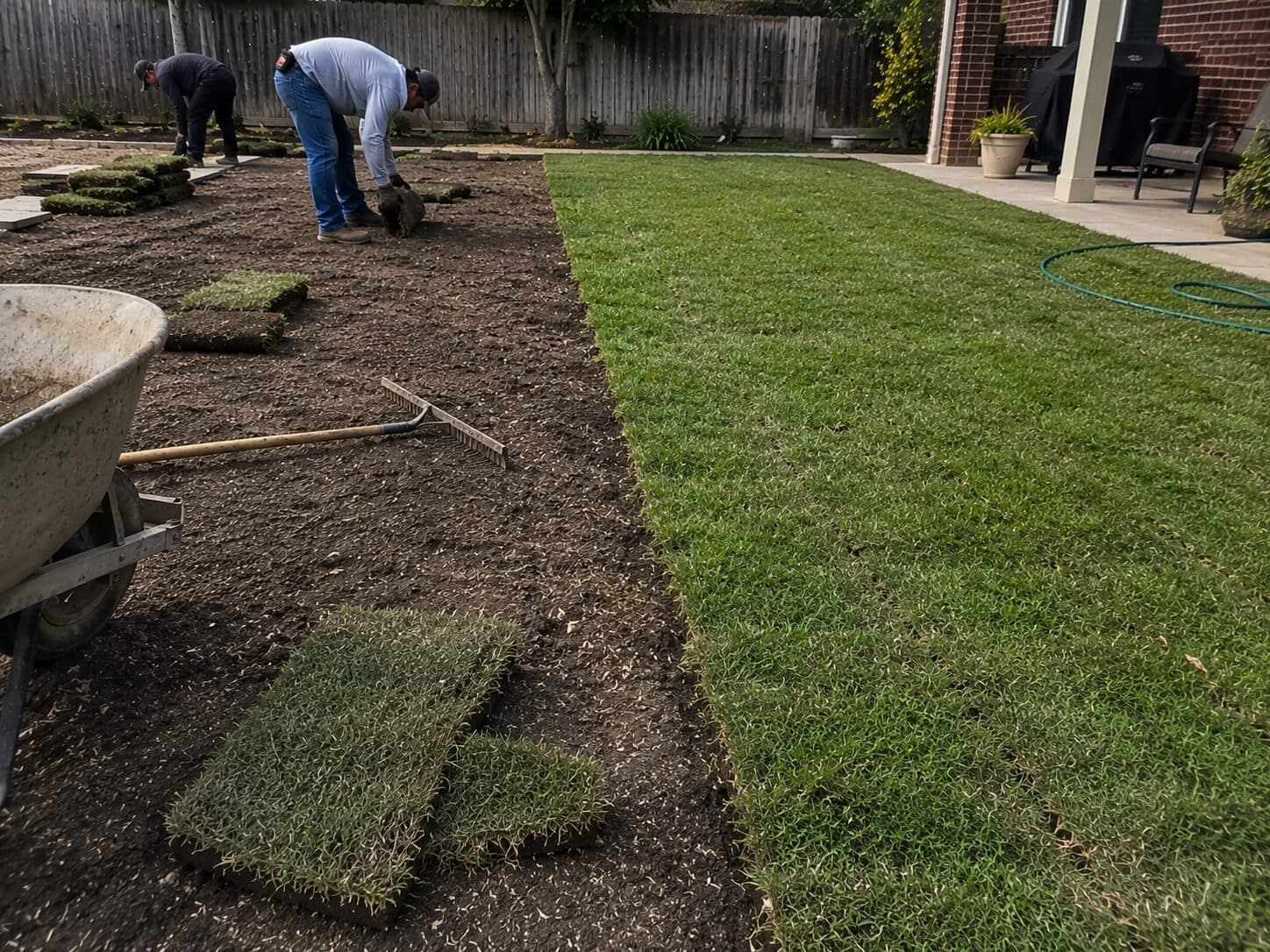
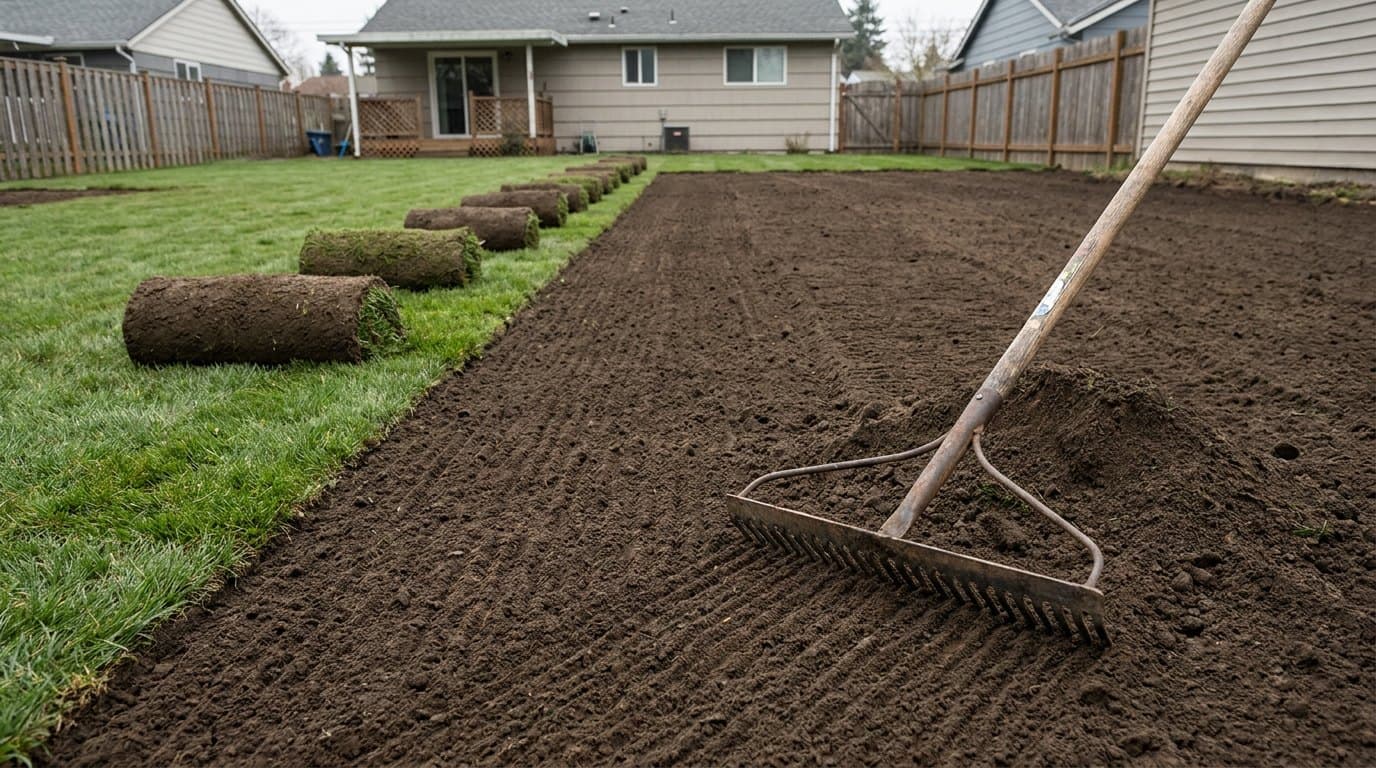
- Rake off the debris. Old roots, clumps, stones, and anything else that would sit between the sod and the soil.
- Loosen the top 1 to 2 inches. A hard rake is enough in most yards. If the ground is compacted, rent a rototiller and work it 4 to 6 inches deep.
- Rake it level. Fill low spots. Knock down high spots. Grade the surface so water runs away from the house, not toward it.
- Finish about 1 inch below hard edges. Sidewalks, driveways, and patios. The sod adds roughly an inch, so this is what makes it sit flush instead of proud.
- Firm it. Walk it or roll it lightly so it is firm underfoot but not packed hard. Soil that has not settled will settle later, under the grass.
Do you need topsoil? Usually not. A yard that already grew grass already has soil that grows grass. Where topsoil is needed, to fill low spots or rebuild a bad grade, 1 to 2 inches spread and leveled is normal. We sell topsoil alongside sod in the markets where we deliver it. The full answer is in Do You Need Topsoil Before Laying Sod?.
Finish before the truck arrives
Your sod is cut fresh against your order and it has to go down the day it arrives. So the ground has to be stripped, leveled and firmed before delivery day. Not that morning. Before.
Test the hoses or the sprinkler system ahead of time too. New sod needs water within about 30 minutes of going down, and that is a bad moment to discover a spigot does not work.
If prep is running behind, call us and move the delivery date. That is an easy change. A pallet sitting on a lawn that is not ready is not.
If you hire our installation
Where USA Sod offers installation, the per-pallet rate covers light removal and standard site preparation, laying the sod, cutting it to fit, and the initial watering. Heavier work such as extensive grading, root removal or drainage is reviewed and quoted separately, so mention it when you order. The full breakdown is in Do You Install Sod or Just Deliver It? and How Much Does Sod Installation Cost?.
Order of operations
- Measure the yard with the Online Sod Calculator and add 5 to 10 percent for cuts.
- Kill or strip the old grass, roots and all.
- Rake off debris, roots and stones.
- Loosen the top 1 to 2 inches, or till 4 to 6 inches if compacted.
- Level, fill low spots, and grade away from the house.
- Finish about 1 inch below sidewalks and driveways.
- Walk or roll it firm.
- Test the water supply.
- Then take delivery, and lay the sod the same day.
The bottom line
Old grass has to come out. Every time. A sod cutter makes quick work of it, a spade handles small patches, and herbicide is a slow route to the same place. Once the ground is bare, loose, level and firm, the new sod has everything it needs to root.
Check your ZIP code to see pricing and pallet sizes for your area, or call 1-866-886-2763 if you want to talk through your yard before you order.