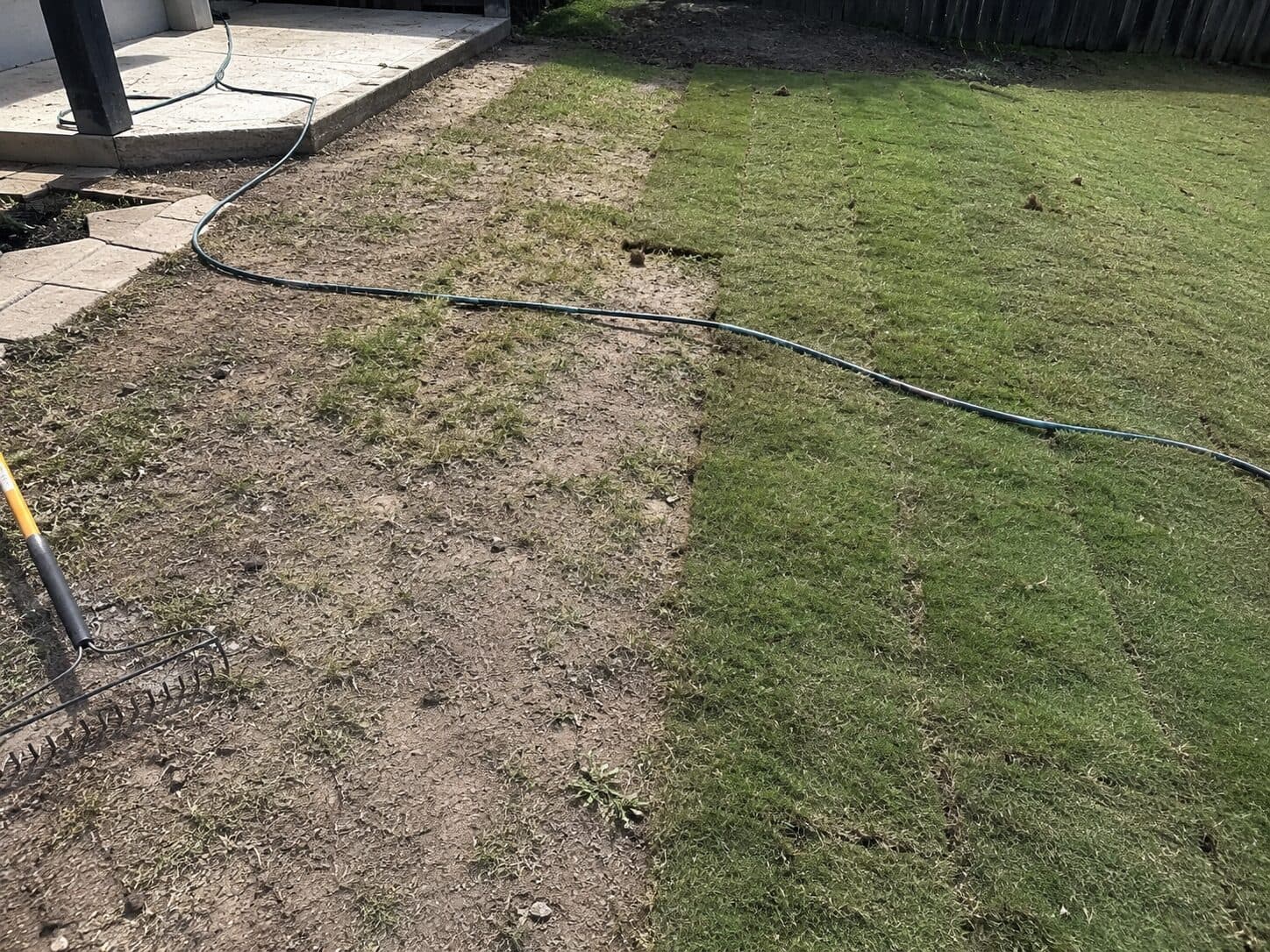
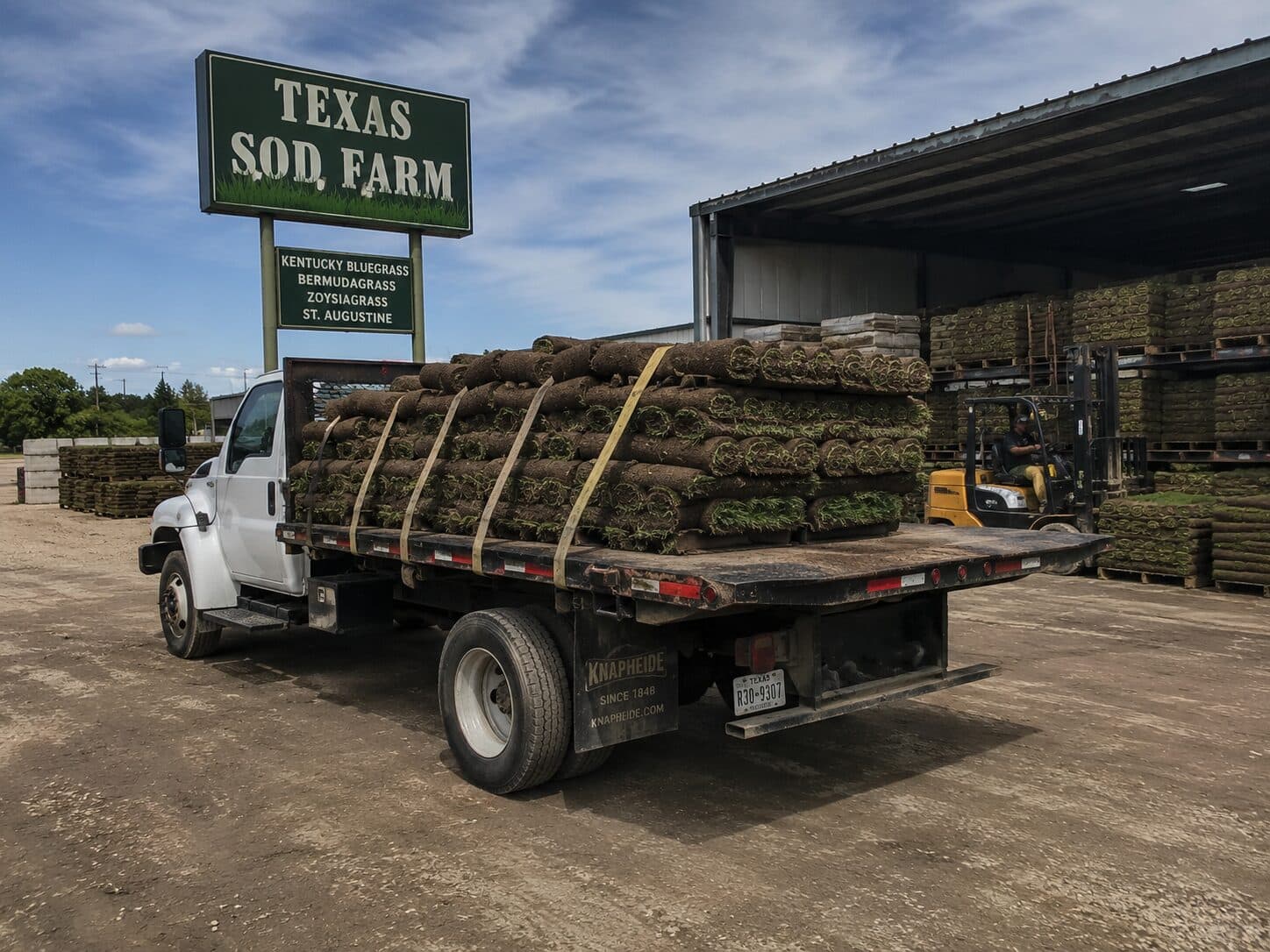
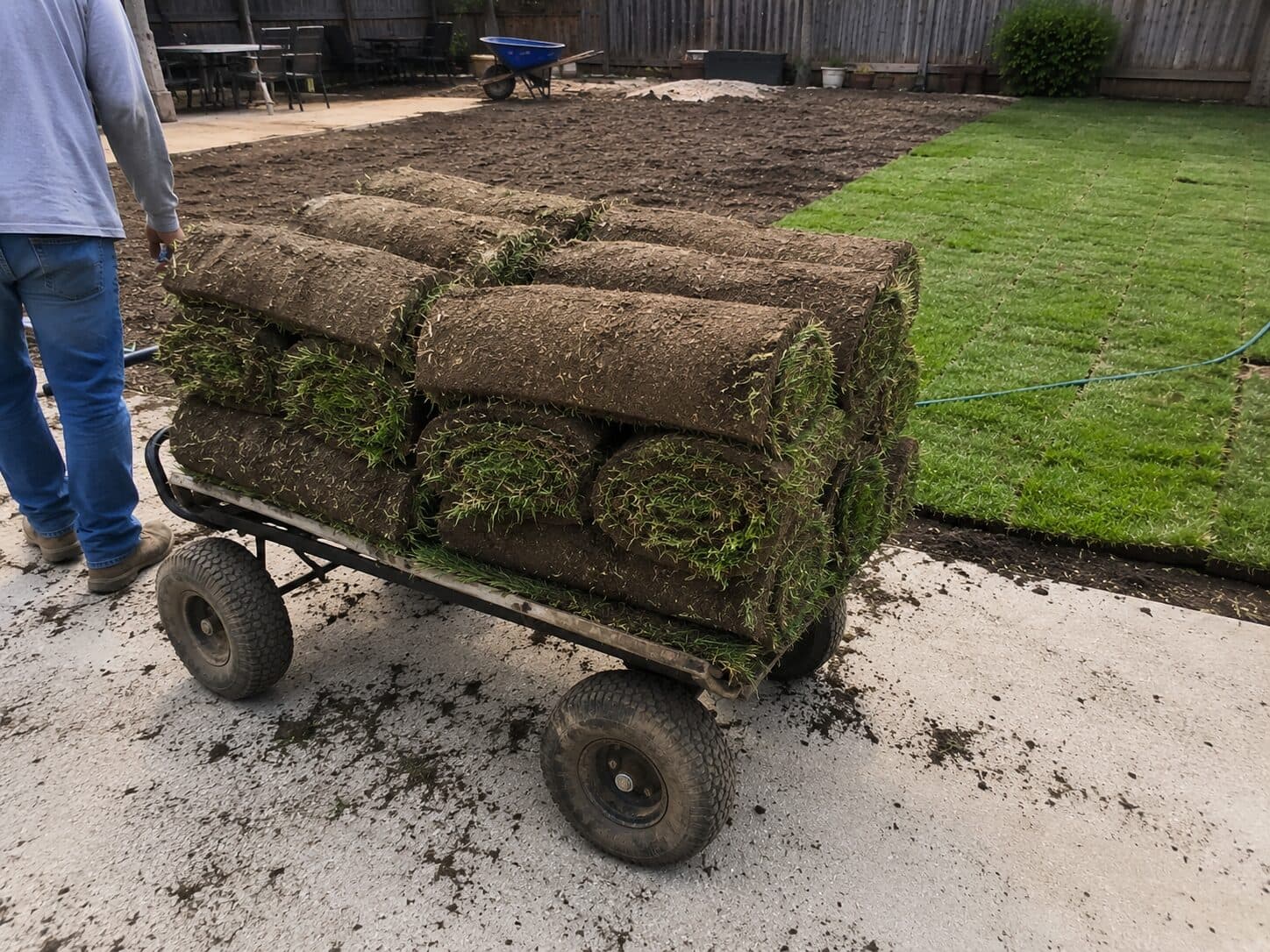
A full pallet is USA Sod's minimum order, and half pallets are not available. Sod is harvested and stacked in full pallets and cut fresh against each order, so there is no partial-pallet inventory to draw from. Most farms cut 450 square feet per pallet, which is often less than people picture, and any surplus is easily used on thin spots, edges or a side yard.
You have measured the yard, you need a few hundred square feet, and a full pallet feels like a lot. So the obvious question follows.
The short answer
A full pallet is our minimum order. We do not sell half pallets.
Here is why, and more usefully, what to do about it.
The reason has nothing to do with policy
This is the part worth understanding, because it explains a lot of other things about buying sod.
Your sod is harvested against your specific order. It is stacked at the farm in full pallets and cut fresh, close to your delivery date. There is no warehouse of pre-cut sod sitting somewhere that we could scoop half a pallet out of.
Which means splitting a pallet does not save anything. The farm still cuts a full pallet. The other half has nowhere to go, and cut sod does not keep. It would be grass harvested for nobody.
That is a genuinely different situation from a supplier holding standing inventory, where selling you half of something already cut costs them nothing.
How much is one pallet, really?
Often less than people picture. Most of our farms cut 450 square foot pallets, though Florida farms typically run 400 and some markets run 500 or 600.
450 square feet is roughly:
- A 21 by 21 foot square
- A 15 by 30 foot strip
- A modest front lawn
- A generous side yard
If you were mentally picturing something the size of a driveway, a pallet is usually smaller than that.
Use the free Online Sod Calculator to see exactly where your yard lands.
What to do if you need less
Widen the project slightly. The most common outcome is that people find more yard once the sod is on site. The bare patch by the mailbox turns into the whole strip along the front. The dead corner becomes the corner plus the edge. Sod that is already delivered and already paid for tends to find a home.
Fix the thin spots you have been ignoring. Almost every lawn has two or three places that never quite filled in. A pallet gives you enough to deal with all of them at once.
Do the side or back at the same time. If you were planning to sort out another area eventually, doing it in one delivery is cheaper than two.
Split it with a neighbor. If someone nearby is also planning work, one delivery serving two yards makes the delivery charge go further. Coordinate the date and the ZIP code and it is straightforward.
What not to do
Do not order short and plan a second delivery. Delivery costs the same whether the truck is full or nearly empty, so a small top-up order is the most expensive sod you will ever buy per square foot.
Do not stretch a pallet by spacing pieces out. Sod needs to be laid edge to edge. Gaps do not fill in reliably, they invite weeds, and the seams stay visible for a long time.
Do not hold leftover sod for next weekend. It is perishable. Whatever you are not laying today should go down somewhere today, even if that somewhere was not in the original plan.
Ordering more than one pallet
Once you are past one pallet, order in whatever quantity your measurements call for, plus five to ten percent for cuts around sprinklers, walkways and curves. Your quote handles the pallet math once your ZIP code is in.
The bottom line
One full pallet is the minimum, because that is the unit sod is cut and stacked in. For most small projects that turns out to be less grass than people expect, and the surplus is easier to use than it sounds.
Check your ZIP code to see pallet sizes and pricing for your area, or call 1-866-886-2763 and we will work out what your yard actually needs.