Written and checked by the USA Sod team · Published November 2, 2026
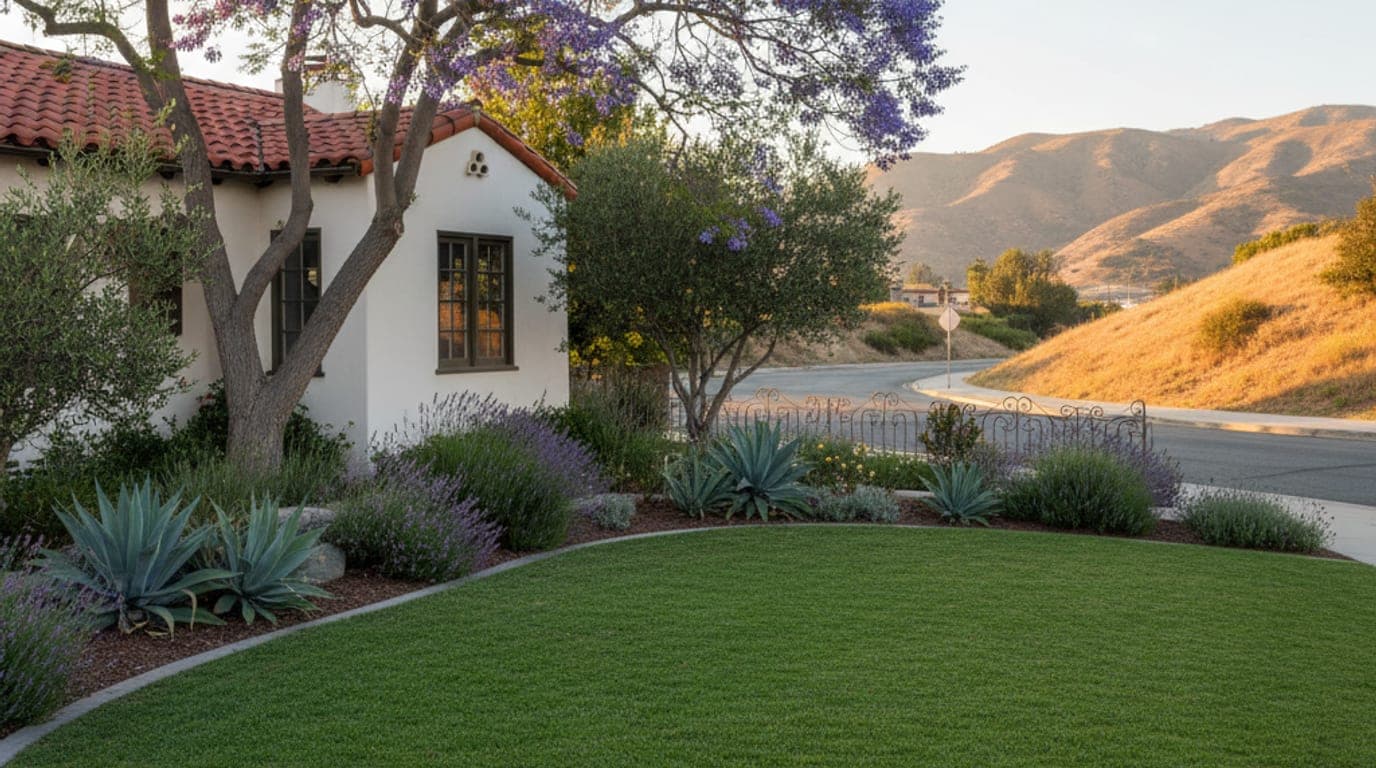
The grasses USA Sod commonly offers in Los Angeles are Bermuda and fescue. University of California guidance says warm-season grasses such as bermudagrass "grow best in southern California or Central Valley climates where summers are hot and dry and winters are relatively mild," and that they need about 20% less water than cool-season grasses during the growing season. Tall fescue keeps its green through mild winters and handles partial shade better. USA Sod commonly offers Bermuda TifTuf, Bermuda Tifway 419 and ElitePlus Fescue in Los Angeles.
The trade-off is simple to state: Bermuda saves water and loves sun but goes dormant and loses color in most locations in winter, while tall fescue stays green longer and takes some shade but drinks more. Here is what UC research says about each, and how to match one to your yard.
Warm-season vs. cool-season grass in Southern California
UC IPM sorts lawn grasses into two groups. Warm-season grasses like bermudagrass, St. Augustinegrass and zoysiagrass do best where summers are hot and dry and winters are relatively mild. They "go dormant during winter months when soil temperatures drop below 52°F and then green up in spring when soil temperatures rise."
Cool-season grasses such as tall fescue "thrive at 60-80°F and may become stressed or go into a semi-dormant state in periods of extreme cold or hot temperatures." UC says they "do best in northern and coastal California climates." Warm-season species, on the other hand, are "most competitive with weeds in the interior valleys and desert regions."
Water use
If your water bill or local watering restrictions drive the decision, this is the number to know. The UC Center for Landscape and Urban Horticulture notes that "warm-season turfgrasses (bermudagrass, zoysiagrass, St. Augustinegrass) require about 20% less water than cool-season turfgrasses (tall fescue, rye grass, Kentucky bluegrass) during the growing season." UC IPM adds that where bermudagrass is well adapted, "it is very water-efficient and has few pest problems."
Whichever grass you pick, a few UC watering basics apply:
- Water when the lawn needs it. UC says a lawn generally "needs water when the top two inches of soil have dried out."
- Water early. "The best times to water are between 2 and 8 in the morning," when evaporation loss is minimal.
- Water deep and less often. In general, UC says "most lawns require about 1 to 1.5 inches of water per week to keep the root system moist."
- Check local rules. UC notes that several counties restrict watering to certain days, so look up your own schedule.
For the first weeks after laying sod, see how often to water new sod.
Bermuda: full sun and heavy use
UC IPM says bermudagrass "does best in full sun and high temperatures" and has "a low tolerance for shade and cold temperatures, but it can tolerate drought conditions and high temperatures." UC adds that both seeded and hybrid varieties "are durable and withstand heavy use during the spring, summer, and early autumn months when they are actively growing, but they can be severely damaged from traffic during the winter months when they are not growing."
Expect a winter color change: bermudagrass "loses its color and becomes dormant in most locations during the cooler months of late autumn and winter." That is normal, not a dead lawn.
Choosing between the two Bermuda varieties? Our TifTuf vs. Tifway 419 comparison covers how they differ, and types of Bermuda grass covers the wider family.
Tall fescue: green longer and some shade
UC IPM calls tall fescue "the most common lawn grass in California" and says it is "well adapted to sunny or partially shady areas." It "tolerates warm summer temperatures and stays green during cool, but not severe winter conditions," and it has "excellent tolerance for heat stress and drought."
The catch is how it grows. "Because tall fescue has a bunch-type growth habit rather than a creeping-type, open areas may develop and need to be reseeded." And on water, UC warns that "if under irrigated, cool-season grasses may become semi-dormant in the hottest part of the summer, returning to full vigor in cooler fall weather."
For planting windows and long-term care, read our tall fescue sod guide.
How to choose for your yard
- Full sun and a tight water budget: Bermuda fits UC's description of a durable, water-efficient warm-season grass.
- Trees or a partly shaded yard, and you want color in winter: tall fescue is the better match, since UC rates bermudagrass low for shade.
- Not sure? Look at how many hours of direct sun the lawn area gets and how much water you are willing to use, then compare the two.
If you are also shopping elsewhere in the state, our Fresno and Sacramento guides cover those climates.
Ordering sod in Los Angeles
USA Sod commonly offers Bermuda TifTuf, Bermuda Tifway 419 and ElitePlus Fescue in the Los Angeles market. The UC notes above are about tall fescue, so ask our team how ElitePlus Fescue compares for your yard. Availability changes week to week, so check your ZIP code for today's list.
Los Angeles pallets cover 480 square feet in USA Sod quotes, and orders come in full pallets because sod is cut to order. How many pallets of sod do I need shows how to measure. Delivery is a flat $200 on any sod order. Installation is offered in Los Angeles, priced per pallet by market and order size, so enter your ZIP for your rate. In Los Angeles an on-site measurement is listed at $150 (check your ZIP for the current price), and the fee is credited toward your sod order. See what an on-site measurement costs for more, and visit our markets page.
Ready to price your Los Angeles lawn? Get an instant quote or call 1-866-886-2763.