Tall fescue is a cool-season grass with deep roots, the best shade tolerance of the cool-season group, and green color through winter. It is the grass to lay in the Mid-Atlantic, the mountain West, the Pacific Northwest and the upper South, and USA Sod sells it in 17 markets. Lay it in early fall or spring, keep it watered through summer heat, mow it tall, and overseed thin spots, because it does not spread to fill them on its own.
If you live somewhere with real winters, or somewhere the summers are warm but not brutal, tall fescue is often the grass you already have. It is also the grass we list in more of our markets than any other.
The short answer
Tall fescue is a cool-season, deep-rooted, shade-tolerant grass that stays green in winter and needs water to get through summer. It is sold by the pallet, cut fresh against your order, and it goes down best in early fall or spring.
What tall fescue is
Tall fescue is a cool-season grass. It grows in the cool months of spring and fall, holds its color through winter, and slows down in summer heat. Warm-season grasses like Bermuda and St. Augustine do the opposite.
It is a bunch grass, growing in clumps with no runners, and its roots run deeper than most lawn grasses, often well past a foot in good soil. That depth is where its drought and heat tolerance comes from. The turf-type fescue sod farms grow now is finer and darker than the old pasture types.
Where USA Sod sells it
Tall fescue is in more of our markets than any other grass. As of this writing, we deliver it in Albuquerque, Atlanta, Baltimore, Charlotte, Denver, Fresno, Las Vegas, Nashville, Newark, Norfolk, Northwest Arkansas, Philadelphia, Raleigh, Richmond, Roanoke, Spokane and Washington, DC. In Fresno, Los Angeles, Sacramento and San Diego we also carry ElitePlus Fescue for the California climate.
Coverage changes as we add farms, so check your ZIP code or our delivery areas before you plan around a variety. Pallet size varies by market too, from 450 to 600 square feet. How many square feet does a pallet of sod cover? explains why.
Sun, shade and where it fits
Tall fescue takes more shade than any other cool-season grass we sell. It does its best in full sun to partial shade and holds on under trees where Kentucky bluegrass gives up. All-day deep shade is still too much for any lawn grass; for that yard, read best grass for shade first.
It is the right call in transition-zone cities like Charlotte, Raleigh, Nashville, Richmond and Atlanta, where summers are hot but winters are too cold for warm-season grasses to look good year round, and it is the standard lawn grass in the Mid-Atlantic, the Front Range and the inland Northwest. Choosing between it and bluegrass is its own post.
When to lay it: fall first, spring second
The best window for tall fescue sod is early fall, roughly as the summer heat breaks and before the first hard freeze. Soil is still warm, the air is cool, and the sod has a full autumn and spring to root before it faces heat.
Spring is the second choice. It works, but the sod has less time to root before summer, so watering through that first summer matters more.
Summer works only if you can water every day. Winter works when the ground is not frozen. For the seasonal detail, see how late in the year you can lay sod.
Whatever the season, we need 3 to 4 days of lead time, and the sod must go down the day it arrives.
It does not repair itself
This is the one thing to know before you own a fescue lawn. Because it is a bunch grass with no runners, a bare spot stays bare until you fix it. Dog damage, a dropped kiddie pool, a patch that died in August: none of it fills in from the sides the way Bermuda or bluegrass does.
The fix is cheap. Overseed thin areas in early fall with a turf-type tall fescue seed, rake it in, and keep it damp for two weeks. Many fescue owners do a light overseed every fall as routine. If you want a lawn that heals itself, that is the argument for bluegrass. If you want shade tolerance and lower water needs, that is the argument for fescue.
Water, mowing and the first month
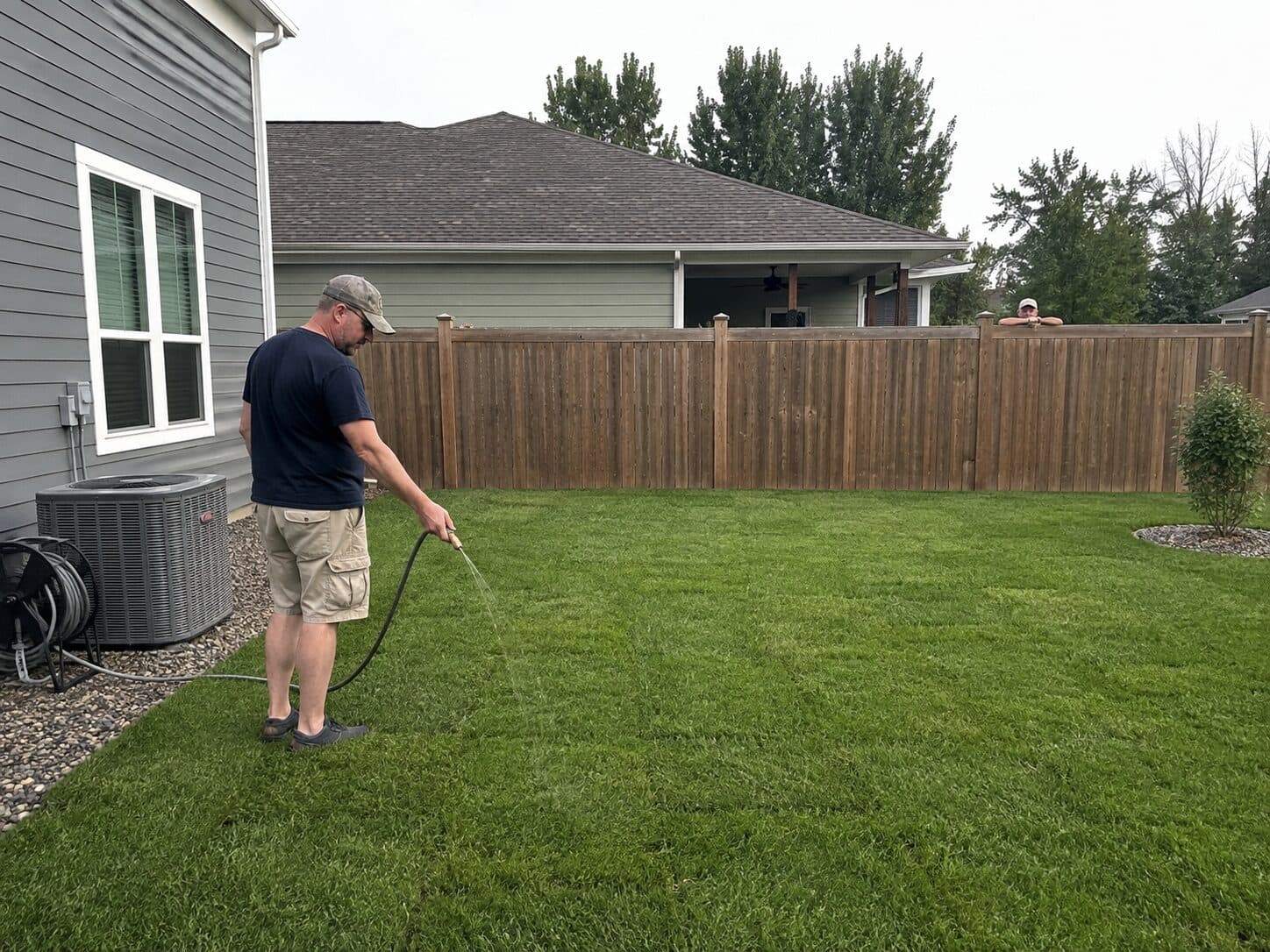
New fescue sod follows the same rules as any sod. Water it within 30 minutes of laying it, keep it moist for two weeks, do the tug test around day 14, and back off to every other day once it holds. The full schedule is in how often to water new sod.
Once it is established, give it about 1 inch a week from rain plus irrigation, up to 1.5 inches in peak heat, in one or two deep morning sessions. Deep and infrequent beats light and daily, because deep soakings pull the roots down. Morning only: blades left wet all night invite brown patch fungus. In a long dry spell it goes dull and stops growing, then comes back with water. Dormant is not dead.
No mowing until it passes the tug test and the blades reach about 4 inches. Then mow high, 3 to 4 inches for the life of the lawn, never more than a third of the blade in one cut. Tall grass shades its own crowns and roots, which is how it gets through July. Hold fertilizer for the first six to eight weeks; after that, fall is the main feeding season, not spring.
The bottom line
Tall fescue is the grass for shade, cold winters and moderate summers. It stays green when warm-season lawns go brown. It wants deep water, a tall mow and a fall overseed. Lay it in early fall if you can, spring if you must, and treat the first two weeks as the job.
Check your ZIP code to see whether tall fescue is available in your area and what a pallet costs, or call 1-866-886-2763 and the team will tell you which fescue the farm near you cuts.