Water new sod within 30 minutes of laying it, soaking the top 2 to 3 inches of soil. For the first 14 days, keep the sod and the top inch of soil moist at all times with two to three short waterings a day of 10 to 15 minutes each, the first one early in the morning. From day 15 to 30, water every other day for 30 to 45 minutes. After 30 days, give it about 1 inch a week in one or two deep morning sessions.
Most sod that fails went dry in the first two weeks. This is the schedule that prevents that.
The short answer
Water within 30 minutes of laying it, then keep it moist for 14 days with two to three short waterings a day. Then every other day for two weeks. Then once or twice a week, deep, for good.
The first 30 minutes
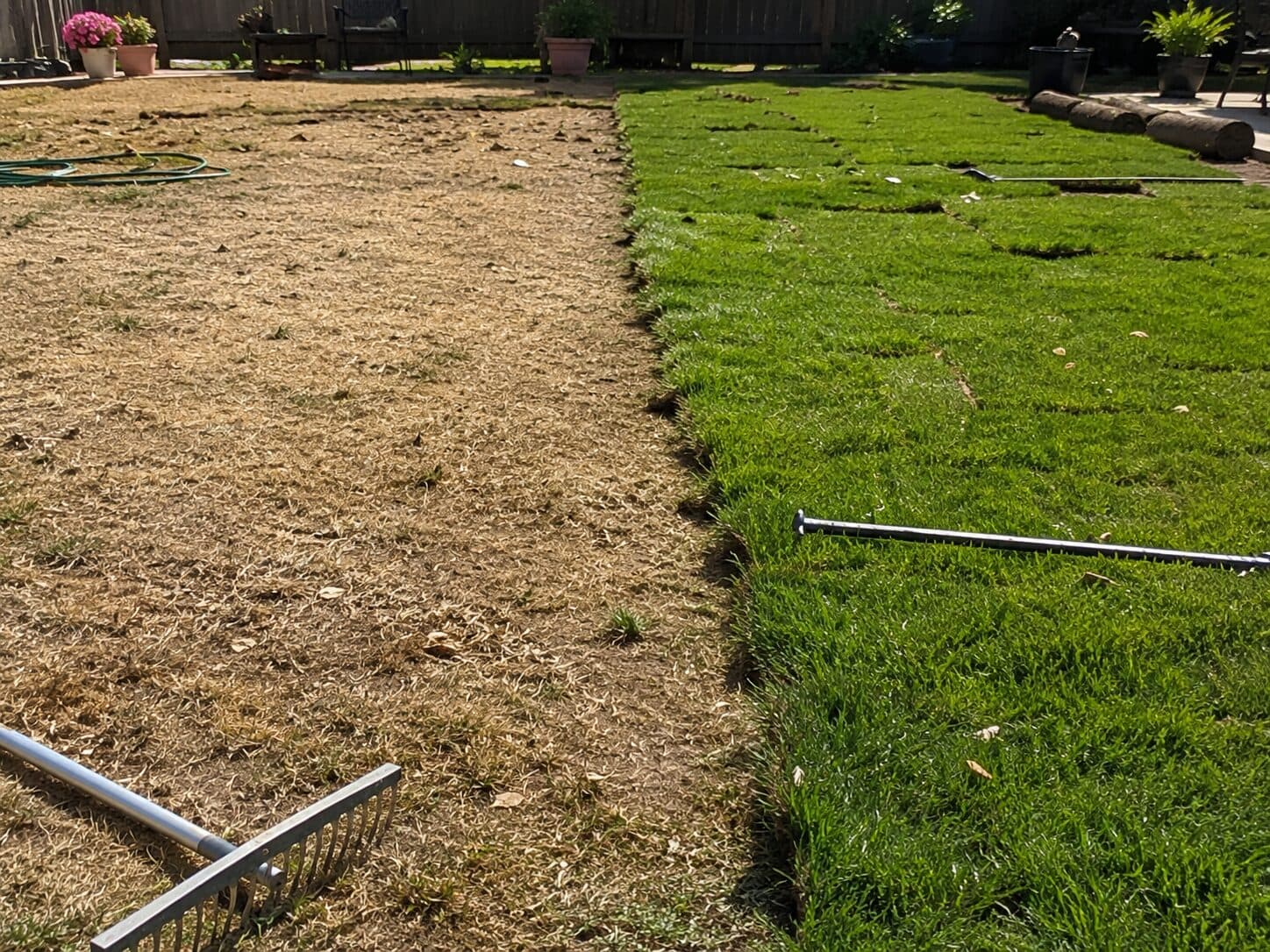
Sod is cut fresh against your order and arrives with its feeder roots exposed on the underside. On a hot, sunny day those roots can dry out and die in as little as 30 minutes.
So the first watering is part of laying the sod. Lay a section, water it, lay the next. Do not wait until the whole yard is down.
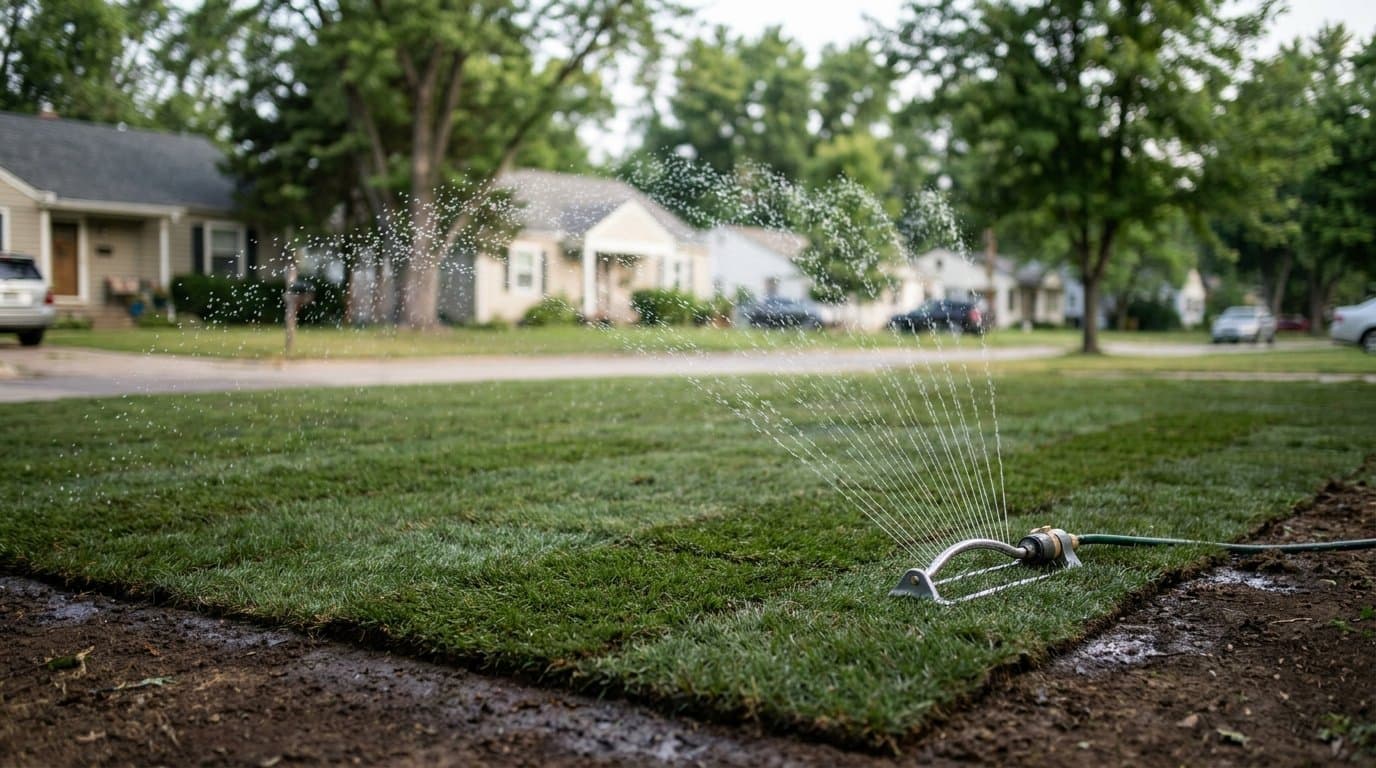
That first soak should be heavy: enough to wet the sod all the way through and the top 2 to 3 inches of soil underneath, which is about 1 inch of water.
Days 1 to 14: keep it moist, always
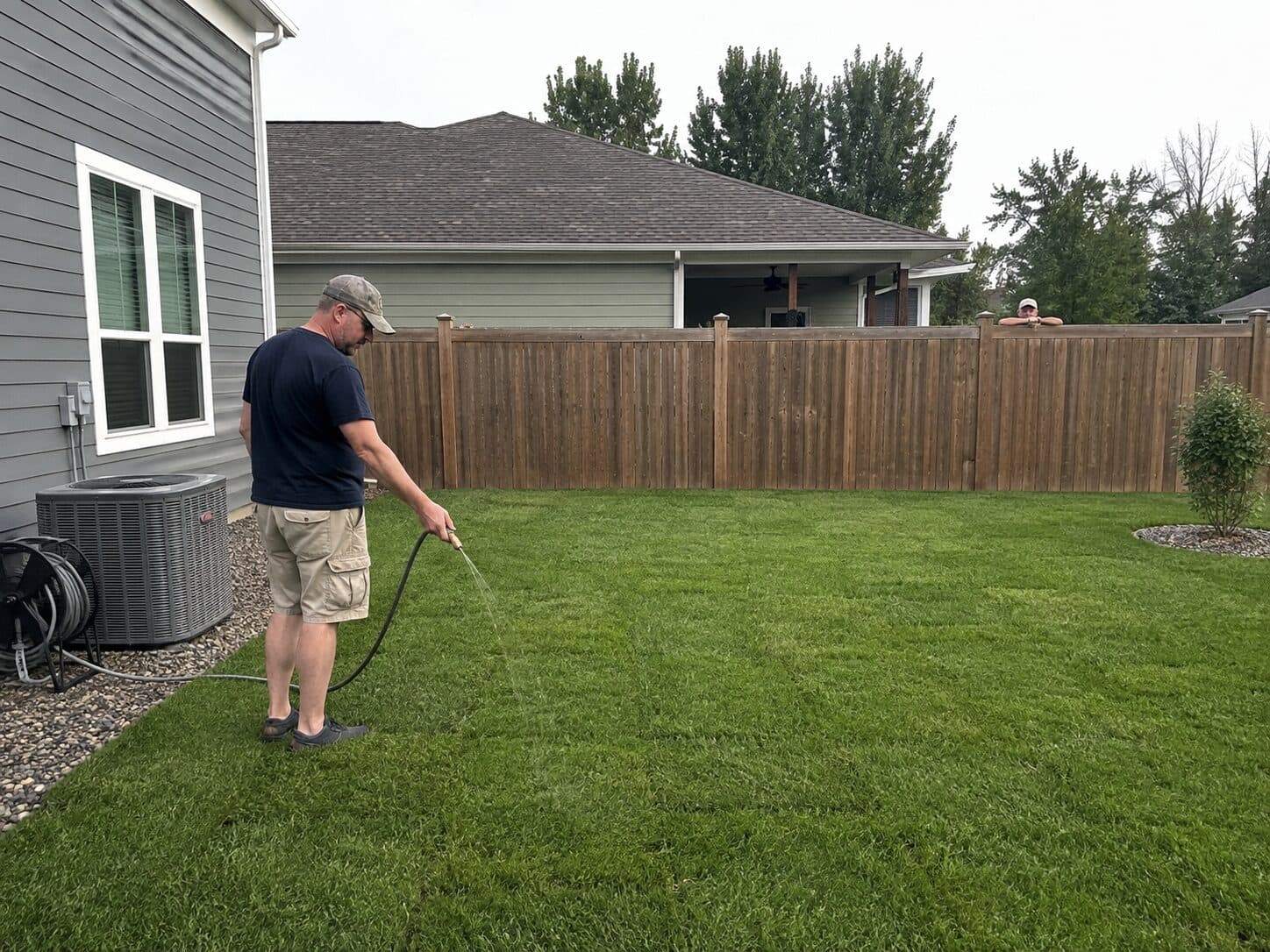
For the first two weeks, the sod and the top inch of soil should never dry out.
- Two to three short waterings a day, 10 to 15 minutes each.
- First one early, between 4 and 10 a.m.
- One around midday, and a third in mid-afternoon when it is hot.
- Check edges and corners twice a day in heat. They dry first.
During these two weeks: no mowing, no foot traffic, no fertilizer. Every step on unrooted sod shifts it off the soil, and shifted sod dries out.
The tug test. Somewhere around day 10 to 14 in warm weather, and up to day 21 in cooler weather or shade, walk to a corner of the sod and lift it gently. If it comes up easily, it has not rooted yet, so stay on the two-week schedule a few more days. If you feel resistance, roots have taken hold and you can move to the next stage.
Check a few spots. Shady areas and edges root slower than open sun.
Days 15 to 30: less often, longer
Once it has rooted, the job changes. Now you want the water to go deeper so the roots follow it down.
- Every other day, 30 to 45 minutes per session.
- Still in the morning.
- Skip a session after a good rain.
This is also when the first mow happens. Wait until the sod has passed the tug test and the blades are 3 to 4 inches tall. Set the mower high, use a sharp blade, and never mow while the sod is wet.
After day 30: like an established lawn
From here on, the rule is deep and infrequent. A light sprinkle every day trains roots to sit near the surface, where they are the first to suffer in a dry spell. A deep soak once or twice a week sends them down.
- About 1 inch of water a week from rain plus irrigation, in one or two sessions.
- Up to 1.5 inches in peak summer heat or in sandy soil that drains fast.
- Morning only. Evening watering leaves the grass wet all night, which is how fungus starts.
- First lawn fertilizer at 6 to 8 weeks. A starter fertilizer worked into the soil before laying is fine. Nothing on top of the grass until then.
How to know you are getting it right
Test the sprinkler before delivery day. Do you need a sprinkler system before laying sod? covers the hose setup. Run every hose and every head and make sure the whole area gets covered, including the far edges.
Do the tuna-can test. Set a few empty cans around the area, run the sprinkler for 15 minutes, and measure the water in each. That tells you how long it takes to put down an inch, and whether one corner is getting half of what the middle gets.
Signs of too little water:
- A gray-blue tint to the blades
- Edges curling up
- Seams opening between pieces
Signs of too much:
- Squishy underfoot
- Mushrooms
- Standing water
- Fungus patches
Either way, adjust the schedule the same day. Stressed sod fixed the same day usually recovers.
If you are going to be away. The two weeks after delivery are the only stretch where the sod truly cannot be left. If you will be traveling, either get someone to water on the schedule above or move your delivery date. Sod must go down the day it arrives, so there is no holding it until you are back.
The bottom line
Water it within 30 minutes. Keep it moist for two weeks. Back off to every other day once it passes the tug test. After a month, water deep and infrequent, in the morning. Follow that and the grass does the rest.
For the full install walkthrough, see how to install sod. If your sod showed up looking rough, read what to do if your sod arrives dead as well. Water it first, then read.
Check your ZIP code to see varieties and pricing for your area, or call 1-866-886-2763 with any watering question before or after delivery.