Written and checked by the USA Sod team · Published November 2, 2026
For a Las Vegas lawn, the grasses USA Sod commonly offers are Bermuda and tall fescue. University of Nevada, Reno Extension says warm-season grasses generally "use less water than cool-season grasses," but go dormant in winter. Tall fescue "has proven to be the most popular lawngrass in the transition zone of the Mojave Desert, even though it is among the highest in water use," mainly because it takes summer heat and stays green through winter. USA Sod commonly offers Bermuda TifTuf, Bermuda Tifway 419 and Tall Fescue in Las Vegas.
Bermuda in Clark County: common vs. hybrid
Bermuda comes in two forms, common and hybrid, and the difference matters in Las Vegas. UNR Extension notes that "in Clark County, Nev., ordinances prohibit the planting of common bermudagrass" because of its heavy pollen production.
According to UNR, hybrid Bermuda "produces less pollen and is more suitable where allergies are a concern." It is also "finer textured, more restrained in its growth and remains green longer in the fall compared with common bermudagrass." Because hybrids produce few living seeds, "they must be planted vegetatively as sprigs, plugs or sod."
What to expect from hybrid Bermuda in the valley:
- Lower water use. UNR says warm-season grasses generally use less water than cool-season grasses, and that "one major reason is their winter dormancy."
- Winter dormancy. Warm-season grasses are "not preferred by homeowners due to their winter dormancy."
- Sun, not shade. "Very few bermudagrasses tolerate shade from trees."
- Winter color is possible. UNR says Bermuda can be overseeded "more successfully than most other warm season grasses," with ryegrass as "the usual choice for winter overseeding." Skip it the first year: warm-season grasses "should not be overseeded for winter color the first year after planting."
Deciding between the two varieties? See TifTuf vs. Tifway 419.
Tall fescue: green all year, at a water cost
UNR lists three reasons tall fescue is so popular in the Mojave: "its tolerance to high summer temperatures, relatively low maintenance and persistence of its green color through the winter months." It also "tolerates a wide range of desert soils as well as moderate shade."
Two things to know before you choose it:
- It uses more water. UNR places it "among the highest in water use."
- It cannot mend large damaged areas. Tall fescue is a bunchgrass with no rhizomes or stolons, so "plastic netting is sometimes used in producing tall fescue sod, holding the sod together." Bunchgrasses "cannot mend sizable damaged areas and must be repaired by seeding or sodding."
Our tall fescue sod guide covers the grass in more depth.
When to lay sod in Las Vegas
UNR's Mojave Desert calendar differs by grass type:
- Bermuda sod: warm-season grasses are planted from seed or sprigs "from April through June," and sod "extends the season an additional month to the beginning of August."
- Tall fescue sod: cool-season sod "can be established from sod nearly any time of the year but is best if the hottest summer months (June, July and August) and coldest winter months (December and January) are avoided."
- If you must lay sod in summer, UNR advises laying it "in the early morning hours when the soil is cool and water immediately after planting."
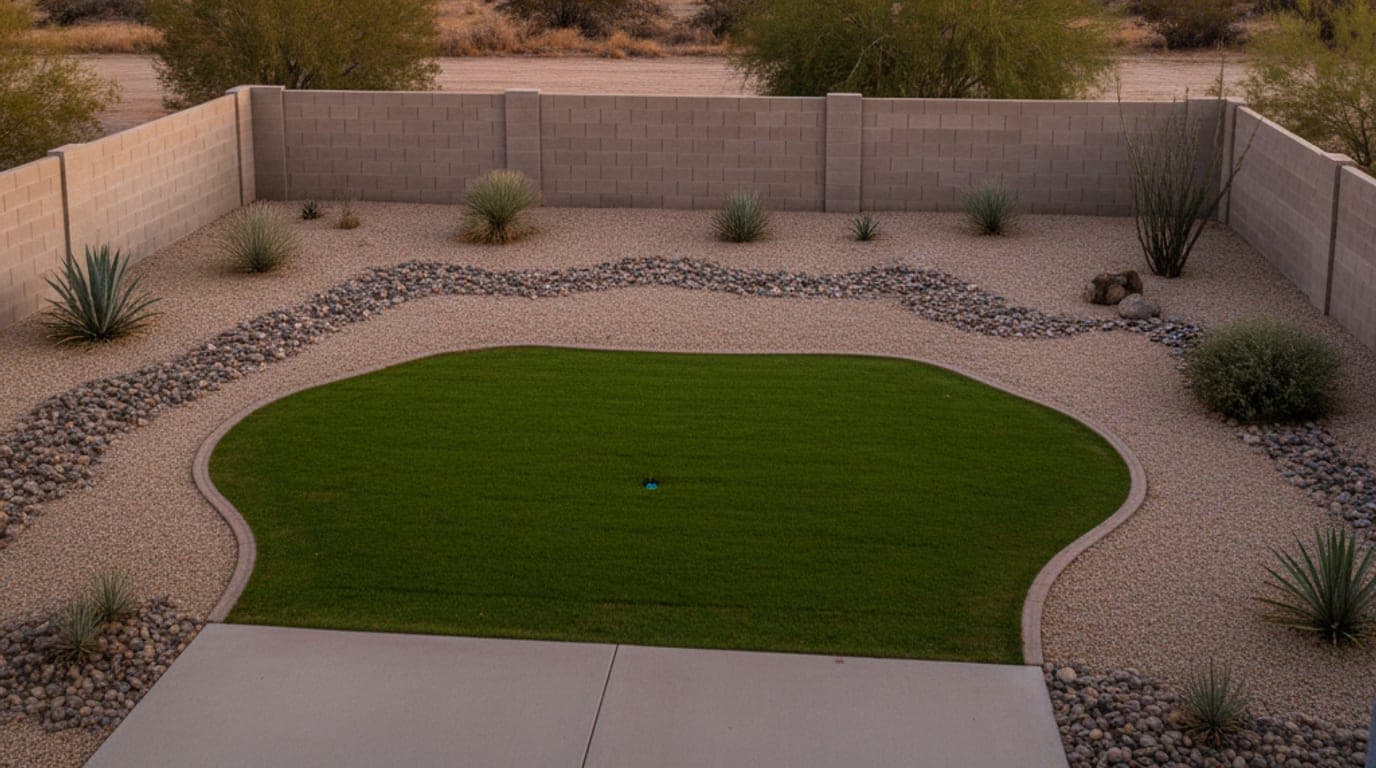
Put grass only where it earns its water
UNR Extension frames the desert question as "HOW turfgrass should be used appropriately," not whether to use it. Its guidance for siting a lawn:
- Do not use grass "as a decorative groundcover to fill in unplanted areas."
- Do not plant sprinkler-watered grass "on slopes greater than 3:1."
- Do not plant sprinkler-watered grass "in landscape areas less than 8 feet wide," because water does not spread evenly on strips that narrow.
UNR also notes that "in the desert, a lawn is only as good as its irrigation system." Shopping in Arizona too? See our Phoenix sod guide.
Ordering sod in Las Vegas
USA Sod commonly offers Bermuda TifTuf, Bermuda Tifway 419 and Tall Fescue in Las Vegas. Availability changes week to week, so enter your ZIP code for today's list. Las Vegas pallets cover 500 square feet in our quotes; how many pallets of sod do I need shows how to measure your yard. Delivery is a flat $200 per sod order. USA Sod delivers in Las Vegas, but installation is not offered in this market, so plan to lay the sod yourself or line up your own installer. See our markets for coverage.
Ready to choose? Start your Las Vegas order or call 1-866-886-2763.