Written and checked by the USA Sod team · Published November 2, 2026
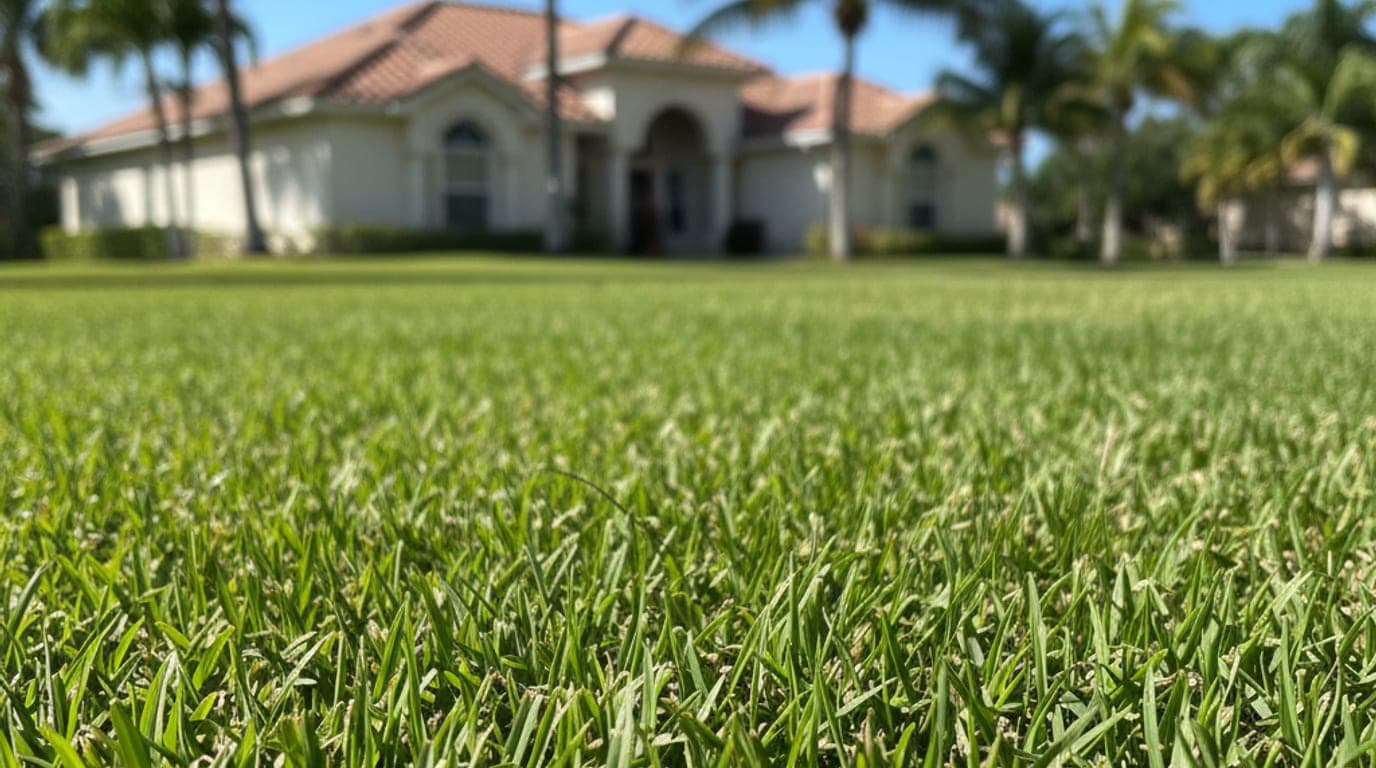
Yes, for the right Florida yard. UF/IFAS Extension says Bermudagrass is "well adapted to most soils and climates found in Florida" and has "excellent wear, drought, and salt tolerance." The catch: it has poor shade tolerance, the Bermuda types used on golf courses need more upkeep than typical home lawn grasses, and nematodes are its most serious pest in Florida. If your yard is sunny and gets hard use, Bermuda fits. If it has shade, look at a shade-tolerant St. Augustine instead.
This post answers one narrow question: does Bermuda make sense in Florida, and when should a Florida homeowner pick St. Augustine instead? For the full side-by-side on both grasses, see Bermuda grass vs. St. Augustine.
Where Bermuda does well in Florida
The UF/IFAS publication Bermudagrass for Florida Lawns lists its strengths plainly. It "establishes rapidly and can outcompete most weed species." It also "offers one of the best turfgrass options for persistence in situations where any form of irrigation (automatic or manual hose-applied) is not available." In drought it turns brown as it goes dormant, and UF/IFAS says "it will revive and resume growth upon irrigation with sufficient amounts of water."
That makes Bermuda a reasonable choice for a Florida yard that:
- gets full sun,
- gets regular foot traffic or play,
- sits near salt exposure, or
- has no irrigation at all, not even a hose.
The downsides Florida owners should know
UF/IFAS is just as direct about the drawbacks:
- Shade. Bermudagrasses "have poor shade tolerance."
- Upkeep. "Bermudagrass cultivars commonly used in golf course and athletic field settings require higher levels of maintenance than other grasses typically used for home lawns." At low to moderate care, UF/IFAS says to cut it at 1 to 2 inches, "which may require mowing one to two times per week."
- Spreading. It grows "very aggressively" and "can rapidly invade flower and landscape beds."
- Nematodes. "The most serious pest of bermudagrass in Florida are nematodes." The damage hits hardest "on sandy soils or under high-maintenance regimes," and "no cultivar is resistant to nematode infestation."
- Winter color. Bermudagrasses "will generally not maintain green color in cold temperatures."
Bimini and Celebration
Outside Orlando, the Bermuda varieties commonly offered in USA Sod Florida markets are Bimini and Celebration, and the UF/IFAS guide covers both. Celebration "does not require as much maintenance as some of the other fine textured bermudagrass cultivars," "has good tolerance to traffic and will tolerate slightly more shade than other bermudagrasses." Bimini "is very new to the Florida market," and UF/IFAS says early evidence supports its use in "golf, athletic fields, and home lawns," with mowing needs "similar to 'Celebration'." For more varieties, see types of Bermuda grass.
When St. Augustine is the better Florida lawn
UF/IFAS calls Floratam "the most widely produced and used St. Augustinegrass in Florida." Its Florida guide also credits St. Augustine with "relatively good salt tolerance."
When shade is the issue, look at a St. Augustine cultivar with better shade tolerance. Not every St. Augustine handles it the same way, though:
- Floratam "does not persist well in environments that receive less than 6 hours of sunlight daily."
- Compared with Floratam, ProVista has "better shade tolerance."
- Palmetto "does well in full sun or partial shade, but not in dense shade."
- Bitterblue has "good cold and shade tolerance."
St. Augustine has its own weak spots. UF/IFAS says it "has poor wear tolerance and does not hold up to repeated foot or vehicular traffic," it "requires water to remain green and healthy," and "the major insect pest of St. Augustinegrass is the southern chinch bug." Our Palmetto vs. ProVista vs. Floratam guide goes deeper on the varieties.
A quick way to decide
- Sunny yard, heavy play, no irrigation: Bermuda.
- Partial shade from trees or the house: a St. Augustine such as ProVista or Palmetto.
- Light foot traffic and a working sprinkler system: St. Augustine.
- Not sure about nematodes: ask your local UF/IFAS Extension office, which UF/IFAS says offers diagnosis and treatment recommendations for pest problems.
What USA Sod commonly offers in Florida
These are the Bermuda and St. Augustine varieties commonly offered in each Florida market. Stock changes week to week, so check your ZIP code for today's list.
| Market | Bermuda | St. Augustine | Pallet size in quotes |
|---|---|---|---|
| Jacksonville | Bimini Bermuda | Floratam, ProVista, Viridian | 450 sq ft |
| Miami | Bimini Bermuda, Celebration Bermuda | CitraBlue, Floratam, Palmetto | 400 sq ft |
| Orlando | Bermuda and Bermuda Tifway 419 (both out of stock at our last check) | Bitter Blue, CitraBlue, Floratam, ProVista | 400 sq ft |
| Southwest Florida | Bimini Bermuda, Celebration Bermuda | Floratam, Palmetto, ProVista | 400 sq ft |
| Suncoast | Bimini Bermuda, Celebration Bermuda | CitraBlue, Floratam, Palmetto, ProVista, Viridian | 400 sq ft |
| Tampa | Bimini Bermuda | Floratam, ProVista, Viridian | 400 sq ft |
If you are in Orlando and set on Bermuda, check your ZIP before you plan around it. The Orlando sod guide and the Tampa sod guide cover the other grasses in those areas.
Sod is sold in full pallets, and delivery is a flat $200 per order no matter how many pallets you buy. See how many square feet a pallet of sod covers to size your order, and our markets page to confirm we serve your area. Installation is offered in some Florida markets; enter your ZIP code for your rate.
Know which grass fits your Florida yard? Design your lawn to see your price, or call 1-866-886-2763 and we will help you choose.