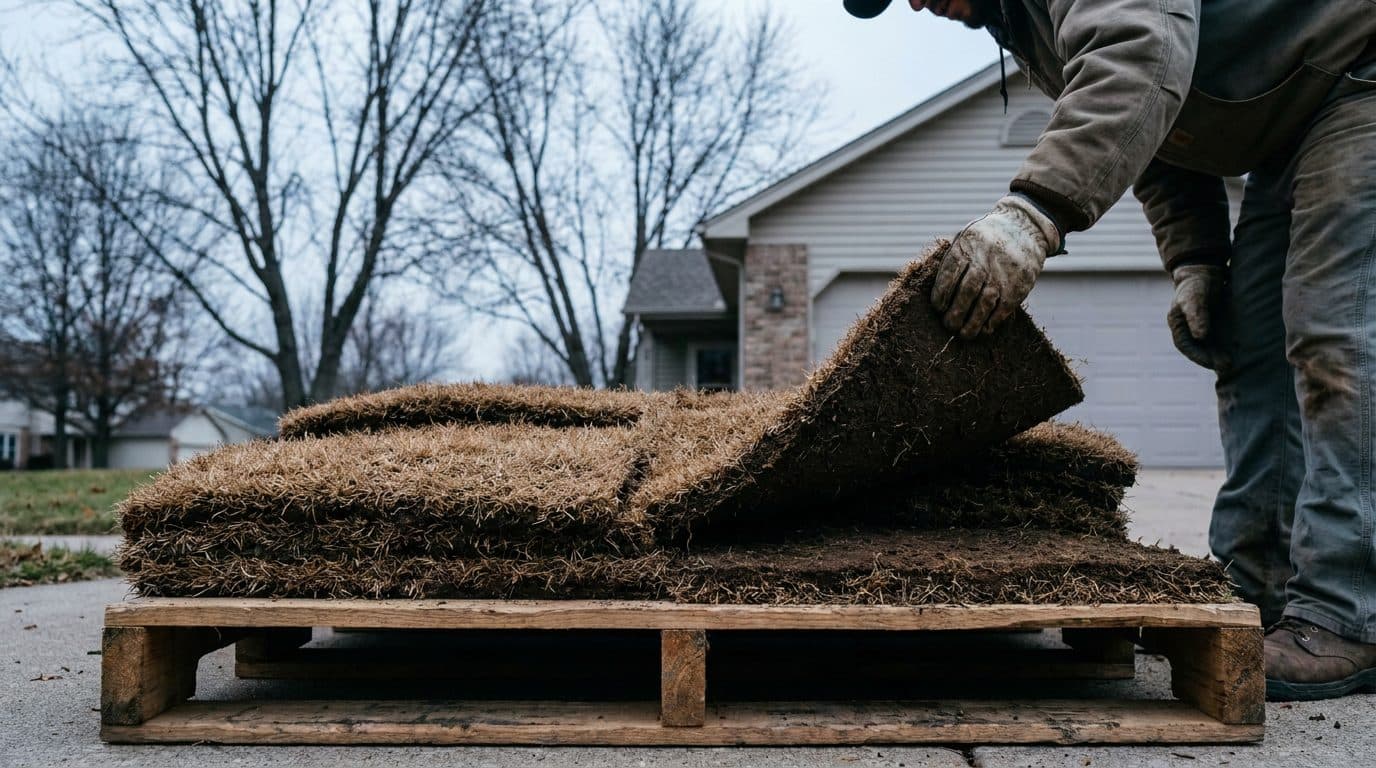
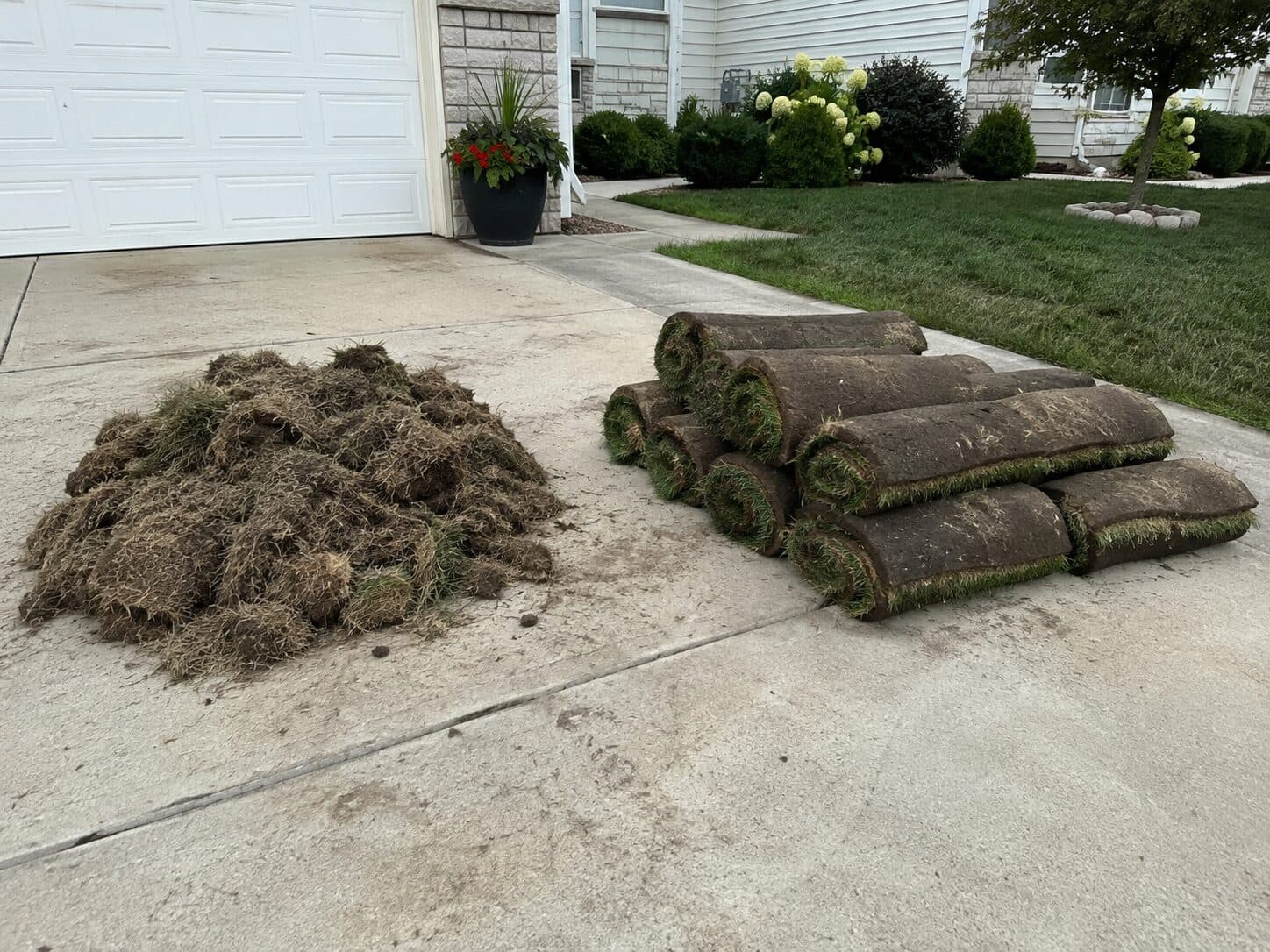
Warm-season grasses like Bermuda, Zoysia, Centipede and St. Augustine go dormant after the first frosts. They turn brown or tan on top and stop growing, but the crowns and roots stay alive. A pallet cut in late fall or winter arrives that color because the field it came from is that color. Dormant sod is not dead sod. It roots in over the cool months and greens up when the soil warms in spring.
Every year around the first cold snap, the same worried call comes in. The truck just left, the sod on the driveway is brown, and it looks nothing like the photos. This post is what the team says on that call.
The short answer
If it is late fall or winter and your sod is a warm-season grass, brown is normal. The grass is dormant, not dead. Lay it the same day, water it, and expect it to green up as temperatures rise in spring. The way to tell dormant from dead is below, and it takes about a minute at the curb.
Which grasses go dormant, and when
Warm-season grasses grow when it is hot and shut down when it is cold. Bermuda, Zoysia and Centipede go fully brown after a few frosts. St. Augustine holds its color longer in mild winters and browns after a hard freeze.
The trigger is temperature, not the calendar, so the timing moves around. In most of our markets it starts somewhere between late October and early December and lasts until soil temperatures climb again in spring.
Cool-season grasses like Tall Fescue and Kentucky Bluegrass do the opposite. They stay green through winter and stress in summer heat, which is why northern markets rarely see a brown winter delivery.
Why the pallet is brown on top
Sod is cut fresh against your order from a farm near you. In November, that field is dormant, so the pieces on your pallet are dormant. There is no green version sitting in a warehouse. What the farm cuts is what the season looks like.
That is also why a dormant delivery is not a freshness problem. The 24-hour harvest-to-delivery goal is the same in January as in May. How fresh is your sod? covers what fresh actually means.
Dormant or dead: the one-minute check
Do this at the curb, before you lay anything.
- Look under the brown. Part the blades near the soil line. Dormant grass has firm, pale or slightly green crowns and stems, often white or cream inside. Dead grass is gray-brown all the way down, dry, and brittle.
- Check the runners. Bermuda, Zoysia and St. Augustine spread by stems that run along the surface. Bend one. Dormant stems flex and are moist inside. Dead ones snap or crumble.
- Check the roots and soil. The soil side of the piece should be cool and damp with fine white roots. A dry, crumbling, sour-smelling piece has a problem that has nothing to do with the season.
- Feel the pallet. Warm inside is the warning sign in any season. Heat builds inside a stacked pallet, and that is what kills sod, not cold.
If the crowns are firm and the roots are damp, it is dormant. Lay it.
The first 10 minutes. Inspect every pallet as soon as it lands. If something looks genuinely wrong, tell the driver and call 1-866-886-2763 while the truck is still there. That is the moment the guarantee is designed for, and What if your sod arrives dead? explains what it covers and where it stops. The Shipping and Delivery page says the same thing in fewer words: dormant sod is not dead sod.
Then start laying. Dormant sod still cannot sit stacked overnight.
Laying and watering dormant sod
The install is the same as any other time of year. Prepared soil, tight seams, staggered pieces, and a good first soak.
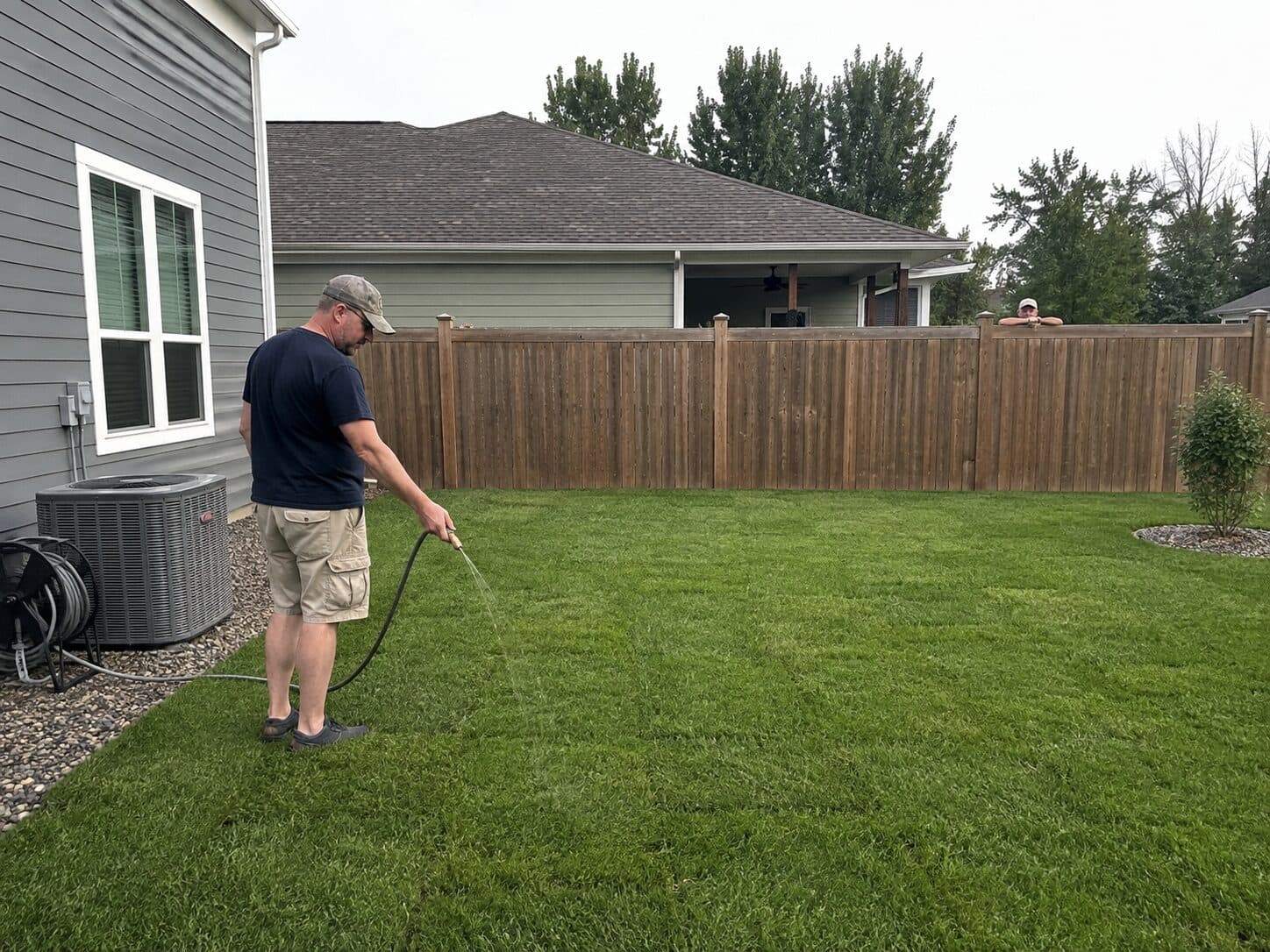
Watering is where it changes. Dormant grass uses far less water than growing grass, but it is not zero. The roots are still alive and need moist soil to knit into the ground.
- Water it in thoroughly the day it goes down.
- Keep the soil moist, not wet, for the first few weeks. In cool weather that is often every few days rather than every day.
- Skip a session after rain. Skip watering on days when it is freezing, so you do not leave ice on the surface.
- Do not fertilize until it greens up and starts growing in spring.
The full schedule is in How often should you water new sod?. Use the cooler-weather end of every range.
When it greens up
Green-up follows soil temperature, not a date. As spring warms up, the crowns push new growth and the color returns over a few weeks. Bermuda and Zoysia tend to wake later than St. Augustine. A lawn laid in December and a lawn laid in March often look the same by late spring.
Two things speed it along. Keep the soil moist through winter so the roots keep working, and wait for real growth before the first mow. Winter Sod Guide has more on the cold months.
Which of our markets see it
Real winter dormancy, brown lawns for a stretch of the year, is the norm in Dallas, Oklahoma City, Nashville, Atlanta, Charlotte and Raleigh, and in most of Texas and the Southeast in a cold year. Houston, San Antonio and Austin see it in a shorter, lighter form. South Florida markets like Miami and Orlando mostly stay green, with St. Augustine holding its color through a mild winter.
If you are in a dormancy market and ordering after the first frost, plan on brown sod and a spring reveal. It is a normal way to build a lawn, and the roots get a head start before the heat.
The bottom line
Brown sod in late fall or winter is almost always dormant, not dead. Check the crowns and roots at the curb, lay it the same day, keep the soil moist, and let spring do the rest. If something is truly wrong, say so at delivery.
Check your ZIP code to see varieties and pricing for your area, or call 1-866-886-2763 if a delivery does not look right.