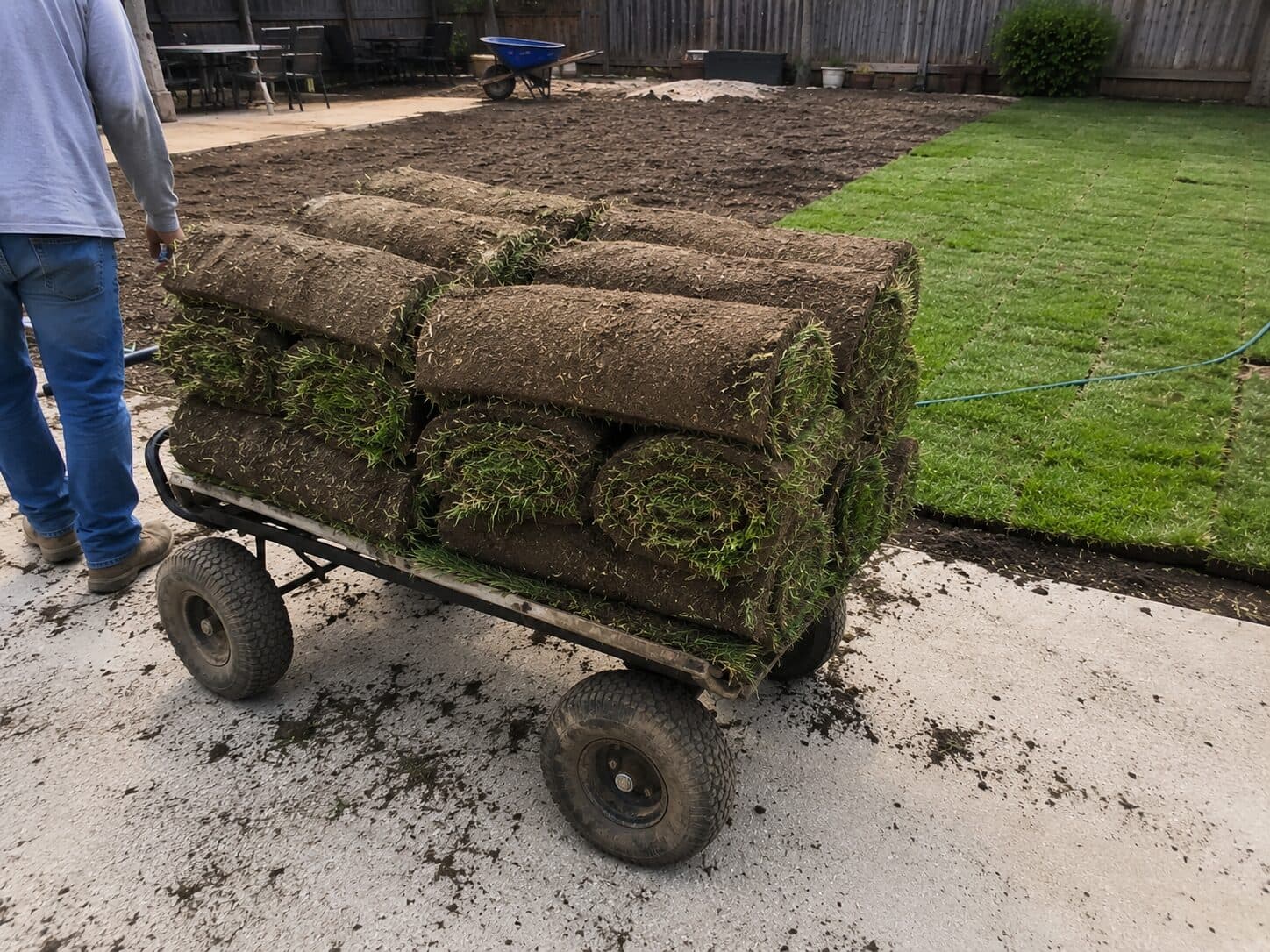
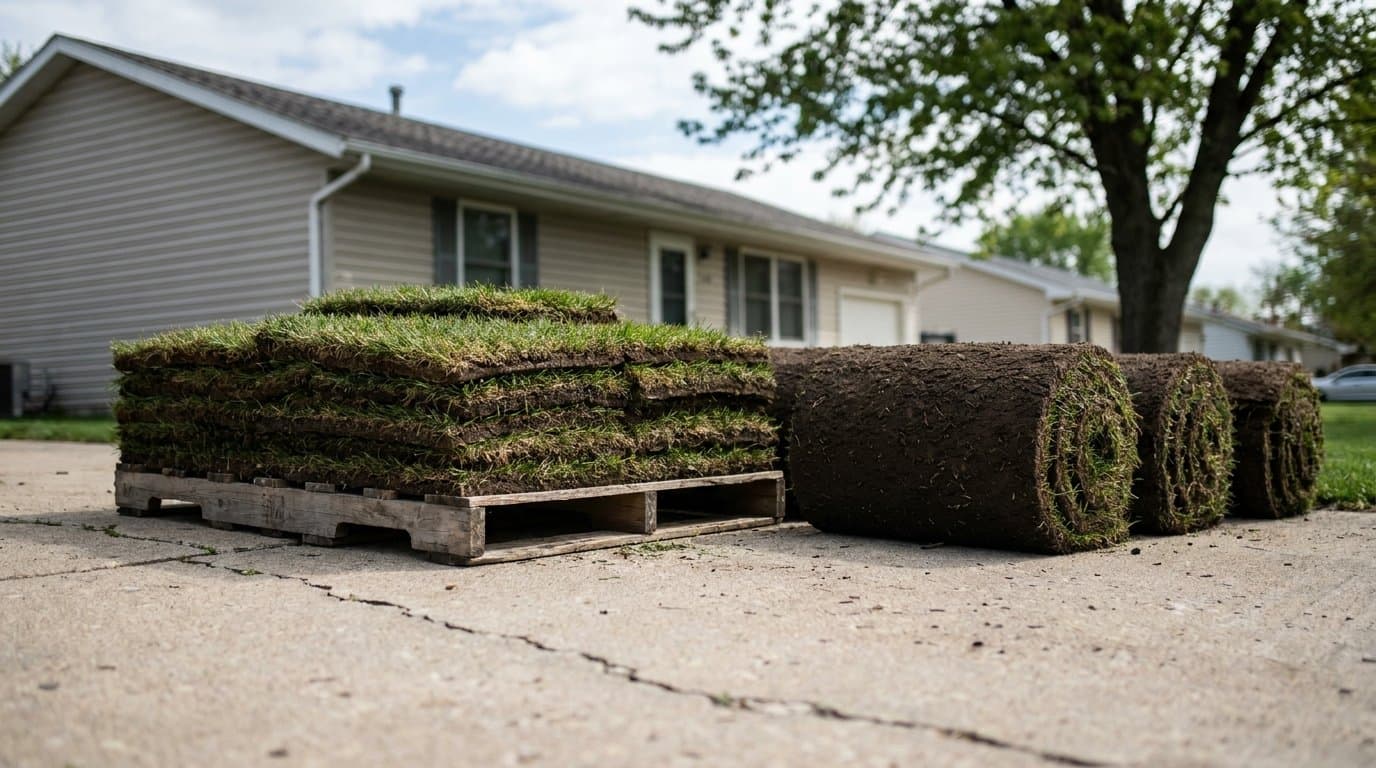
It depends on the farm that cuts your order. USA Sod's sod is harvested fresh against each order by the farm nearest your ZIP code, and each farm cuts one way. Many cut flat rectangular pieces, often called slabs, stacked on the pallet. Some cut small rolls, often around 2 feet by 5 feet, or about 10 square feet each. Either way it is the same grass, and it installs the same way: edge to edge, with the seams staggered. Pallet coverage does not change with the form.
You picture a pallet of sod arriving and realize you are not sure what is on it. Rolls, or squares?
The short answer
Both exist, and which one you get depends on the farm that cuts your order. Many of our farms cut flat pieces. Some cut rolls. Neither is better grass, and neither changes how much lawn a pallet covers.
Here is what that means for you on delivery day.
Why you cannot just pick one
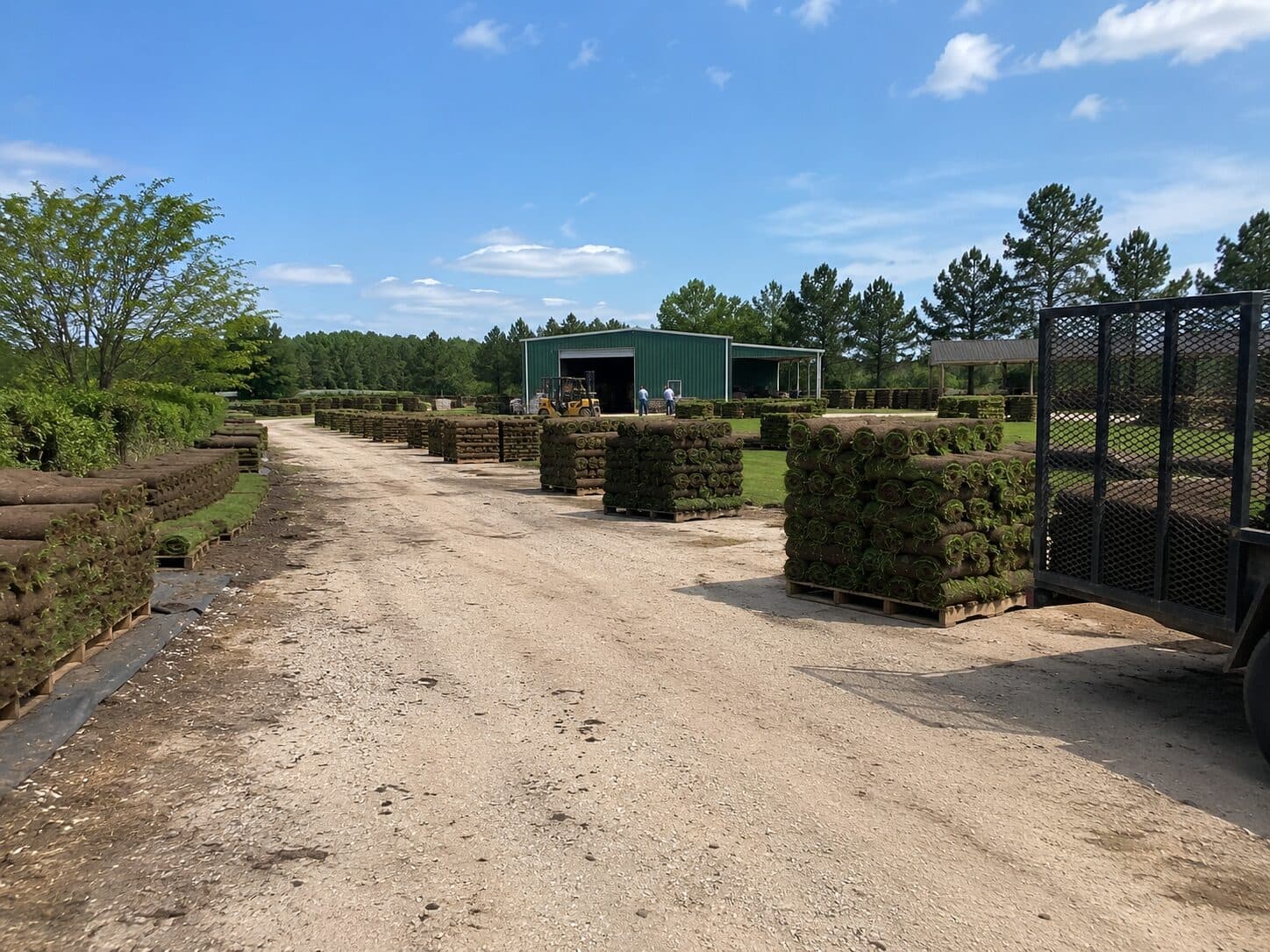
Your sod is not sitting in a warehouse somewhere in two versions. It is cut fresh against your order by the farm closest to your ZIP code, with a goal of 24 hours from harvest to delivery.
Every farm has its own harvester, and that machine cuts one shape. There is no option on the order form for the form of the sod, because the farm sets it, not us.
If the form genuinely matters to you, for example a crew that strongly prefers rolls, ask when you order or call 1-866-886-2763. The team can tell you what the farm for your area cuts.
What flat pieces look like
Flat pieces, or slabs, are a common form we deliver. They are rectangular, cut to a consistent size by the farm, and stacked in layers on the pallet with the grass side up.
You lift one piece, carry it to where it goes, and set it down. Then the next one. It is simple work, and easy to do alone.
What rolls look like
Some farms cut long strips and roll them up. A common size is 2 feet by 5 feet, so 10 square feet per roll. On a 600 square foot pallet, that works out to about 60 rolls.
You set the roll at the edge of the run, unroll it along the line, and butt the next roll up against the end. Rolls cover open ground quickly because each one lays a 5 foot strip in one motion.
The practical differences
Same grass, same day, same pallet coverage. The differences show up in how the work feels.
Slabs:
- Easier to carry one at a time, which matters if you are working alone or have to walk the sod around a house.
- Easier to cut and fit around curves, beds, sprinkler heads and edging, because you are placing small pieces.
- More seams per pallet, so staggering them well takes a little more attention.
Rolls:
- Cover open runs faster. A long straight strip along a fence goes down quickly.
- Fewer seams per pallet, since each roll is one continuous strip.
- Heavier per piece, and less handy on tight curves, where you end up cutting a roll into smaller sections anyway.
Both are heavy and wet. A full pallet commonly runs 1,500 to 3,000 pounds. Plan the drop spot so it is close to the work. See how much a pallet of sod weighs for the details.
What about the big rolls? You may have seen sod going down on a sports field as a single strip the width of a truck. Those big rolls exist, usually in the 200 to 500 square foot range, and they need machinery to lift and lay.
They are a commercial and athletic-field product, not the residential default. For a normal yard, the sod arrives in slabs or small rolls that people carry by hand. For larger sites, see buying sod for a job site.
Pallet coverage does not change
Rolls do not mean more sod, and slabs do not mean less.
A pallet is sold by the square feet it covers, and that number is set by the farm. Many farms cut 450 square foot pallets. Florida farms often run 400. Some markets run 500 or 600. The farm counts pieces to hit its pallet size, whichever shape those pieces are.
So when you are working out how many pallets to order, ignore the form and use the coverage. The Online Sod Calculator does the math once you know your square footage, and how many square feet a pallet covers walks through the pallet sizes by market. Add 5 to 10 percent for cuts around walkways, sprinklers and curves.
Either way, it goes down today
Rolls or slabs, the rule is the same. Sod must go down the day it arrives.
A roll and a stacked slab have the same problem: the grass inside cannot breathe, and the pile heats up. In warm weather, sod left rolled or stacked overnight can yellow and start to die before you lay it. Have the ground prepped, the hoses tested, and enough hands ready before the truck shows up. See how fresh is your sod for why the cutting date matters so much.
The bottom line
Your sod arrives as flat pieces or small rolls, depending on which farm cuts your order. You cannot choose the form, but it does not affect the grass, the coverage or the price. Slabs are easier to handle and fit; rolls are faster on open ground. Both are heavy, both need to go down the same day, and both install edge to edge with staggered seams.
Check your ZIP code to see pallet sizes and pricing for your area, look up our delivery areas, or call 1-866-886-2763 and we will tell you what the farm near you cuts.