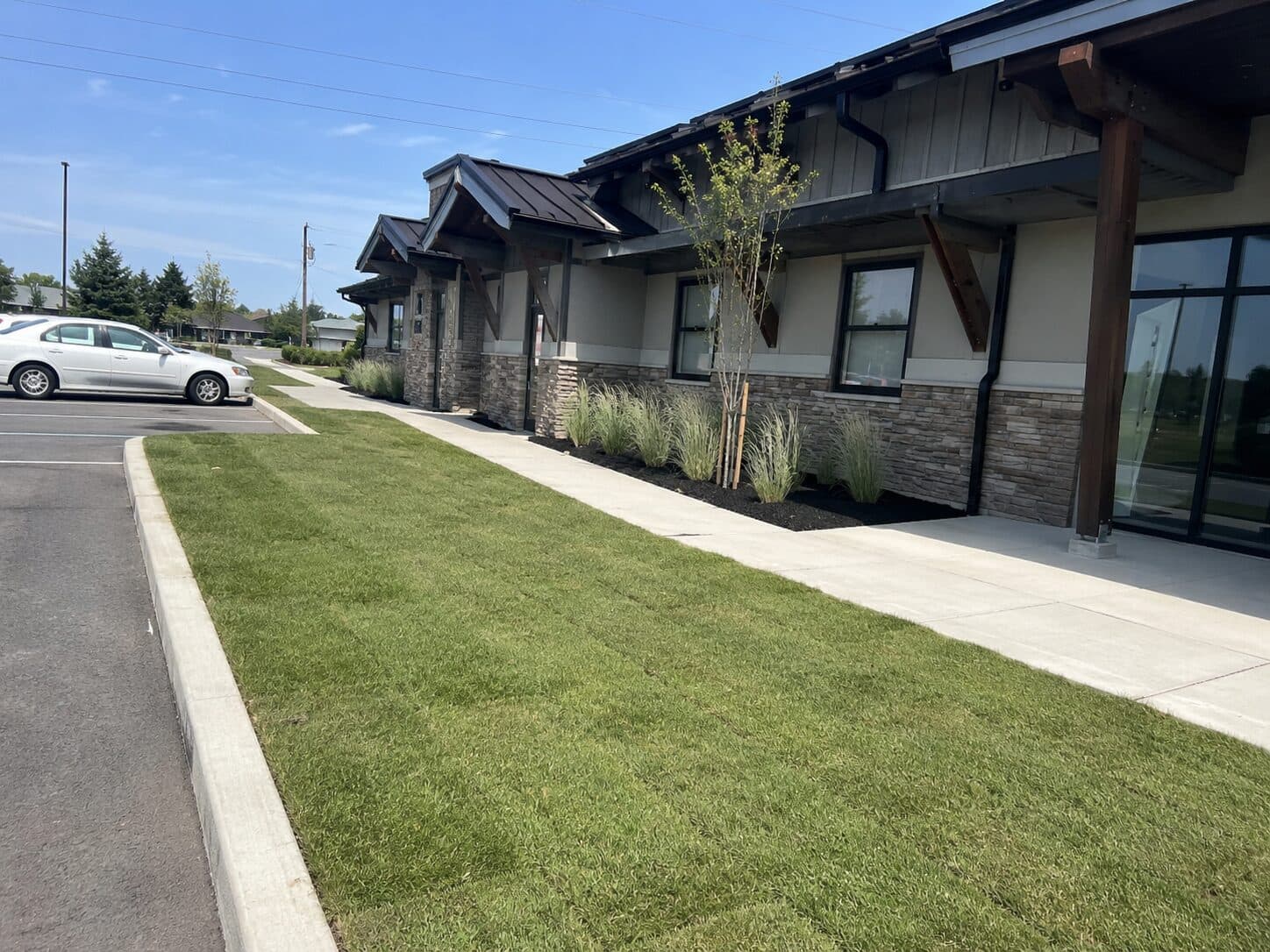
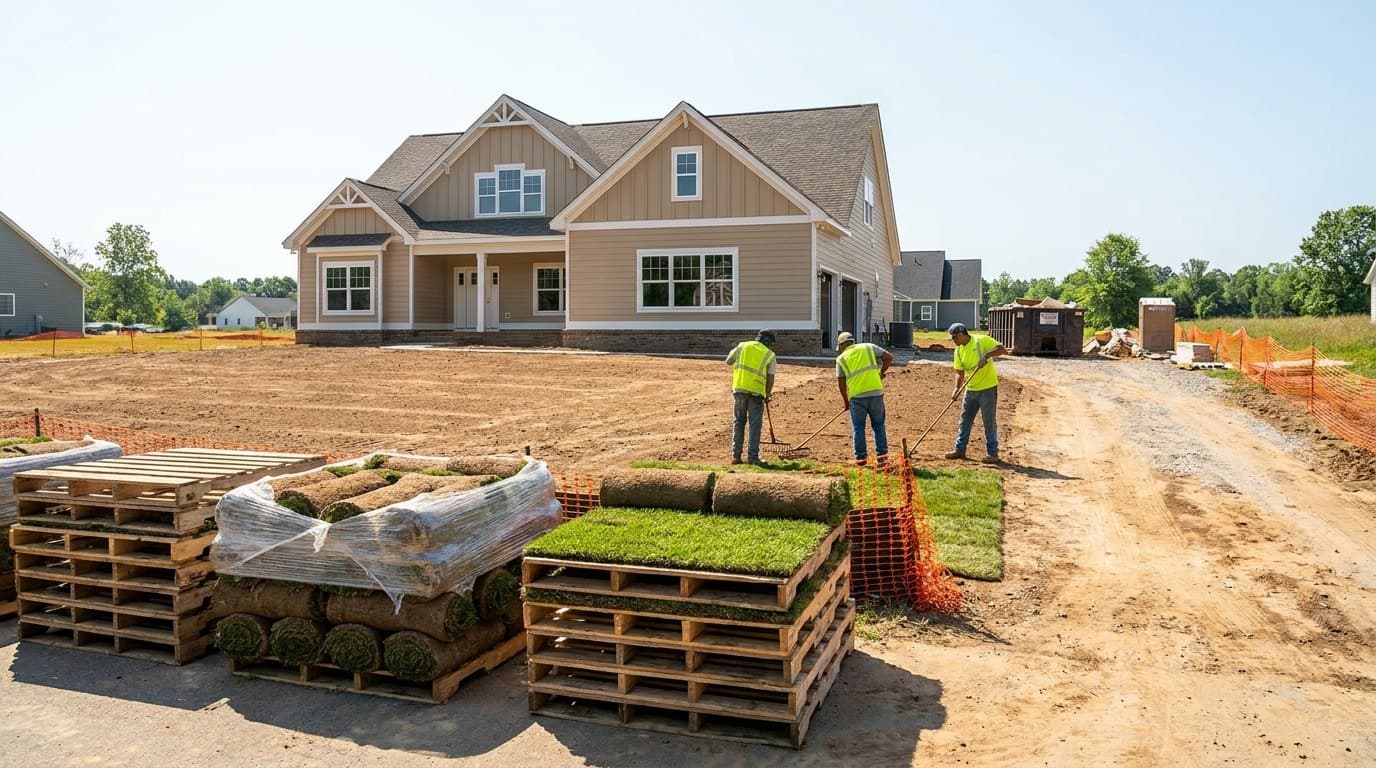
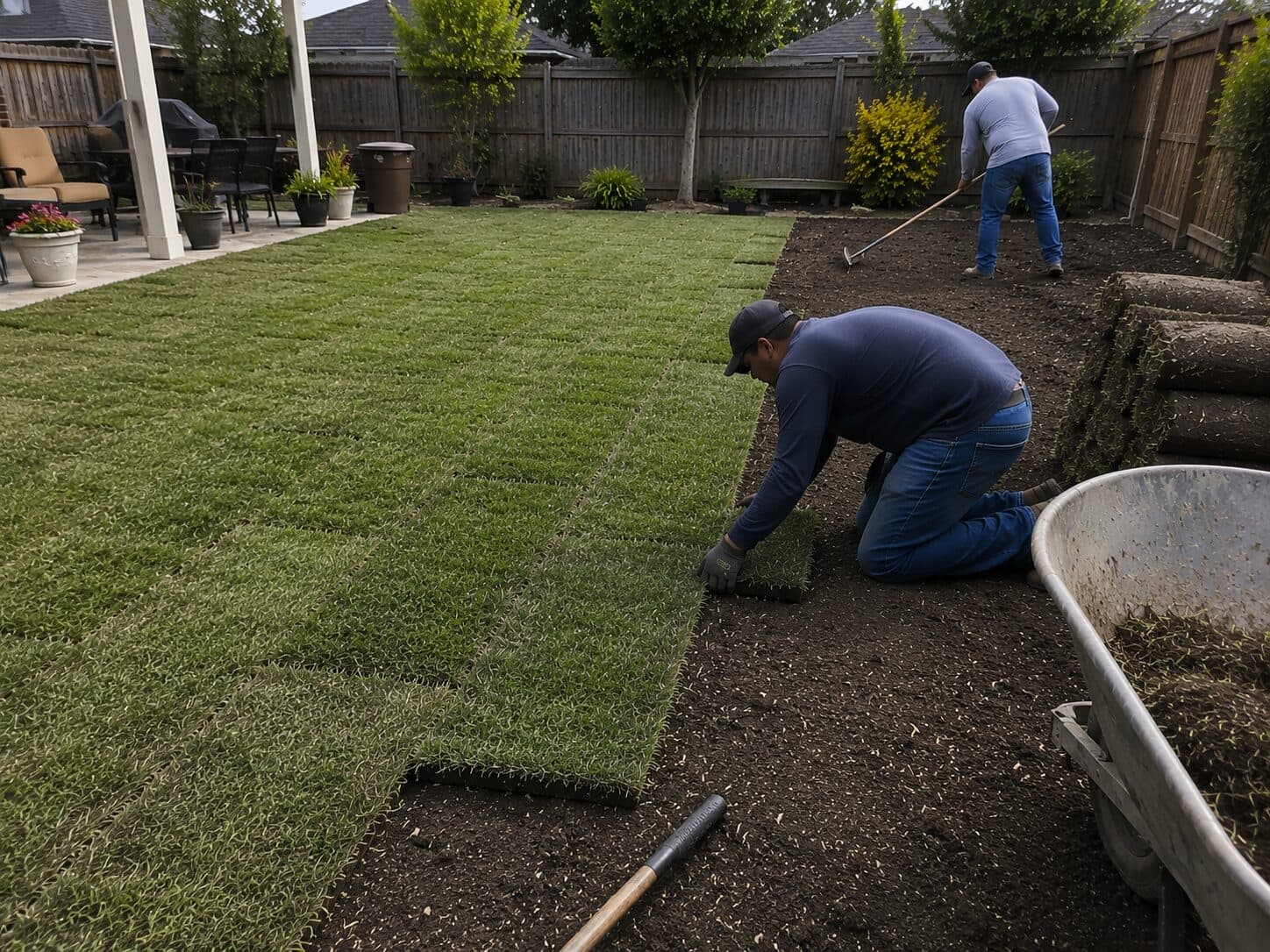
We supply sod to builders, landscape contractors and property managers across all of our markets, and volume orders are priced differently from a single homeowner pallet. The things that decide a job-site order are not the same as a residential one: delivery timing against your build schedule, where a pallet can be set down and how long it can sit there, and having one point of contact who knows the job rather than starting over on each call. Call us with the square footage, the site address and your target install window, and we will price it properly.
Most of what is written about buying sod is written for a homeowner doing one lawn on a Saturday. Almost none of it applies to a job site.
Volume changes the price, and it is a conversation
Contractor and bulk pricing is not the same as the per-pallet price a homeowner sees, and it depends on the size of the order and the market you are in.
We do not publish a discount table, because a table would be wrong for half the jobs it was applied to. Square footage, how many drops, how far the market's farms are from the site, and whether the work is one delivery or a rolling schedule all move the number.
Call with the actual scope and you will get an actual price. That conversation is faster than working out which bracket you fall into.
Timing is the part that goes wrong
Sod is not a stocked item that sits in a warehouse. It is cut to order, and the clock starts the moment it is cut. That single fact drives every scheduling decision on a job site.
A pallet delivered to a site that is not ready is a liability, not an asset. In summer heat, sod left stacked on a pallet begins to break down within a couple of days, and the middle of the stack goes first because it cannot breathe. You will not see it until it is laid.
So the order to work in is:
- Grade and prep is finished, or finishes that morning.
- Irrigation is in and tested.
- Sod arrives.
- Sod goes down the same day, and gets watered immediately.
If your ground is not ready, moving the delivery is almost always cheaper than absorbing the loss on the grass.
New construction has its own problem
On a new build the ground has usually had heavy equipment over it for months, and it is compacted well beyond what roots can penetrate.
Sod laid on compacted builder's fill will look correct at handover and fail in the first season, which is the worst possible timing because it fails after somebody has moved in.
Budget for the prep. Break up the surface, correct the grade so water runs away from the structure, and bring in topsoil where the fill is not real soil. It is the difference between a lawn that establishes and a callback.
Access, staging and the forklift question
Worth confirming before delivery day rather than on it:
- Can the truck get in? Narrow access, soft ground, a tight turn, or a street that is still stacked with other trades.
- Where do the pallets go down? As close to the work as possible, and out of full sun if anything is going to sit.
- Is there a machine on site? If you have one, unloading is faster and you have more control over placement.
- Multiple drops. On a larger site it is often better to stage across two or three points than to carry every piece from one corner.
Getting the quantity right at scale
The 5 to 10 percent overage rule that applies to a home lawn applies harder on a job site, because there is more edge work and more trimming around hardscape, beds and utilities.
Coming up short on a residential lawn is annoying. Coming up short on a job site stops a crew that is already booked for the next job, and the replacement grass will not be the same age as what went down that morning.
If the site is large or awkward, an on-site measurement is worth doing rather than working off a plan set, because plans and finished grade routinely disagree.
One point of contact
If you are ordering repeatedly, tell us that on the first call. Rebuilding the context of a job every time you ring is the most avoidable cost in the whole process, and repeat orders for the same site should not need re-explaining.
What to have ready when you call
- Square footage, or the plan and a note that it needs measuring.
- Site address or ZIP, since availability and pricing are per market.
- Your target install window, and how firm it is.
- Grass type if it is specified, or tell us the conditions and we will advise.
- Access notes and whether there is equipment on site.
With those five things we can price and schedule it in one call.