Written and checked by the USA Sod team · Published November 9, 2026
Full sun and lots of play: pick Bermuda. Part shade, or you want the grass that handles winter best: pick Meyer zoysia. A shadier yard: St. Augustine, if you accept some winter risk. Little Rock sits in the transition zone, where summer heat is hard on cool-season grass and winter cold can hurt warm-season grass. USA Sod commonly offers Tifway 419 Bermuda, Meyer Zoysia and Raleigh St. Augustine in Little Rock: check your ZIP code for today's list.
Pick by sun, play and winter
No single grass fits every yard. Choose by your climate, how you use the lawn and the look you want, not only by what it costs to put in. Shade and too little water are often the main limits on a home lawn.
All three grasses here take summer heat very well. They differ in shade, wear and winter cold.
Bermuda: full sun and heavy use
Bermuda is the most widely planted lawn grass in Arkansas, and it grows in every part of the state. It needs full sun, 6 hours a day, and it does poorly in shade. It holds up to wear and recovers fast, so it is a good choice for a yard that gets a lot of play.
The trade-offs: Bermuda creeps above and below ground into walks, borders and flower beds, and it spreads more and needs more mowing than zoysia. Cold injury to Bermuda is not unusual in Arkansas.
Tifway 419 (Tifton 419) is the most popular hybrid Bermuda. Too much fertilizer and water can build thatch in it. On a home lawn, cut it between 1.0 and 2.0 inches.
Meyer zoysia: some shade and the best winter hardiness
Zoysia grows across all of Arkansas. It forms a dense lawn in full sun or part shade but often thins out under heavy shade. It takes more shade than Bermuda, though less than St. Augustine, and it is hardier in winter than either one.
Meyer is the most widely used of the types of zoysia grass in Arkansas. Its blade is medium in width, and it has good cold tolerance.
Know the trade-offs before you order. Zoysia is slow to cover, so it costs more to establish, and it handles drought less well than Bermuda. In return it is less likely to need nitrogen, needs less mowing and is less invasive. Sod is the most common way to start a zoysia lawn.
Raleigh St. Augustine: more shade, more winter risk
St. Augustine tolerates more shade than any other warm-season grass grown in Arkansas. It has broad, coarse blades and a blue-green color. Because it spreads only by stems on top of the soil, it is easy to keep in check along borders.
It also wears poorly, and no warm-season grass in the state is less winter hardy: injury is likely when the temperature falls below 10°F. Little Rock is as far north as it is well adapted, and many lawns in the city's older neighborhoods are St. Augustine. City heat helps it survive there. Raleigh is one of the named St. Augustine varieties.
Torn between Bermuda and St. Augustine? Let sun and traffic decide: Bermuda for full sun and play, St. Augustine for shade and light foot traffic.
Brown in winter is normal
All three are warm-season grasses that grow quickly in summer, then turn brown and go dormant in winter. Sod delivered in winter may arrive dormant, and dormant is not dead. Lay and water the sod the day it arrives.
Ordering sod in Little Rock
USA Sod commonly offers Bermuda Tifway 419, Meyer Zoysia and Raleigh St. Augustine in the Little Rock market. Availability changes week to week, so enter your ZIP code for today's list, or see the Little Rock page. Then start your plan in the lawn designer.
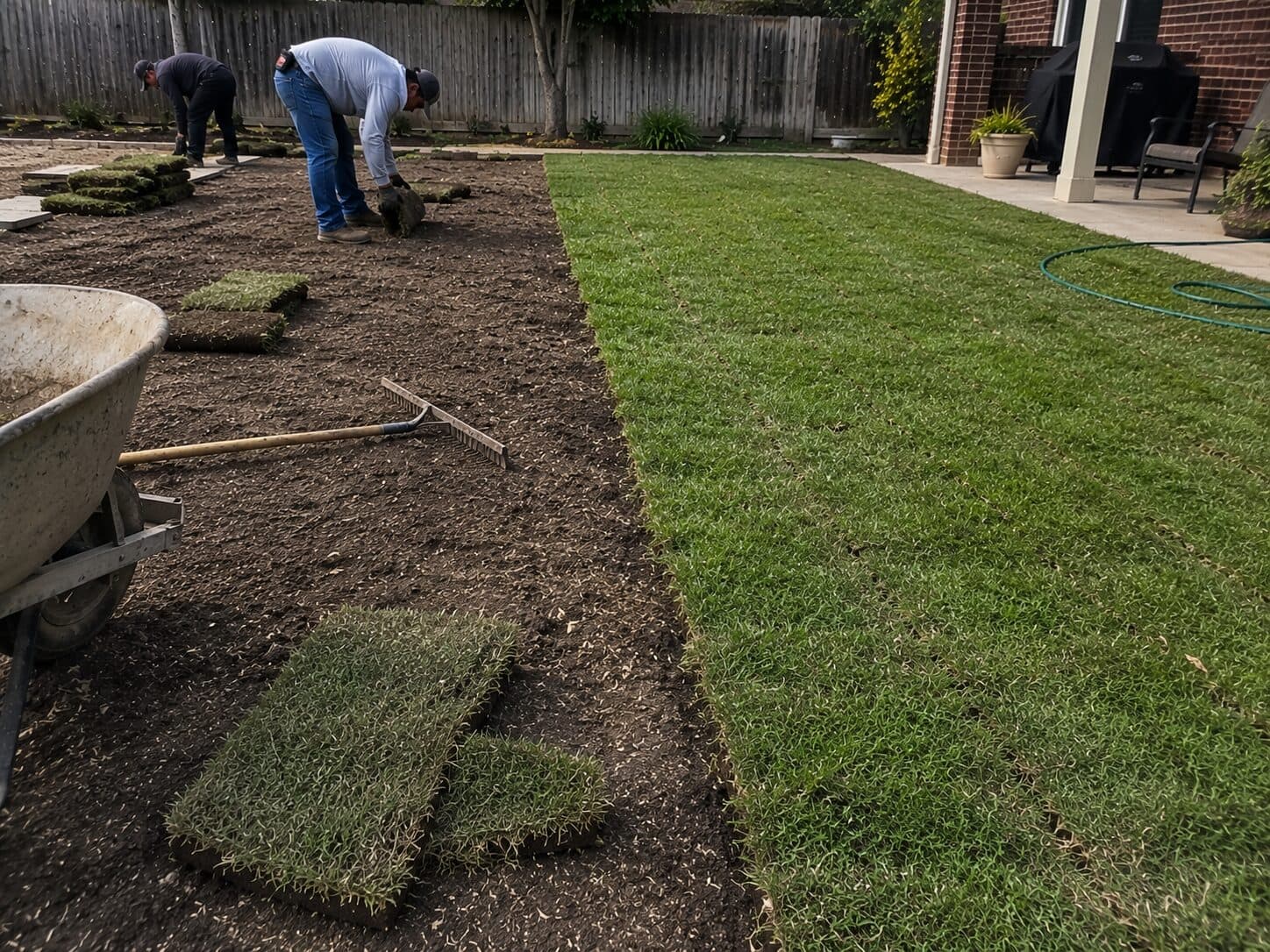
Little Rock pallets cover 450 square feet in USA Sod quotes, and sod is sold in full pallets because it is cut to order. Delivery is a flat $200 on any sod order. Installation is offered in Little Rock, priced per pallet and depending on order size; enter your ZIP code for your rate. In the Little Rock market, an on-site measurement is $99, credited toward your sod order.
Know whether your yard is sunny, shady or busy? Plan your Little Rock lawn in the lawn designer or call 1-866-886-2763.
Sources