Written and checked by the USA Sod team · Published November 26, 2026
New sod is rooted when you gently tug a corner and it holds instead of lifting free. That usually takes about 2 to 3 weeks. St. Augustine, Bermuda and bahia generally peg down in 14 to 21 days; zoysia roots slower than Bermuda.
Once it holds, you can start mowing.
| Grass | Commonly offered in San Antonio, Jacksonville or Charlotte | Typical rooting time | First mow | Source |
|---|---|---|---|---|
| St. Augustine | Floratam, Palmetto, ProVista | 14 to 21 days | After it pegs down, generally 14 to 21 days after planting | UF/IFAS; USA Sod |
| Bermuda | TifTuf, Tifway 419, Celebration | 14 to 21 days | After it pegs down, generally 14 to 21 days after planting | UF/IFAS; USA Sod |
| Zoysia | Zeon, Emerald, Palisade | Usually 2 to 3 weeks; slower to root than Bermuda | Once the edges no longer lift when pulled | UF/IFAS; Purdue; UF/IFAS; USA Sod |
| Centipede | Centipede | Generally 2 to 3 weeks | When a gentle tug does not pull it up easily | UF/IFAS; USA Sod |
| Bahia | Bahia | 14 to 21 days | After it pegs down, generally 14 to 21 days after planting | UF/IFAS; USA Sod |
| Tall fescue | Tall Fescue | No grass-specific figure; sod in general typically roots in 2 to 3 weeks | Start at a 2-inch height once it averages 3 inches tall | University of Maryland; UT Extension; USA Sod |
Which of these you can get depends on your market, so check your ZIP for today's list.
What "rooted" or "pegged" means
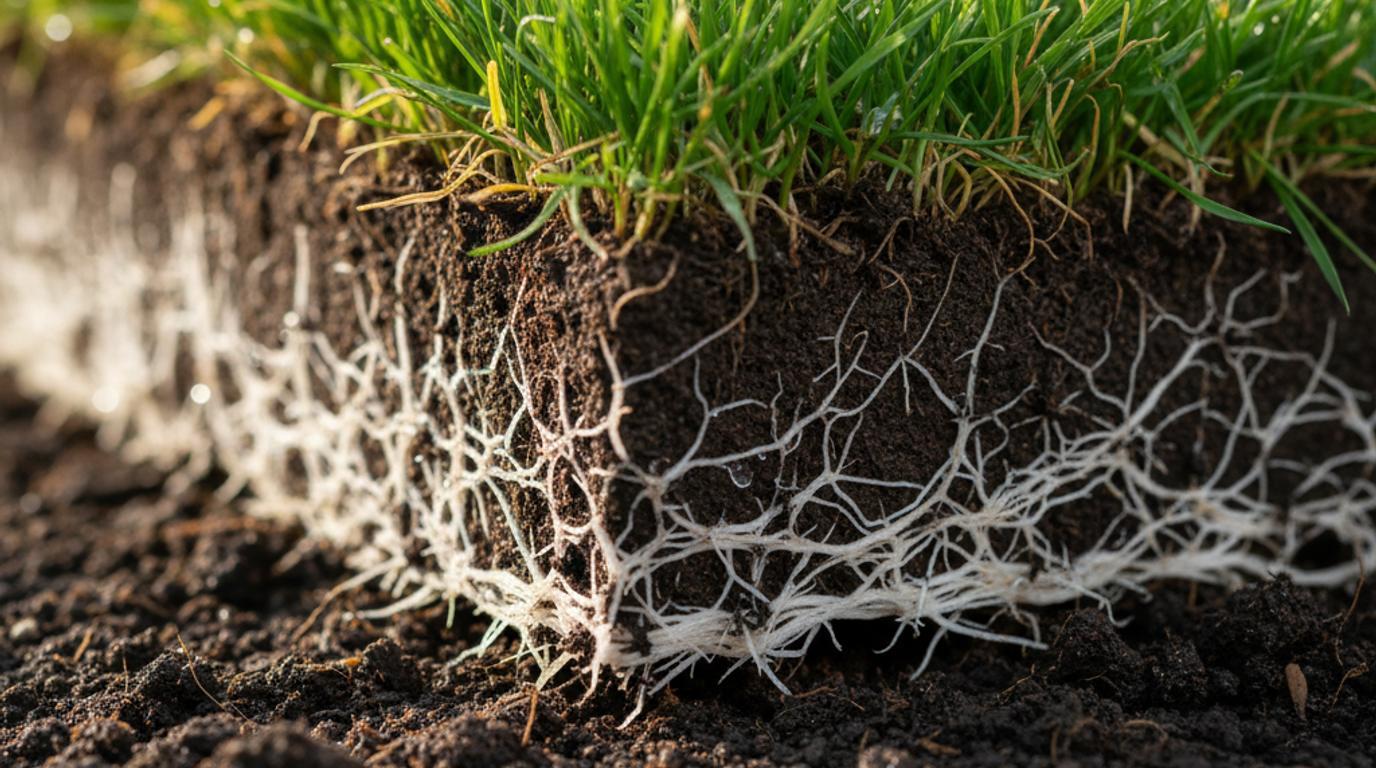
Rooting is the new roots working down into the soil underneath. Turf people call it pegging: the sod is pegged once you cannot pull it up without real effort. At that point, new roots are holding the pieces fast to the soil.
Until then, keep foot traffic off the new lawn.
How to do the tug test
- Pick a corner or an edge. That is where unrooted sod still lifts.
- Lift gently. Pull up on the corner without yanking.
- Feel for resistance. If the piece fights back, roots have started reaching into the ground. If it comes up easily, it is not ready yet.
- Look underneath. Fresh, white roots are the sign you want.
- Check the soil too. While you have the corner up, feel the soil under it. It should be moist.
If the seams opened up while you waited, see gaps between sod pieces.
What speeds up or slows down rooting
- Moisture. Rolling and a thorough watering press the roots against the soil so they take hold fast; see how to install sod.
- Season, warm-season grasses. Zoysia and Bermuda laid in early to midsummer put down roots quickly, because the grass is actively growing then.
- Season, cool-season grasses. Fall is the best time to lay tall fescue. More on that grass in the tall fescue sod guide.
- Winter and dormancy. Sod laid in winter may arrive dormant, and dormant is not dead (see why sod arrives brown). Keep dormant sod moist even though it is not growing, and expect new roots to show up in early spring.
When to mow for the first time
Hold off until the sod passes the tug test. Then:
- Use a sharp blade so you cut the grass instead of tearing and pulling it.
- Skip mowing while the grass is wet when you can.
- Set the deck a little higher than your normal height for a few cuts, to avoid scalping the new lawn.
- Never remove over a third of the blade height in one mowing.
For the right height by grass, see what height to mow St. Augustine, zoysia, Bermuda and centipede.
When to cut back the watering
Zoysia sod gets watered at least twice a day until new roots hold it fast, then only as needed. For St. Augustine, the lawn should be fully established three to four weeks after it goes down, and watering can then switch to as needed. The full day-by-day plan is in how often to water new sod.
Hold the fertilizer too: give it at least 30 days from laying. Most sod was fed before harvest. For weed products, see whether you can use pre-emergent on new sod.
Common questions
How long after laying sod can I walk on it?
Stay off it until it is fully rooted, typically 2 to 3 weeks. Do a tug test first.
Can I mow new sod before it roots?
No. Wait until it pegs down, generally 14 to 21 days for St. Augustine, Bermuda and bahia.
Why is my winter sod not rooting?
Dormant sod is not actively growing, so new roots may not show up until early spring. Keep it moist in the meantime.
When can I fertilize new sod?
Give it at least 30 days from the day you lay it. Most sod already got fertilizer before it was harvested.
Planning a new lawn?
Sod is cut to order. Lay and water it the day it arrives and give it 2 to 3 weeks to root. When you are ready, get an instant quote for your yard.
Sources
- UF/IFAS: St. Augustinegrass for Florida Lawns
- UF/IFAS: Bermudagrass for Florida Lawns
- UF/IFAS: Zoysiagrass for Florida Lawns
- UF/IFAS: Centipedegrass for Florida Lawns
- UF/IFAS: Bahiagrass for Florida Lawns
- UF/IFAS: Establishing Your Florida Lawn
- University of Maryland Extension: Starting a New Lawn
- UT Extension: Turfgrass Establishment, Sodding and Plugging
- Purdue Extension: Establishing a Lawn from Sod
- Illinois Extension: Planting a New Lawn