Written and checked by the USA Sod team · Published November 23, 2026

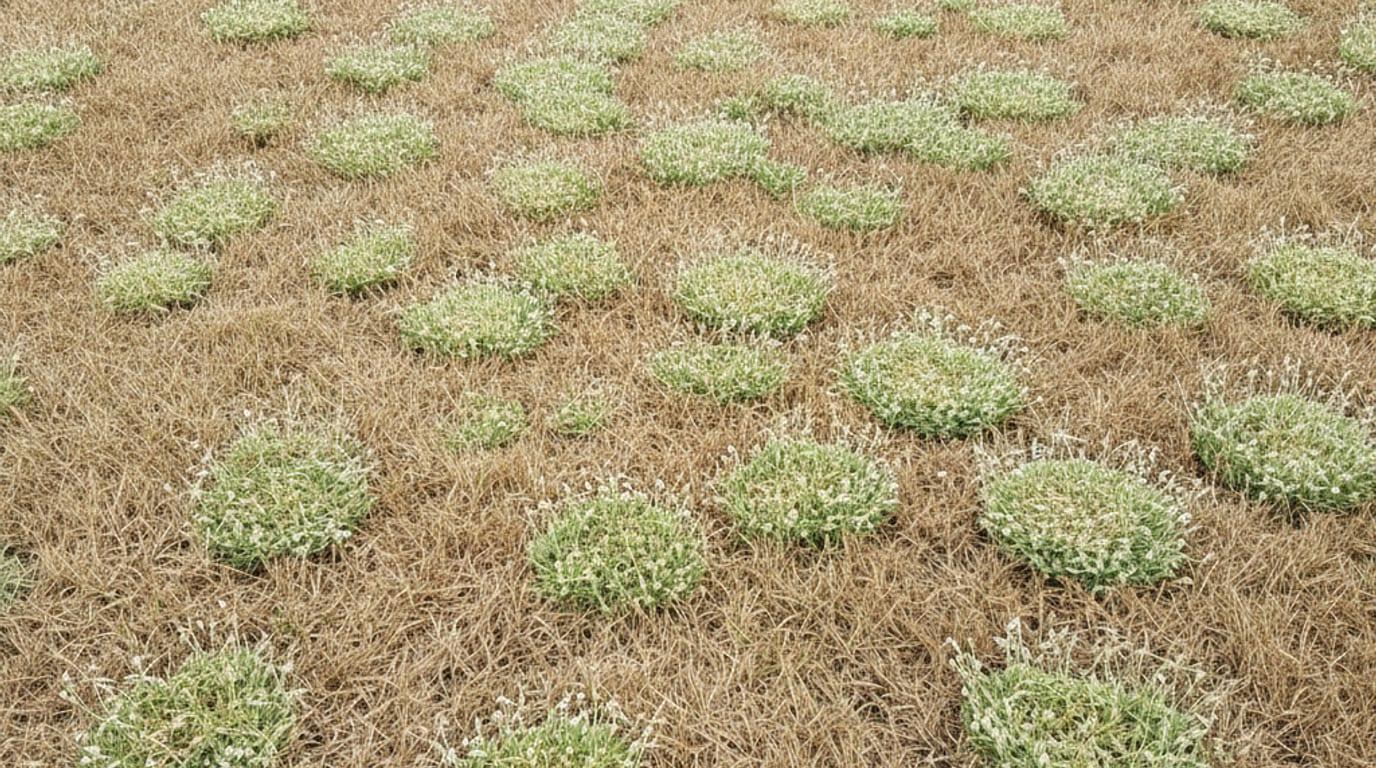
Poa annua is a cool-season weed that sprouts in fall and keeps growing while your warm-season grass is dormant, so its light green clumps stand out in a tan lawn until it usually dies in summer in warmer areas.
Limit next year's crop with a pre-emergent put down at the end of summer or start of fall, and use pulling, bagged clippings and smart watering to hold it back.
What poa annua is
Poa annua, also called annual bluegrass or just poa, ranks among the most common weeds in home and commercial lawns. It is a winter annual. Its seed sprouts at the end of summer or in early fall once the soil cools below 70° F. The young plants grow through fall, live through winter and make seed in spring.
Not every poa plant is a true annual. Some are a longer-lived perennial type, which is more common in turf that is mowed low, watered often and fed heavy nitrogen.
How to spot poa in a dormant lawn
Poa is a cool-season grass, so it stays green while a dormant warm-season lawn around it turns tan. Look for these signs:
- Color: a lighter green than most lawn grasses.
- Shape: dense, low clumps that spread.
- Seed heads: branched seed heads that are often pale, which it can make even in a lawn that is mowed often. Most seed heads appear in spring.
- Leaves: a leaf tip shaped like a boat's bow, and blades that are often crinkled partway down.
- A bumpy lawn: in cool weather poa outgrows warm-season grass, so the lawn can look uneven within two days of mowing.
Why it shows up in winter
Bermuda, zoysia and other warm-season grasses go dormant as the weather cools, and their color shifts from green to tan or brown. Poa does well with cool weather and short days, and it can outcompete other lawn grasses in late fall and early spring. Its winter growth habit gives it an edge over warm-season grass in the cool season, which is why poa outbreaks look worst in winter. In many cool-season lawns it blends in, but it stands out most in grass that is mowed close, such as bermuda.
If you are not sure your own grass is just dormant, see when zoysia grass goes dormant and when centipede grass goes dormant.
Poa spreads fast because it makes so much seed so quickly. A single small plant can make roughly 100 seeds within eight weeks. New seedlings keep sprouting through winter in several flushes. Birds, foot traffic, mowing and cultivation all carry the seed around, and seed can sit dormant in the soil for years before it sprouts.
Why it often dies out in summer
Poa flowers for several months in spring. Its roots are weak and shallow, so it needs frequent rain or irrigation to live. Where the climate is warm, it usually dies in summer. It may survive where it is irrigated and pests are controlled, especially the perennial type.
What to do about poa annua
This winter and spring
- Pull single plants early. Remove single plants before they set seed. Hand pulling works when you keep at it, since new seedlings tend to fill the gaps, and it is a realistic option for a home lawn.
- Bag your clippings while seed heads are showing. Collecting clippings then cuts down on the seed that spreads.
- Do not feed the dormant lawn. Fertilizing dormant grass while poa is actively growing can make the problem worse.
- Clean your mower. Cleaning equipment after you mow an infested area helps keep poa from spreading to clean areas.
- Know the limits of weed killers. A few post-emergent herbicides control poa, but no one product can be used on every lawn grass, and they have done little good as the only control.
Next fall: time the pre-emergent
- Apply it before poa sprouts. Put a pre-emergent down at the end of summer or in early fall, as the soil cools below 70°F.
- Plan a winter follow-up. A second application in winter can catch plants that sprout later.
- Know what it will not do. A pre-emergent will not kill poa plants that are already up, and it will not stop perennial types from spreading.
- Water it in. Pre-emergents need rain or irrigation to move into the soil.
- Skip it where you plan to patch. Do not use a fall pre-emergent on areas you need to reseed or resod within several months.
- Read the label. Always read the label directions before you apply.
Habits that keep poa out
- Water deep and less often. Deep, infrequent watering works against poa's shallow roots. Wait to water until your grass first shows signs of drought stress, instead of keeping the surface wet.
- Do not overwater shade. Overwatering, especially in shady spots, sets a lawn up for poa.
- Mow at the right height. Mowing too low can stress the lawn and make it less able to compete, and scalping thins turf so weeds like poa can move in.
- Give aeration time to heal. Warm-season lawns should recover fully from summer aeration before poa starts sprouting in fall.
- Ease off nitrogen when poa sprouts. Cut back nitrogen during peak poa germination.
- Keep the lawn thick. A dense lawn shades the soil and makes it harder for poa seedlings to take hold.
Put these steps on your lawn care schedule so the fall pre-emergent date is not missed. For other cold-season trouble, see common winter lawn problems.
Common questions
Will poa annua go away on its own?
The annual type usually dies in summer in warmer areas. Its seed can stay dormant in the soil for years before it sprouts.
Is poa annua the same as Kentucky bluegrass?
No. Kentucky bluegrass is a cool-season lawn grass. Poa is a weed that, unlike Kentucky bluegrass, can survive mowing under 1 inch and still make seed.
Can I put down a pre-emergent now?
It will not kill poa that is already growing. If you applied one in fall, a second application in winter can control plants that sprout later.
Get thin spots ready for spring
A thick lawn makes it harder for poa to take hold. If winter has left thin or bare areas you plan to fix with sod, leave those spots out of any fall pre-emergent and get an instant quote for your yard. Your quote uses the pallet size for your ZIP code.
Sources