
Written and checked by the USA Sod team · Published November 19, 2026
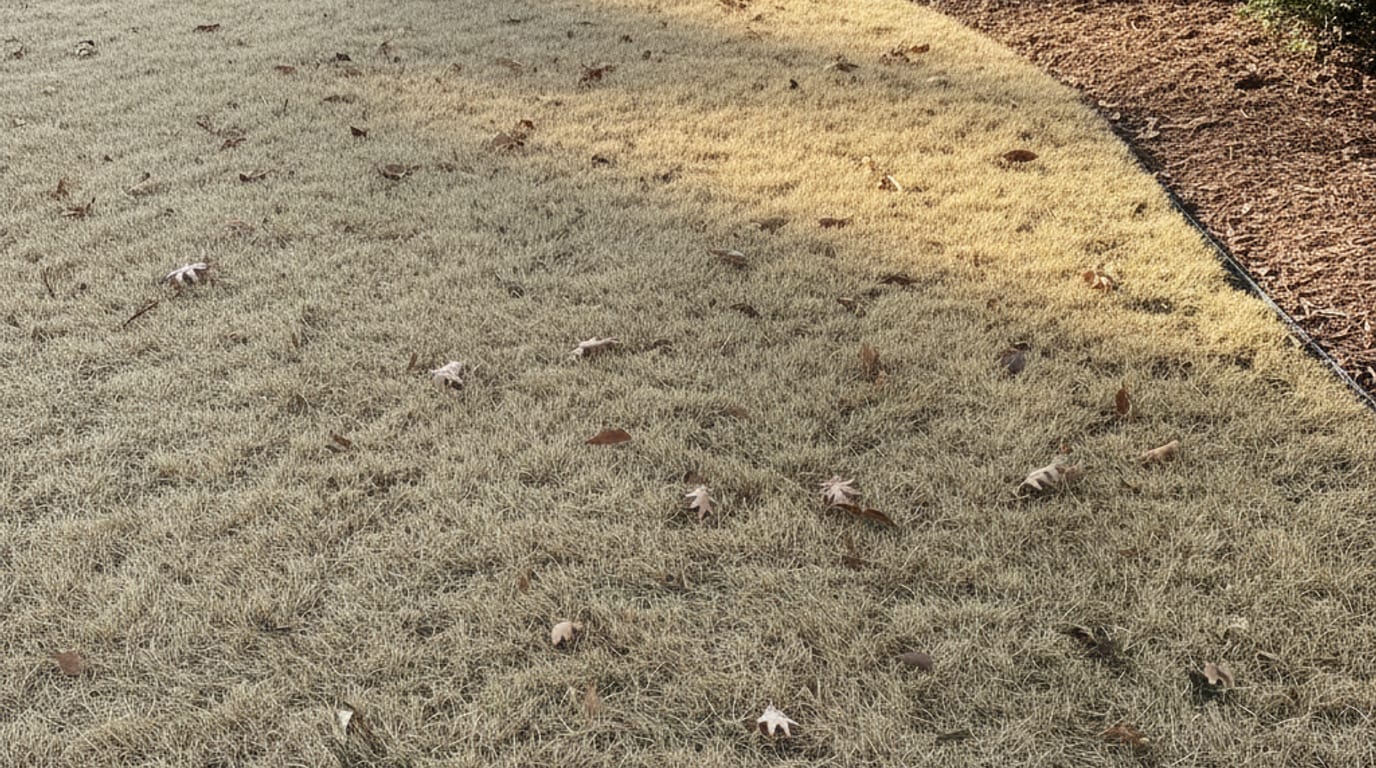
To prepare zoysia for winter, give it its last nitrogen 4 to 6 weeks or more before the historic first frost date where you live, keep mowing at its normal height until it stops growing, cut back on water, and avoid walking on it as much as you can while it is frozen. In spring, hold off on fertilizer until the lawn is fully green again. The steps below run from fall through spring green-up.
Zoysia is a warm-season grass, so winter is its rest period. If you are not sure whether your brown lawn is resting or dead, start with when zoysia goes dormant. This guide covers what to do from fall until the lawn wakes up.
Fall: stop nitrogen on time
Your final nitrogen of the year belongs 4 to 6 weeks or more before your county's historic first frost date. Fertilizing too late in the year can slow the lawn's regrowth the next spring.
Late nitrogen also feeds disease. Nitrogen put on zoysia in late fall, or in early spring, clearly raises the risk of large patch. Large patch is most active in fall, but its patches are often easier to see in spring as the grass comes out of dormancy. Heavy fall nitrogen also adds to take-all root rot pressure. Large patch tends to come back in the same spots year after year. When the weather favors the disease, a preventive fungicide may be worth it. In fall, time it at roughly the same point as a fall preemergence herbicide, once soil temperatures drop to 70°F for 5 days in a row.
Slow-release or organic fertilizers release nutrients gradually, so they allow some leeway on timing.
Mowing going into winter
Keep your usual height as long as the grass is growing: 1 to 2 inches for fine-textured zoysias, up to 2.5 inches for coarse ones. Cutting toward the taller end of that range, without going over it, can help grow deeper roots that handle stress better.
Avoid scalping: ideally, take off no more than a third of the leaf height at one time. Scalping bares the soil, which lets weeds in, and zoysia is slow to fill back in after damage. Once the lawn goes dormant, it stops putting out new leaves and the weekly mowing ends.
Watering a dormant lawn
Zoysia needs less water in fall and winter. As a rule, shut off the sprinklers in the winter months once a warm-season lawn has gone dormant. Watering during winter and early spring can also favor take-all root rot.
The shut-off rule has exceptions: areas where warm-season grass may not go fully dormant, such as south Texas, very dry soils like those in west Texas, sandy soils that drain fast, and newly planted lawns. Keep sod that went down in fall or winter moist.
Winter weeds
Winter is a good time to go after winter weeds. They are easier to control before they mature, and a dormant lawn is less likely to be hurt by the treatment. Broadleaf weeds such as chickweed, dandelion, wild violet and wild onion can be spot sprayed. Read each product label for the weeds it controls and the grasses it is safe on.
Skip the ryegrass: overseeding zoysia with it is not recommended.
Frost, foot traffic and leaves
Hard frosts kill most of the leaf tissue and many of the runners above the ground. That dead layer breaks down slowly over winter, especially where there is a lot of foot traffic. When the lawn is frosty or frozen, walking on it shatters the ice crystals and can cut the leaf blades. To keep the cover thick through winter, avoid walking on frozen turf as much as you can.
Rake up fallen leaves. Clearing them makes the lawn look better and helps prevent disease.
Winter is also a good time for a soil test if you have not done one in three years. If the test calls for lime, put it down in winter: lime takes months to change soil pH, so it helps the lawn sooner in the growing season.
Spring: wait for full green-up
Zoysia loses its color earlier in fall and greens up later in spring than any other turf species, so give it time. Hold off on fertilizer until the lawn is fully green. Feeding too early pushes early green growth that late frosts can damage. Good signs it is time: you have mowed it twice, and the soil 4 inches down stays at 65°F or warmer and is still rising.
Avoid scalping during or right after green-up, because it can injure the lawn. Save dethatching and core aeration for spring and early summer, once the grass is actively growing and can recover fast, and not during frost, heat or drought.
If patches stay brown after the rest of the lawn greens up, check the list of zoysia grass problems. For mowing, water and feeding the rest of the year, see the zoysia grass care guide or our lawn maintenance schedule.
Planning a new zoysia lawn
Zoysia should be planted from late spring into early summer, while it is actively growing. If your lawn came through winter too thin to save, or you want zoysia next season, compare the types of zoysia grass, check your ZIP code for what is commonly offered near you, and price it in the instant quote.
Sources