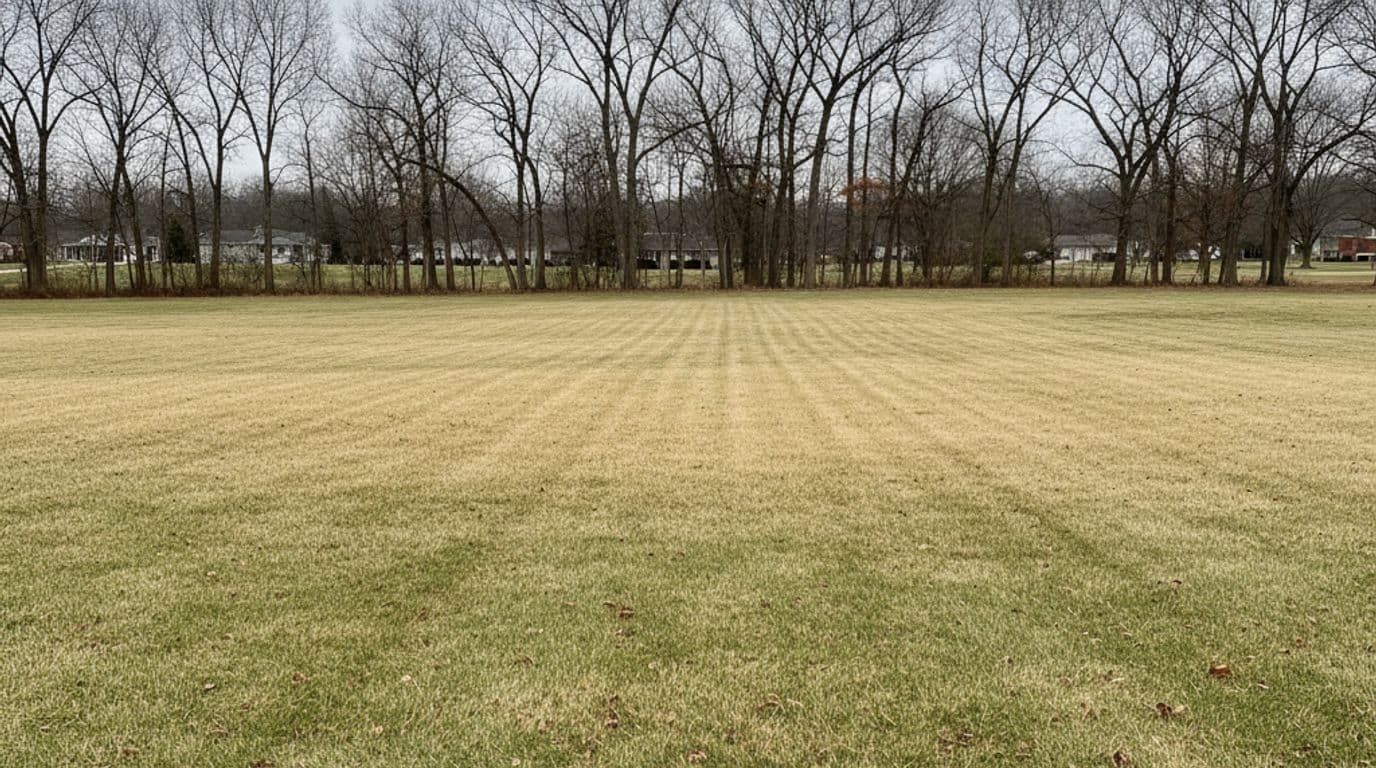
Centipede is a warm-season grass, and like other warm-season turf it turns brown once cold weather sets in and stays dormant through winter. LSU AgCenter puts it simply: "Warm-season turfgrasses turn brown or mostly so when dormant," and adds "there is, however, a difference in brown dead sod and brown dormant sod. Dead sod will still be dead in spring." If your centipede just turned brown, it is almost certainly dormant, not dead, and should green back up as temperatures rise.
If your centipede lawn just lost its green color this fall, here's what's actually happening.
Why centipede turns brown in fall
Centipede, along with the other warm-season grasses used in Southern lawns, slows its growth as the growing season winds down. UGA Cooperative Extension's guidance for warm-season lawns in general says that "as the active growing season comes to an end in August for warm-season grasses, we want to allow growth to slow down in preparation for dormancy." That slowdown is what leads into the brown, dormant look once cold weather sets in, and it is the grass's normal seasonal cycle, not a problem.
Don't fertilize late to try to keep it green
It is tempting to push one more round of fertilizer to hold the green color into fall. UGA Extension warns against this directly: "Fertilizing in September can delay dormancy long enough for warm-season turfgrass to suffer from cold injury." UF/IFAS Extension's publication on centipedegrass adds a related caution for centipede specifically: "Overfertilizing with nitrogen to obtain a dark green color reduces its cold tolerance, increases long-term maintenance problems, and is believed to contribute to centipedegrass decline." Let the grass slow down and go dormant on its own schedule instead of fighting it with late nitrogen.
Dormant vs. actually dead
Brown color alone does not tell you which one you have. LSU AgCenter's distinction holds for centipede the same as any warm-season grass: dormant sod recovers in spring, dead sod does not. If you're unsure which you're looking at, our general guide why sod arrives brown: dormant vs. dead walks through how to tell the difference, and if your lawn shows other symptoms beyond seasonal color, such as patchy thinning or a yellow cast rather than brown, check why is my centipede grass turning yellow to rule those out.
For the rest of the year, our centipede grass care guide covers routine mowing, watering, and the restrained fertilizing centipede actually needs.
Have questions about a centipede lawn that just arrived, or one that's been dormant longer than expected? Call 1-866-886-2763, or check our shipping and delivery policy for what to expect when sod ships dormant in cooler months.