Written and checked by the USA Sod team · Published November 19, 2026
Not necessarily, and maybe not all of it: St. Augustine that turns brown after a freeze is often just dormant, and the real verdict comes in spring, when dead patches fail to green up among the live grass. For an early read, pot a few small plugs in a warm, sunny spot and see if they grow. Do not fertilize to force the color back, and the mower can wait. If spots still have not recovered in spring, replace just those.
Why St. Augustine takes a freeze harder
Any warm-season lawn can brown in a polar vortex freeze, but St. Augustine ranks low for cold tolerance. Zoysia handles cold best, Bermuda comes next, and Centipede is usually hardier than St. Augustine as well.
Part of the reason is how it spreads. St. Augustine has no rhizomes under the soil. It grows by St. Augustine grass runners (stolons) along the surface, which makes coming back from cold damage harder, and grasses that do have rhizomes tend to tolerate cold better. The nodes along each runner hold cells that can grow new shoots and roots, which is how the lawn spreads sideways. North of hardiness zone 8B (around Alexandria, Louisiana), St. Augustine is more likely to suffer freeze damage.
Timing plays a part too. Warm-season grass is easiest to hurt with cold before it has adjusted to fall, or right as it wakes from dormancy at the end of winter or early in spring. Grass that was fully dormant before a freeze will likely come through without lasting harm. Shady spots may be an exception, and so may St. Augustine grown outside the region it is best suited to.
Dormant or dead: how to tell
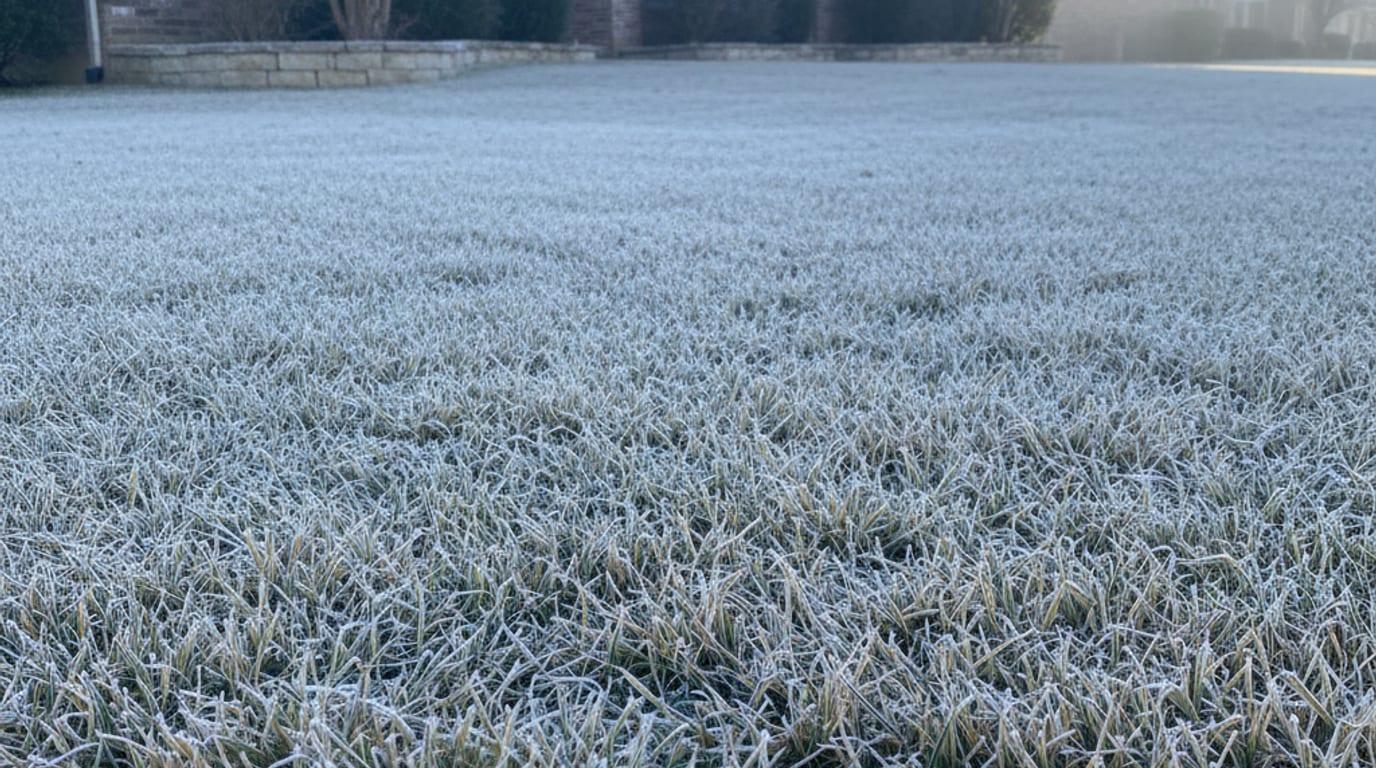
Brown right after a freeze is normal. Cold sends the lawn into winter dormancy, and once days lengthen and temperatures climb in spring, the growing points wake up and push out green growth again.
Try a pot test. Cut a few small plugs with both roots and leaves, plant them in a pot, and set it somewhere warm with natural sunlight. If the grass starts to grow, it survived.
Wait for spring for the final answer. Winter injury usually stays hidden while the weather is cool, then shows in spring as dead patches surrounded by green, growing grass. You will not truly know until the lawn greens up. After one winter with lows in the teens on many nights, late March or early April was judged the likely best time to see how much grass would come back.
Look for rot in soggy spots. Where soil stays saturated through winter, the stolon bases and crowns can rot: they turn dark and soft and separate when pulled.
Do not let the soil dry out. Dormant St. Augustine needs less water than growing grass, but it still needs enough soil moisture, and dry winter winds pull water from the soil. See watering St. Augustine in winter.
What to do after a freeze, and what to skip
Do not fertilize to bring the color back. Let spring green-up happen on its own: feeding after a freeze does more harm than waiting. See St. Augustine lawn fertilizer timing.
In central and north Florida, skip weed and feed over winter. Do not rely on it there to stop weeds before they sprout in winter.
Leave the mower alone, and never scalp. The lawn can go a good while without mowing. Once it needs mowing, set the mower to the tallest height recommended for your grass. Scalping leaves the lawn less able to bounce back from freeze damage.
Stay off frozen or frosty grass. Walking or driving on it crushes the ice crystals into the grass and injures it, and the footprints or tire tracks can show up once the lawn starts growing again.
When to replace with sod or plugs
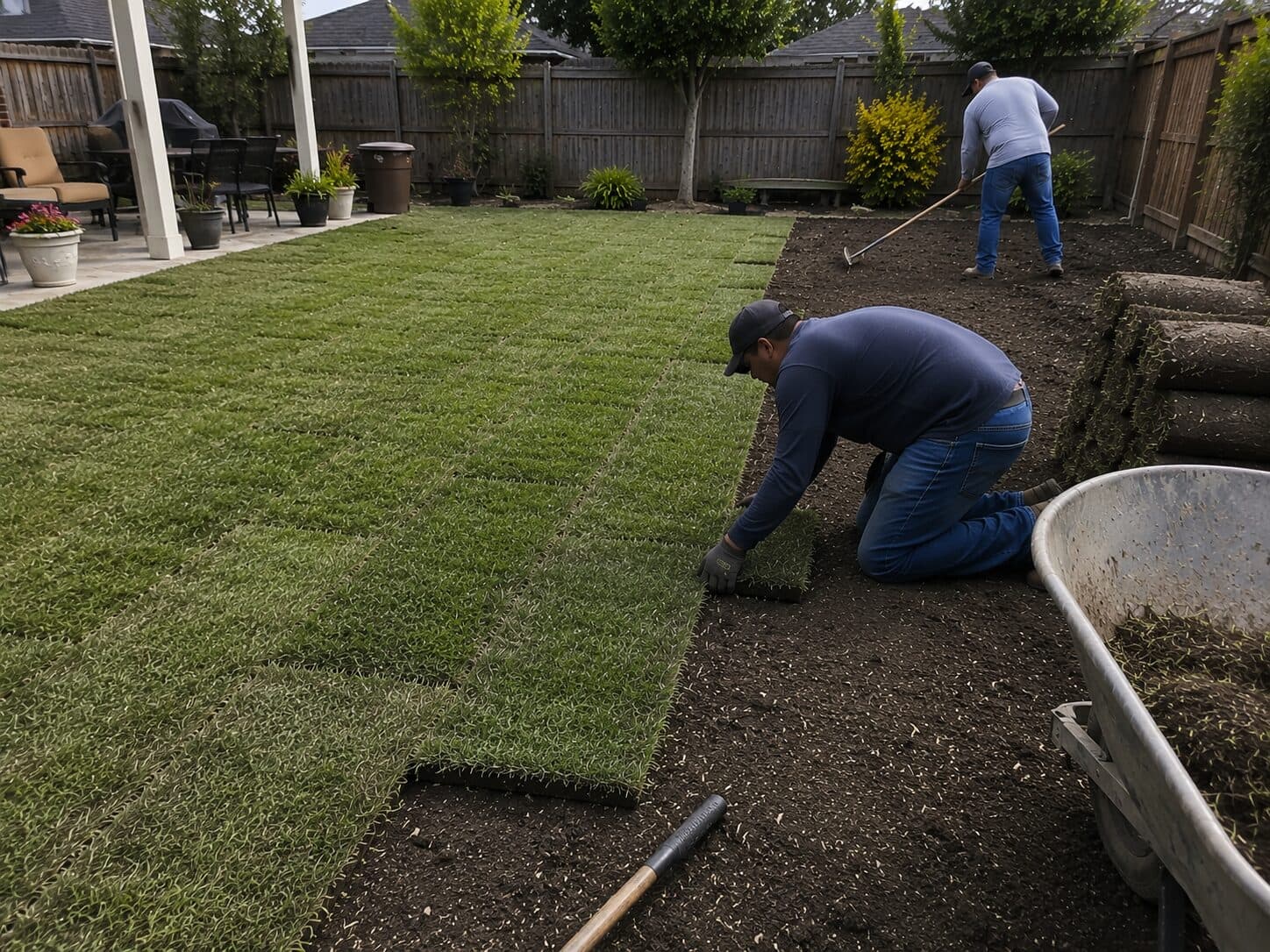
If parts of the lawn do not recover in spring, clear the dead grass out of those spots and fill them with sod pieces or plugs. Do it before weeds get a chance to sprout and claim the bare soil. The damage may be limited to the areas most exposed to the cold.
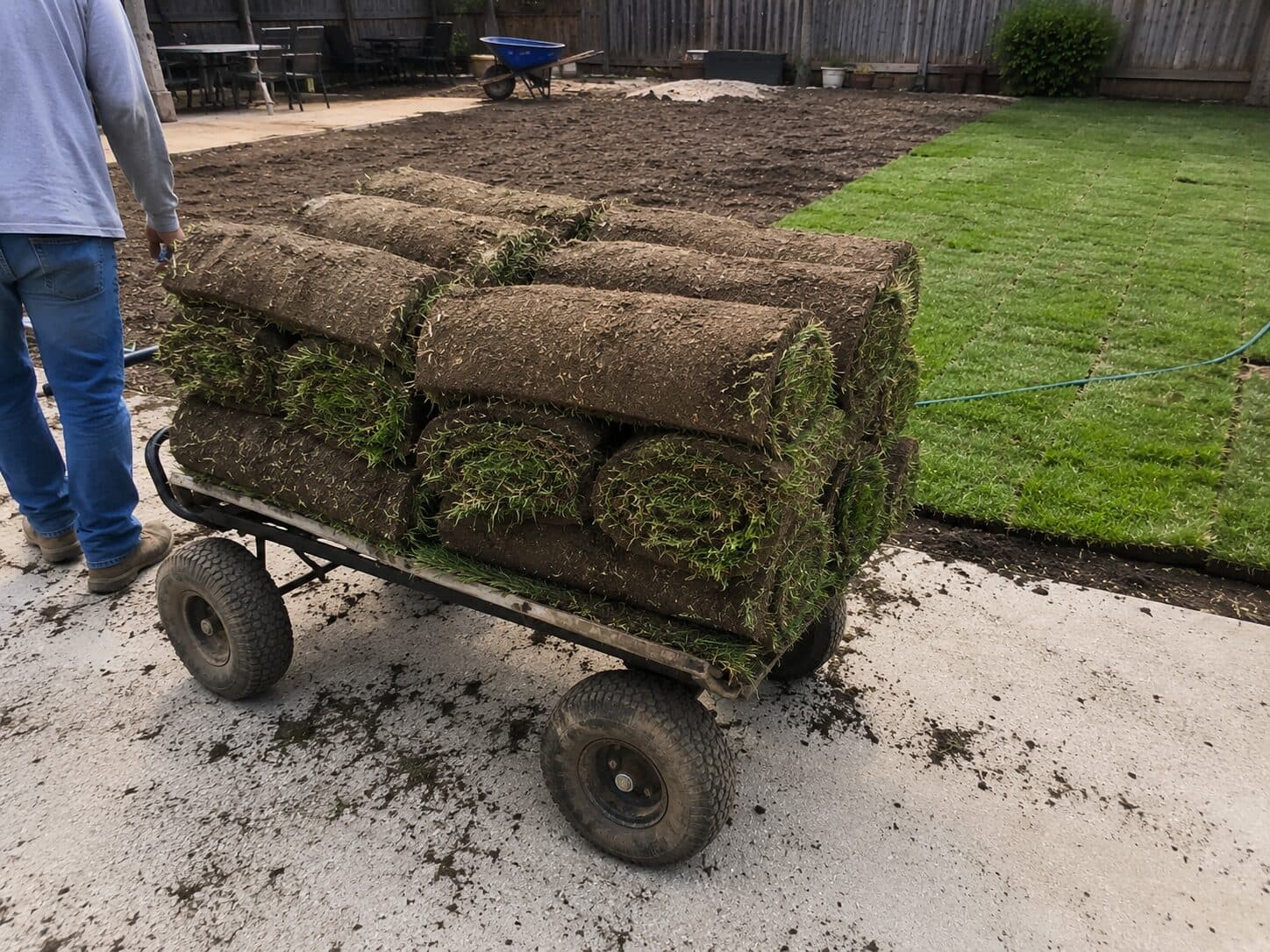
For large bare areas, you can lay sod or set 2-inch plugs 12 inches apart. Sod is the fastest way to a finished lawn because it covers the ground completely. Keep new sod or plugs moist with light watering several times a day until runners form or the sod roots in. Plant while the grass is actively growing, and avoid times when freezing weather is in the forecast.
If St. Augustine keeps freezing out where you live, a more cold-hardy grass such as zoysia is worth considering. And if you order sod in winter, it may arrive dormant; dormant is not dead, as covered in why sod arrives brown.
Lawn too far gone to save? Price new sod in the instant quote.
Sources
- LSU AgCenter: Winter Injury of Warm-Season Turfgrasses
- LSU AgCenter: Turfgrasses, St. Augustinegrass
- LSU AgCenter: Louisiana Home Lawn Series, Winter Turf Decline of Warm-Season Lawns
- UGA CAES Field Report: North Georgia lawns may show cold damage this spring
- UGA Extension, Glynn and McIntosh Counties: Freeze Damage and Pruning
- UF/IFAS Gardening Solutions: How to Help Your Lawn Survive the Chill
- UF/IFAS Extension Nassau County: Most of my St. Augustine lawn looks dead. Will I have to replace all of it?
- UF/IFAS Extension: St. Augustinegrass for Florida Lawns (ENH5)