Written and checked by the USA Sod team · Published November 23, 2026
Turf that peels back like a carpet over white, C-shaped grubs likely means grub damage; blades that slip off with a dark, rotten-smelling base or carry dull tan spots point to a fungus such as brown patch.
Do both checks at the edge where brown turf meets green turf.
Why brown spots fool people
Insects, lawn diseases, fertilizer or herbicide mistakes and dog urine can all leave damage that looks alike. So confirm insects are the cause before you treat for them. Light grub feeding turns turf yellow, and that is hard to pin down.
Check 1: the tug test for grubs
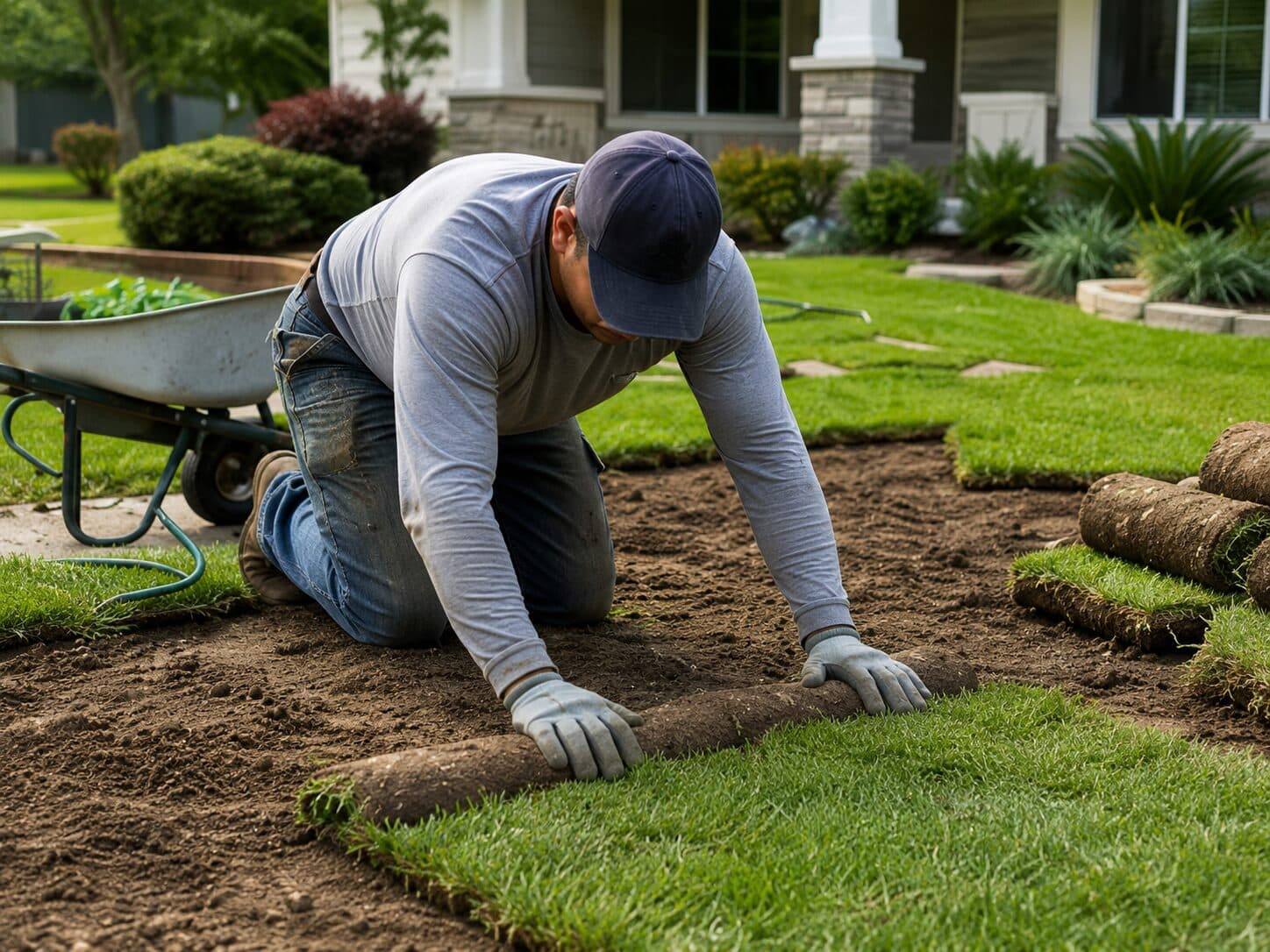
Slice about 2 inches down on three sides of a square foot of turf, then fold that flap back. If it pulls away from the soil easily, few or no roots are left. Where grubs are thick, they eat the roots and the turf can roll back like a carpet.
What white grubs look like
White grubs are scarab beetle larvae, including masked chafers and May and June beetles. They lie curled in a C shape, measure about ½ to 2 inches, and have six legs. Look in the soil right under the thatch, where they chew on grass roots.
How many grubs is a problem
Count the grubs in that square foot. More than about 6 may call for control, and 5 or fewer do not need treatment.
Birds, skunks and raccoons tearing up turf in fall can be a grub clue, but they also dig for earthworms, so dig and look yourself. Beetles flying near lights at night are another hint, though they may fly in from far away.
Check 2: the leaf test for brown patch
Pull a few blades along the outer rim of the patch. If a blade slides off its stem easily and its base looks dark and smells rotten, a fungus is the likely cause. Then look at the leaves: brown patch makes dull tan spots that may get a reddish-brown rim.
New patches can look purplish green at first, then fade to dull tan or brown in taller turf. Grass the fungus kills often turns light brown and brittle, without a wet, greasy look. In warm-season grass the patch border is often darker, sometimes orange, and the middle turns brown and sinks.
If you find no grubs but the leaves show these signs, a fungus is the likely cause. Your county Extension office can help confirm which fungus it is.
Which grass and which season
Brown patch is a hot-weather disease of cool-season grasses such as fescue, ryegrass and bluegrass. It is common from 75°F to 95°F, and the fungus colonizes leaves best at 85°F to 90°F when humidity is high or leaves stay wet for long stretches.
On Bermuda, zoysia and St. Augustine, the same fungus causes large patch, which is sometimes called brown patch. In Florida, large patch shows up mostly when temperatures drop below 80°F, usually from November to May, and it is especially a problem in St. Augustine and zoysia.
Grubs eat the roots of every lawn grass, and bluegrass and ryegrass are hit hard. Heavy grub damage usually shows between late summer and early fall, especially when the lawn is stressed, such as by drought. Overwatering can draw egg-laying beetles, mainly when the yards around you are dry.
That means a brown area in a warm-season lawn in early fall could be either one, so run both checks.
| Grub damage | Brown patch (called large patch on warm-season grass) | |
|---|---|---|
| Tug test | Turf lifts off the soil with few roots | Blades slip off; leaf base dark and rotten-smelling |
| What you find | White, C-shaped grubs under the thatch | Dull tan leaf spots, dark, rotten-smelling leaf bases |
| Grasses | All lawn grasses | Fescue, ryegrass, bluegrass; large patch on Bermuda, zoysia, St. Augustine |
| Season | Late summer to early fall | Hot, humid weather; large patch below 80°F, November to May in Florida |
What to do if you found grubs
Treat only when the count is high enough to hurt the lawn. Once you know the pest, ask your county Extension office which treatment fits it. Insect-killing nematodes can control grubs with little harm to other organisms, and they need warm, moist soil of at least 60°F. If you use a grub insecticide, water after you apply it so it moves down into the soil.
Then water and fertilize the lawn properly, and overseed it. A healthy lawn needs few pesticides, if any. For watering and feeding through the year, see the lawn care schedule.
What to do if it is brown patch
Water before dawn or early in the morning so leaves dry fast, and only when the lawn needs it. Where you can, cut back shade and improve drainage and aeration. Go easy on nitrogen, since heavy feeding makes the disease worse. Mow the sick area last and clean the mower blades after, so you do not carry the fungus to new spots.
Warm-season turf that is otherwise healthy usually fills the patches back in over one or more growing seasons. For fungicide timing and the full plan, see how to treat brown patch in your lawn. On a St. Augustine lawn, pair this with good St. Augustine grass care, and on zoysia, check the other zoysia grass problems too.
If neither check turns anything up, work through the lawn problems and solutions guide.
Ready to replace dead turf
Lawn too far gone to save? Price new sod for your ZIP code in the instant quote. Stock changes week to week, so your ZIP code shows today's list.
Sources