For a yard that gets played on every day, Bermuda is the grass to beat. TifTuf, Celebration and Tifway 419 take heavy wear and grow back fast in full sun. Zoysia is the choice where there is some shade and the play is lighter, because it is dense but slow to repair. St. Augustine is the one to avoid for hard play. In northern markets, Kentucky Bluegrass repairs itself and Tall Fescue does not, but fescue takes shade.
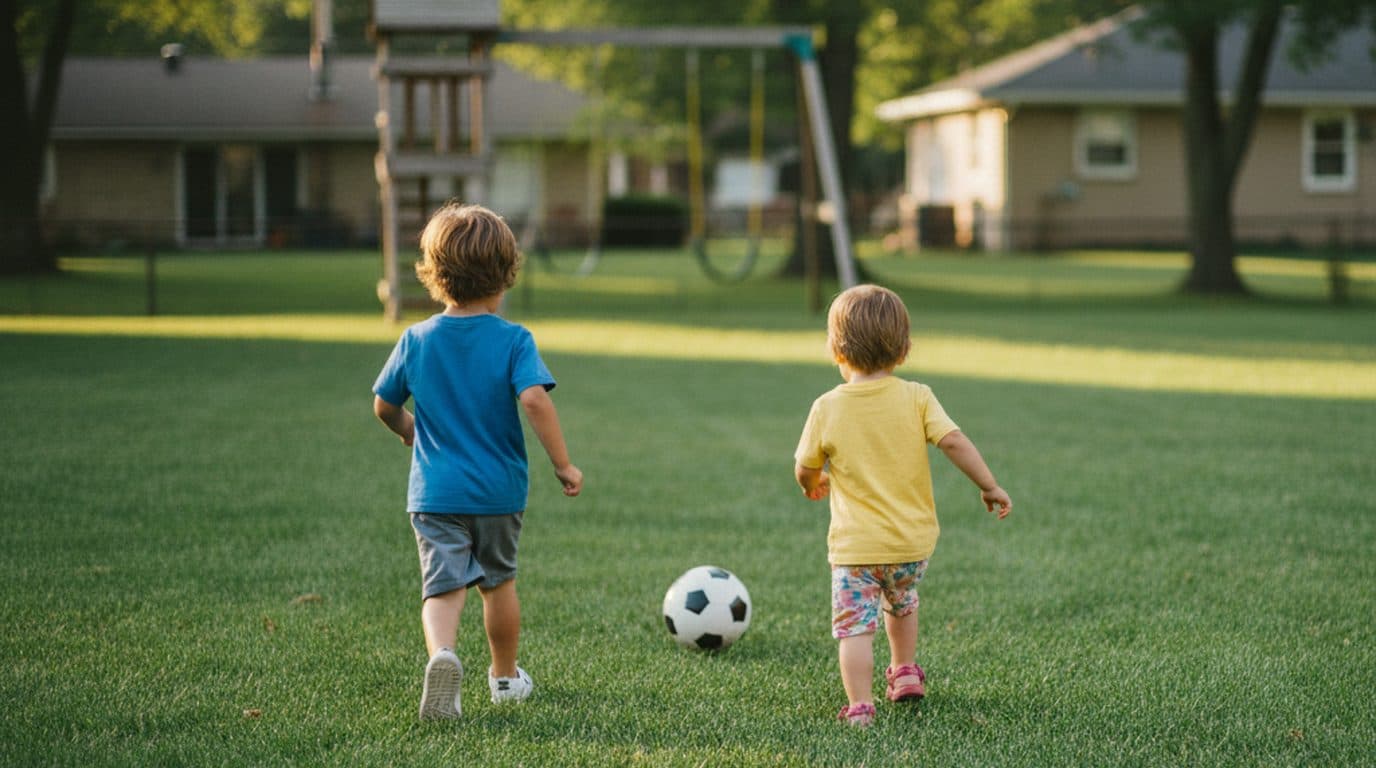
Kids do two things to grass: they wear it down in the same spots, and they do it every day. The grass that wins is the one that grows back fastest, not the one that looks best on day one.
The short answer
Full sun and hard play: Bermuda. Some shade and lighter play: Zoysia. Trees everywhere: St. Augustine, and lower your expectations for the goal mouth. Up north: Kentucky Bluegrass in sun, Tall Fescue in shade.
What "high traffic" actually does to a lawn
A play yard fails in the same predictable places: under the swing, at the trampoline ladder, along the fence where the dog and the kids both run, and in the goal mouth. Those spots get compacted, the blades get crushed, and the crowns of the plant get damaged.
Two things decide whether the grass survives that:
- Wear tolerance. How much abuse the blades and crowns take before they die.
- Recovery. How fast the grass fills the bare spot back in. Grasses that spread by runners repair themselves. Grasses that grow in clumps do not.
Recovery matters more than toughness. Every grass gets worn. The good ones grow back.
Ranked for kids, warm-season markets
1. Bermuda
Bermuda spreads by runners above and below ground, so it fills bare spots on its own. It also takes heat and drought, which is why it is on sports fields across the South.
- Bermuda TifTuf. The first pick. Drought-tough and quick to recover, and one of the best choices for dogs too.
- Celebration Bermuda. Darker green, a little more shade-tolerant than the others, still tough.
- Bermuda Tifway 419. The fine-textured classic. Wants full sun and frequent mowing.
The catch: Bermuda needs full sun and regular mowing. It thins fast under trees. See types of Bermuda grass for the differences.
2. Zoysia
Zoysia grows dense and low, which feels good under bare feet and resists weeds. Zeon and Zorro take partial shade. Empire and Palisade have a coarser blade and take heat well.
The catch: Zoysia is slow. It takes longer to establish and longer to repair a worn spot. It suits a yard with kids who play on it, not a yard that is the neighborhood field. Types of Zoysia grass compares them.
3. St. Augustine
St. Augustine is the shade grass of the South, and it is a poor traffic grass. It spreads by above-ground runners that crush easily, and worn patches come back slowly. If your yard is under trees, it may still be your only option. Keep the play in one area and accept some bare ground there.
Best grass for shade covers how much shade each grass really takes.
Ranked for kids, northern markets
- Kentucky Bluegrass. Spreads by underground rhizomes and repairs itself. Wants full sun and steady water. The classic playground grass where it grows.
- Tall Fescue. Deep-rooted, takes shade, and stays green longer into summer. It grows in clumps, so a worn spot stays worn until you overseed it.
In many yards the honest answer is bluegrass in the open and fescue under the trees. Tall Fescue sod guide covers where it grows and how to keep it.
Plan the yard, not just the grass
The grass choice is half of it. The layout is the other half.
- Put the play in the sun. A swing set under an oak is a bare patch waiting to happen, whatever you plant.
- Move things that stay put. A trampoline or kiddie pool in one spot all summer kills whatever is under it. Slide it a few feet every couple of weeks.
- Give paths a surface. Where the kids run the same line every day, from the gate to the back door, consider stepping stones or mulch. No grass survives a daily lane.
- Mow a little higher. Taller grass has more leaf to absorb wear and shades its own crowns. Keep it near the top of the range for your variety.
- Water in the morning. Wet grass at night is how fungus starts, and a fungus patch is a bare patch.
Kids, bare feet and lawn chemicals
Bare feet notice texture. Fine-bladed Bermuda and Zoysia feel soft. Coarser grasses feel scratchy to small feet, which is a real consideration for a toddler yard.
On weed killers and pesticides, be conservative. New sod does not need them for the first several weeks, and a healthy, thick lawn crowds out most weeds on its own. If you do treat the lawn, follow the label and keep the kids off until it says they can go back on. When in doubt, spot-treat instead of covering the whole yard.
How many pallets a play yard takes
Measure the play area in square feet and add 5 to 10 percent for cutting and fitting. A pallet covers 400 to 600 square feet depending on the farm that cuts your order, and our checkout uses the real size for your market. How many pallets of sod do I need? walks through the measuring.
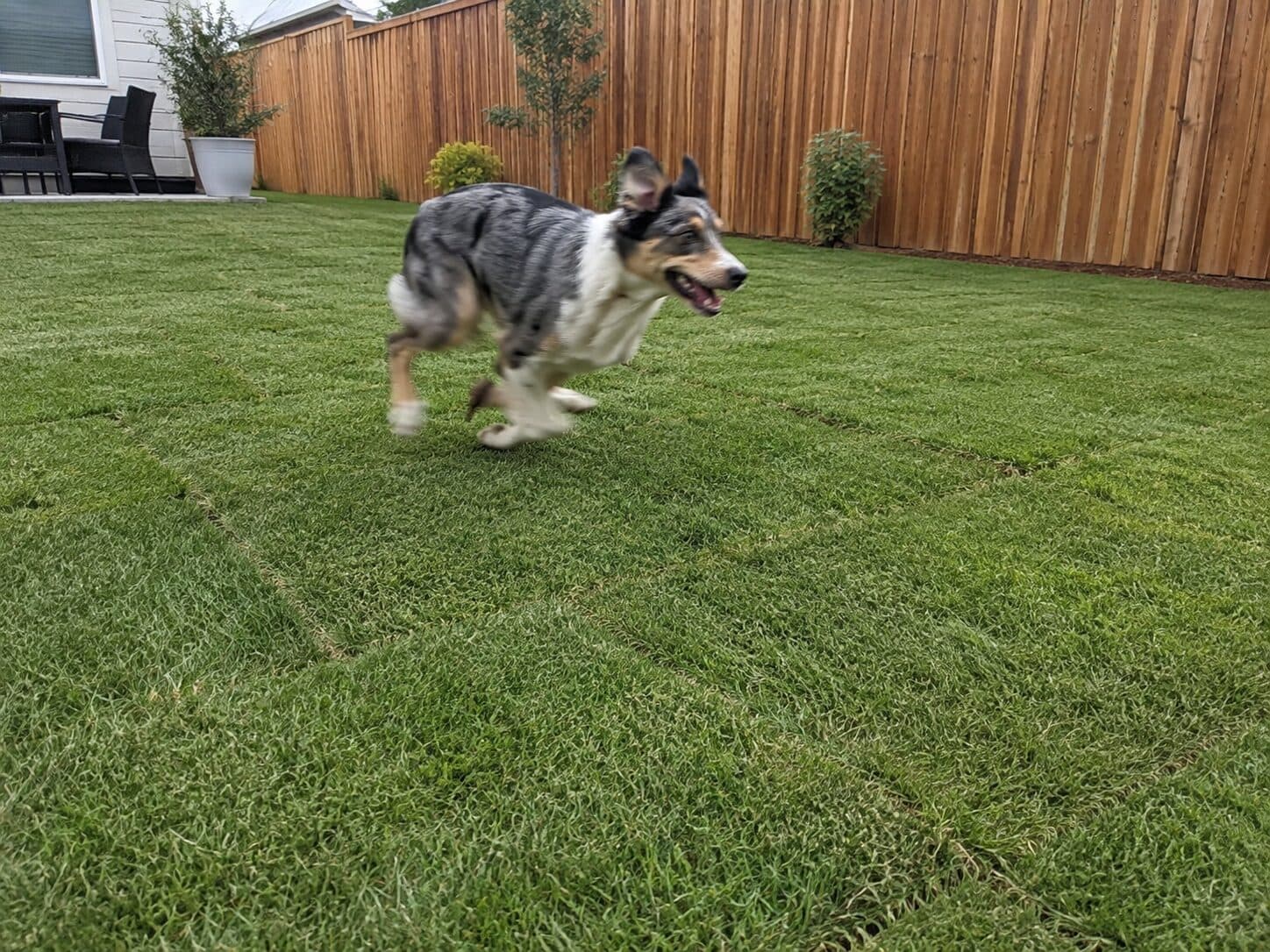
If the kids share the yard with a dog, best grass for dogs lands on the same answer for the same reasons: Bermuda first, Zoysia second.
The bottom line
For a yard that gets used, pick the grass that grows back. Bermuda in sun, Zoysia in part shade, St. Augustine only where trees leave no choice. Up north, bluegrass in the open and fescue in the shade. Then put the swing set in the sun and move the trampoline.
Check your ZIP code to see which of these varieties we cut for your area, or call 1-866-886-2763 and tell us how the yard gets used.