
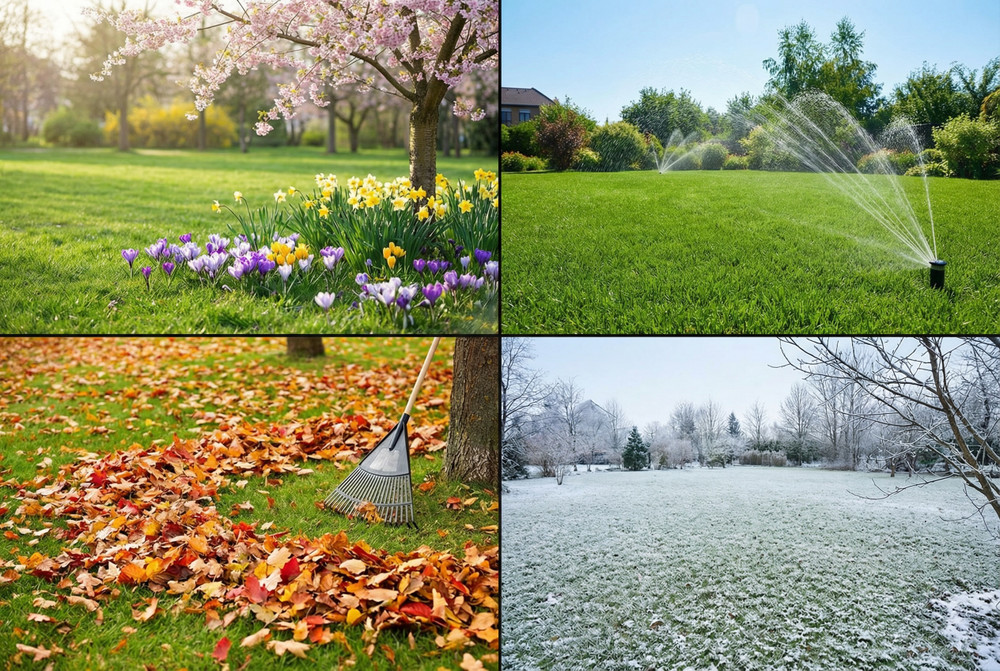
Complete Lawn Maintenance Guide: Year-Round Care Calendar
Author: Travis Chulick
Date: Feb 8th 2026
Effective lawn maintenance follows a four-season cycle tailored to your grass type. It starts with spring pre-emergent weed control as the soil warms to 55°F, followed by strategic summer mowing and watering. The cycle continues with fall feeding and repairs to build resilience, and concludes with winter rest and preparation. Aligning these core tasks—mowing, fertilizing, and aerating—with your lawn's natural rhythm is the key to achieving a healthy, beautiful lawn year-round.
A perfect lawn isn't an accident; it's a schedule. For homeowners who want a great-looking yard without the guesswork, the secret isn't more work; it's the right work at the right time. The single biggest and most frustrating mistake homeowners make is treating all grass the same. Fertilizing a dormant Zoysia lawn in the fall is as ineffective as trying to seed a Fescue lawn in the middle of summer. You're working against the plant's natural rhythm, wasting time, money, and effort.
This guide is your roadmap for a healthy lawn. It's a year-round calendar that separates tasks for cool-season and warm-season grasses, ensuring you do the right thing at the right time. To use it, you must first identify your grass type. Once you know what you're working with, this schedule will remove the confusion and put you on a clear path to success. Product availability varies by region. Enter your zip code on our website to see which varieties are available in your area.
Table of Contents
- The Foundation of a Great Lawn: Soil Health
- The Golden Rule: Know Your Grass Type
- Spring (March – May): The "Wake Up" Phase
- Summer (June – August): The "Survival" Phase
- Fall (September – November): The "Fix It" Phase
- Winter (December – February): The "Rest" Phase
- The Year-Round Lawn Care "Cheat Sheet"
- Your Path to a Perfect Lawn
- Key Takeaways
- FAQs
- References
The Foundation of a Great Lawn: Soil Health
Before you can effectively maintain your lawn, you must first understand the foundation upon which it is built: the soil. Soil health is the single most important factor in growing a resilient, low-maintenance lawn. The three pillars of soil health are pH, Cation Exchange Capacity (CEC), and nutrient levels (N-P-K).
The Three Pillars of Soil Health
- pH (The Gatekeeper): Soil pH is a measure of its acidity or alkalinity. It is the gatekeeper of nutrient availability. If your soil's pH is too high or too low, it doesn't matter how much fertilizer you apply; the grass simply cannot absorb the nutrients. The optimal pH range for most turfgrasses is between 6.0 and 7.5.
- CEC (The Storage Tank): Cation Exchange Capacity is a measure of your soil's ability to hold and exchange nutrients. A higher CEC indicates a more fertile soil that can hold onto essential nutrients and release them to the plant as needed. Sandy soils typically have a low CEC, while clay soils have a high CEC.
- N-P-K (The Fuel): Nitrogen (N), Phosphorus (P), and Potassium (K) are the three primary macronutrients that your lawn needs to thrive. Nitrogen fuels leaf growth and gives the lawn its green color. Phosphorus is critical for root development and energy transfer. Potassium enhances stress tolerance and disease resistance.
The Importance of a Soil Test
A soil test is the only way to know for sure what is happening beneath your lawn's surface. It is a simple, inexpensive tool that provides a wealth of information about your soil's pH, CEC, and nutrient levels. You can get a soil test kit from your local university extension office or a garden center. The results will tell you exactly what your soil needs to support a healthy lawn, taking the guesswork out of fertilization and soil amendments.
The Golden Rule: Know Your Grass Type
Before you can maintain your lawn, you have to understand it. Every decision—from when you fertilize to how high you mow—depends on whether you have a cool-season or warm-season grass. They have opposite growth cycles, and what helps one can harm the other.
Cool-Season Grasses (Fescue, Bluegrass, Rye)
These grasses, common in the northern half of the U.S., grow most in the spring and fall, when temperatures are between 60°F and 75°F. Their goal is to store energy to survive the stress of summer heat, when they often go dormant. For them, fall is the most important season of the year—it's their primary time to recover, grow strong roots, and prepare for the year ahead.
Warm-Season Grasses (Bermuda, St. Augustine, Zoysia)
Found across the southern U.S., these grasses thrive in summer heat, with peak growth occurring between 80°F and 95°F. They spend the winter in a state of dormancy, turning brown after the first frost. Their maintenance calendar is centered on maximizing growth during the summer and protecting the roots during their winter rest.
Spring (March – May): The "Wake Up" Phase
As the soil warms up, your lawn begins to stir from its winter slumber. The goal of spring maintenance is to set the stage for a successful year by preventing weeds and providing an early energy boost.
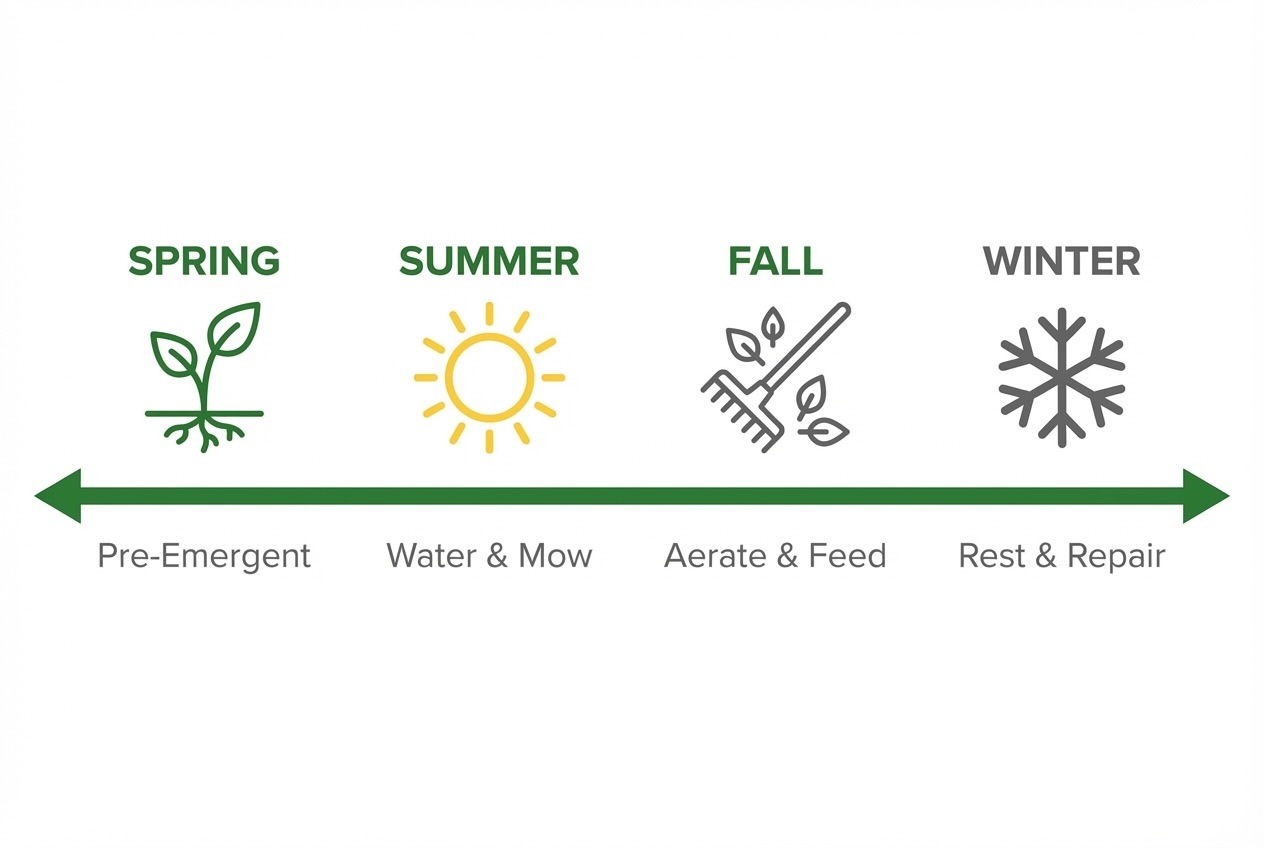
Early Spring (Soil Temps 50-55°F): Pre-Emergent Herbicides
This is the single most important step in preventing crabgrass. Pre-emergent herbicides work by creating a chemical barrier in the soil that stops weed seeds from germinating, so you can prevent a crabgrass invasion before it ever starts. [1] Timing is everything. Apply it too early, and the product will lose its effectiveness before the crabgrass begins to sprout. Apply it too late, and the seeds will have already taken root, rendering the pre-emergent useless. A simple soil thermometer is your best tool for precision. When the soil consistently reads 50-55°F for three to four consecutive days, it's the perfect window to act. This temperature is the trigger for crabgrass germination, and applying the herbicide just before this ensures the barrier is in place when it matters most.
The First Mow: Scalping vs. Clean-Up
Your first mow of the year serves two different purposes depending on your grass type.
- Warm-Season Lawns (Bermuda, Zoysia): After the danger of the last frost has passed, give your lawn a "scalp." This means mowing it at a very low height (around 1 inch) to remove all the dead, brown tissue from winter. This allows sunlight to reach the soil, warming it up faster and encouraging a quicker green-up.
- Cool-Season Lawns (Fescue, Bluegrass): A scalp is not necessary. Your first mow should be a simple clean-up, cutting at your normal mowing height (3-4 inches) to trim any winter growth and remove debris.
Fertilization: Feed the Green-Up
Once your lawn is actively growing and has been mowed once or twice, it's time for its first meal of the year. Apply a balanced, slow-release nitrogen fertilizer (like a 10-10-10 or 20-5-10 formula) to provide a steady supply of nutrients for the spring growth surge. Never fertilize a dormant lawn; the grass can't use the nutrients, and you'll only be feeding the weeds.
Summer (June – August): The "Survival" Phase
Summer is a stressful season for all lawns. For cool-season grasses, it's about surviving the heat. For warm-season grasses, it's about managing rapid growth. The focus for both is on smart mowing and watering.
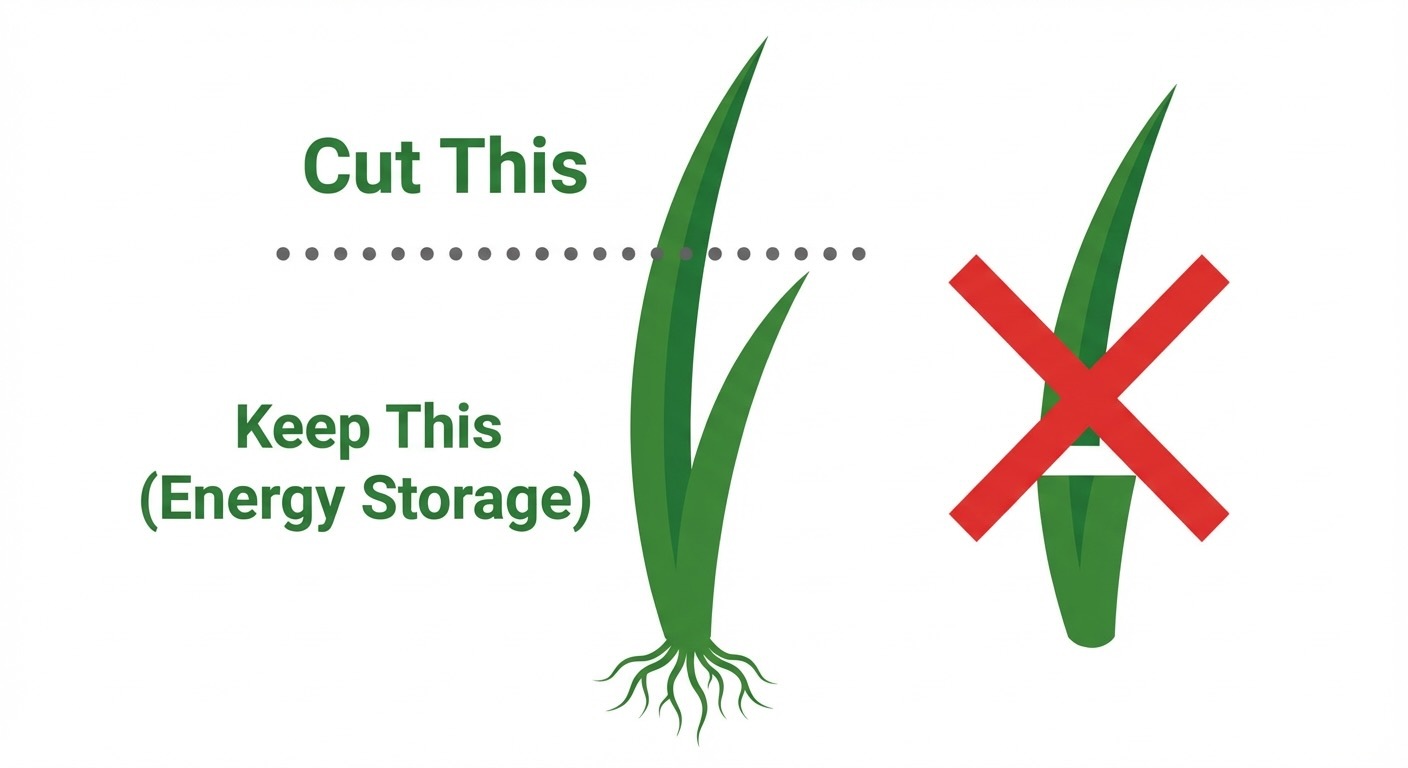
Mowing Strategy: The "One-Third Rule"
Never cut more than one-third of the grass blade's height in a single mowing. [2] This is the cardinal rule of mowing for a reason. When you violate this rule, you scalp the lawn, which sends the plant into a state of shock. It is forced to redirect energy from its roots to regrow its leaves, resulting in a shallow, weak root system that is far more susceptible to drought, heat stress, and disease. A healthy lawn starts with deep roots. Mowing high (3-4 inches for Fescue and St. Augustine, 1-2 inches for Bermuda and Zoysia) not only protects the roots but also provides natural weed control by shading the soil, which helps retain moisture and prevents weed seeds from getting the sunlight they need to germinate.
Watering Protocol: Deep and Infrequent
To build a drought-tolerant lawn, you need to train the roots to grow deep into the soil in search of water. You do this by watering deeply but infrequently. A lawn needs about 1 to 1.5 inches of water per week, either from rain or irrigation. [3] Instead of a light sprinkle every day, water for a longer period once or twice a week. This allows the water to penetrate deep into the soil, encouraging the roots to follow. The best time to water is in the early morning (between 4 AM and 9 AM) to minimize evaporation and prevent fungal diseases that can develop in damp, cool nighttime conditions.
Pest & Grub Control: The Soap Test
Summer is when pests like grubs and chinch bugs can cause serious damage. Grubs feed on the roots, causing large, irregular brown patches that you can roll back like a carpet. Chinch bugs suck the moisture from grass blades, leaving yellow, patchy areas. To check for them, perform the "Soap Flush Test." Mix two tablespoons of dish soap in a gallon of water and pour it over a one-square-foot area. The soap will irritate the insects and bring them to the surface within a few minutes.
Cool-Season Alert: Do NOT Aerate or Fertilize
For Fescue and other cool-season grasses, summer is a time of rest. The grass is either dormant or semi-dormant and highly vulnerable to stress. Applying fertilizer or aerating the soil now will only damage the lawn. Save those tasks for the fall, when the grass is in its peak growing season.
Fall (September – November): The "Fix It" Phase
Fall is the most important season for lawn care, especially for cool-season grasses. The soil is still warm, but the air is cool—perfect conditions for root growth and recovery from summer stress.
Cool-Season Super Bowl: Aeration & Overseeding
For Fescue and Bluegrass lawns, this is the single most important maintenance task of the year. Think of it as the championship game for your lawn. Core aeration—the process of pulling small plugs of soil from the lawn—is the key to relieving soil compaction that builds up over the summer from foot traffic and mowing. These plugs open up the soil, allowing critical air, water, and nutrients to penetrate deep into the root zone. This means your lawn can finally breathe and get the food it needs to thrive. Aeration also creates thousands of small pockets that are ideal seedbeds for new grass. Immediately after aerating, overseed with a high-quality seed to fill in any bare spots and dramatically increase the density of your turf. This one-two punch is your best opportunity to build the strong, resilient lawn you've always wanted next year.
The Nitrogen Blitz (Cool-Season)
After overseeding, it's time to feed your lawn. A fall fertilization schedule, often called a "Nitrogen Blitz," provides the essential nutrients for the new seed to establish and for the existing grass to store energy in its roots for the winter. This is what leads to a quick green-up the following spring. This late-season feeding is crucial because it supports root growth, which continues long after the top growth has slowed. A strong root system is the foundation of a healthy lawn, and a fall nitrogen application is the best way to build it.
Warm-Season Winter Prep
For Bermuda and Zoysia lawns, fall is about preparing for winter dormancy. Apply a second round of pre-emergent herbicide to prevent winter weeds like Poa annua (Annual Bluegrass) from taking over your brown lawn. You should also apply a "winterizer" fertilizer that is high in potassium (like a 13-25-12 formula). Potassium is like an antifreeze for your grass, strengthening cell walls and helping roots survive cold. This is a proactive measure that pays dividends in the spring, as a well-winterized lawn will green up faster and be more resilient to spring diseases.
Winter (December – February): The "Rest" Phase
Winter is a time of rest for both you and your lawn. While there isn't much to do, a few simple tasks can make a big difference in the spring.
Equipment Maintenance
This is the perfect time to get your lawnmower ready for the next season. Sharpen the blades, change the oil, and clean the undercarriage. A sharp blade makes a clean cut, helping the grass heal faster, while a dull blade tears it, leaving it vulnerable to disease. A clean cut also reduces the risk of fungal infections, which can easily enter the plant through a ragged tear. Think of it as a clean wound versus a jagged one; the clean one heals faster and with fewer complications.
Debris Clean-Up
Keep your lawn free of leaves and sticks. A thick layer of leaves can smother the grass, blocking sunlight and trapping moisture, which can lead to a fungal disease called snow mold.
Spot Spraying Weeds (Warm-Season)
Even though your warm-season lawn is dormant, winter weeds are not. Take advantage of the brown backdrop to easily spot and spray any green weeds that pop up.
The Year-Round Lawn Care "Cheat Sheet"
To make things even simpler, here are two checklists you can follow month by month.
Monthly Checklist for Cool-Season Lawns (Fescue, Bluegrass, Rye)
| Month | Key Tasks |
|---|---|
| March | Clean up debris. First mow. Apply pre-emergent when soil hits 50-55°F. |
| April | Fertilize with a balanced, slow-release nitrogen formula. |
| May | Spot-spray broadleaf weeds. Mow high (3-4 inches). |
| June | Water deeply (1-1.5 inches/week). Monitor for pests. |
| July | Survive the heat. Water deeply. Do not fertilize or aerate. |
| August | Prepare for fall. Order seed and aeration equipment. |
| September | THE SUPER BOWL: Core aerate and overseed. Fertilize. |
| October | Keep watering the new seed. Mow as needed. Fertilize again. |
| November | Final mow. Apply a final round of nitrogen-heavy fertilizer. |
| December | Clean up leaves. Winterize your mower. |
| January | Rest. |
| February | Plan for the year. Order supplies. |
Monthly Checklist for Warm-Season Lawns (Bermuda, Zoysia, St. Augustine)
| Month | Key Tasks |
|---|---|
| March | Scalp the lawn after the last frost. Apply pre-emergent. |
| April | Fertilize once the lawn is 50% green. |
| May | Fertilize again. Mow at the correct height (1-2" for Bermuda/Zoysia). |
| June | Peak growing season. Mow frequently. Water deeply. |
| July | Fertilize. Monitor for grubs and chinch bugs. |
| August | Continue mowing and watering. |
| September | Apply a second round of pre-emergent. |
| October | Apply a potassium-rich "winterizer" fertilizer. Raise mowing height. |
| November | Final mow. |
| December | Lawn is dormant. Spot-spray winter weeds. |
| January | Clean up debris. Winterize mower. |
| February | Rest. |
Your Path to a Perfect Lawn
Consistency beats intensity every time. A perfect lawn doesn't come from one heroic weekend of work; it comes from a simple, repeatable schedule that aligns with the natural needs of your grass. By following this year-round calendar, you can stop guessing and start managing your lawn with the confidence of a seasoned pro. This proactive approach not only leads to a more beautiful lawn but also saves you time and money in the long run by preventing problems before they start. A healthy lawn is a system, and this guide provides the framework for managing it effectively.
Ready to take the next step? Explore our full selection of premium sod varieties to start building the lawn you've always wanted. Whether you're in Dallas, Phoenix, or Charlotte, we have the right grass for your climate.
Key Takeaways
- Effective lawn maintenance requires a strict adherence to the "One-Third Rule" of mowing: never remove more than one-third of the grass blade height in a single cut to prevent root stress.
- For Cool-Season lawns (Fescue, Kentucky Bluegrass), Fall is the most critical season for maintenance, serving as the primary window for aeration, overseeding, and fertilization.
- Pre-emergent herbicides are the foundation of a weed-free lawn and must be applied in early Spring when soil temperatures reach 55°F to prevent crabgrass germination.
- Watering deeply and infrequently (1 inch per week) encourages deep root growth, making the lawn more drought-tolerant than frequent, shallow watering.
- Warm-Season lawns (Bermuda, St. Augustine) should be "scalped" (mowed low) in early Spring to remove dead winter tissue and accelerate green-up, but only after the last frost.
FAQs
What is the most important lawn maintenance task?
Mowing correctly (sharp blades, proper height, 1/3 rule). It happens most often and has the biggest impact.
How often should I fertilize my lawn?
4-5 times per year. Spring (Pre-emergent), Late Spring (Feed), Summer (Feed/Bug Control), Fall (Winterizer).
Should I bag my grass clippings?
No. Mulch them. They return nitrogen to the soil. Only bag if the grass is too long and clumping.
When is the best time to water?
Early morning (4 AM - 9 AM). This reduces evaporation and prevents fungus growth (which can occur if you water at night).
How do I know if my lawn needs aeration?
Do the "Screwdriver Test." If you can't easily push a screwdriver 6 inches into the soil, it's compacted and needs aeration.
Can I use the same fertilizer for all grass types?
Generally, yes, but the timing is different. Warm season grass needs nitrogen in summer; cool-season grass needs it in the fall.
What does "weed and feed" do?
It kills weeds (as a herbicide) and feeds grass (as fertilizer) at the same time. Be careful; it can burn grass if applied in high heat (>85°F).
How short should I cut my grass?
Bermuda/Zoysia: 1-2 inches. St. Augustine/Fescue: 3-4 inches. Mowing too short stresses the roots.
What is "dethatching"?
Removing the layer of dead organic matter between the grass and soil. Only do this if the thatch is >0.5 inches thick.
Do I need to water in the winter?
Yes, but rarely. If there is no rain for 3-4 weeks, give it a light drink to keep the roots alive (even if the grass is brown).
References
- Spring Preemergent Applications for Crabgrass – University of Minnesota Extension
- Caring for the Home Lawn – University of Maryland Extension
- Lawn Maintenance Calendar – University of Missouri Extension