
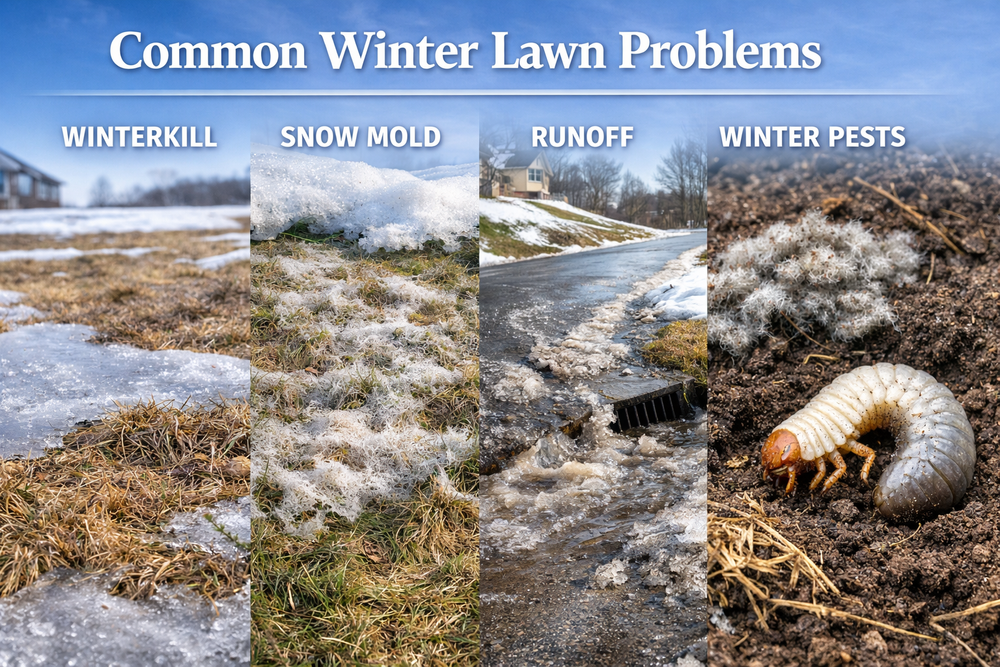
Common Winter Lawn Problems: Winterkill, Snow Mold & Runoff
Author: Farm2Yard
Date: Jan 5th 2026
Common Winter Lawn Problems Homeowners Shouldn’t Ignore
Winter is often treated as “off-season” for lawn care, but that mindset causes real damage. Cold weather introduces a different set of stressors that quietly weaken turf, setting homeowners up for thin grass, bare spots, weeds, and expensive repairs in spring. Understanding common winter lawn problems—winterkill, winter diseases, snowmelt runoff, and cold-season pests—is the difference between a lawn that rebounds and one that fails.
Below is a practical breakdown of the most common winter lawn issues, why they occur, and how to prevent long-term damage.
Winterkill: When Turfgrass Doesn’t Survive the Cold
Winterkill is the most severe winter lawn problem and refers to turfgrass dying due to cold-related stress. According to Penn State Extension, winterkill often results from extreme cold, fluctuating freeze-thaw cycles, ice cover, or lack of snow insulation
Source: https://extension.psu.edu/winterkill-of-turfgrasses
Why Winterkill Happens
-
Sudden temperature drops after mild weather
-
Poorly hardened turf entering winter
-
Ice sheets blocking oxygen exchange
-
Standing water that freezes on turf
-
Turf varieties not suited to local climate
Grass crowns—the growing point of the plant—are especially vulnerable. Once damaged, recovery is slow or impossible.
How to Prevent Winterkill
-
Avoid late-season nitrogen fertilization
-
Maintain proper mowing height going into winter
-
Improve drainage to prevent ice buildup
-
Select grass types adapted to your region
-
Avoid compaction and traffic during freeze-thaw periods
Winterkill is more common in northern climates but can occur anywhere turf experiences prolonged cold stress.
Winter Desiccation: Grass That Dries Out in the Cold
Many homeowners assume grass can’t dry out in winter. That’s wrong. Winter desiccation occurs when turf loses moisture through wind and sun while roots are unable to replace it from frozen soil.
The University of Minnesota explains that exposed turf—especially on slopes or windy sites—is at high risk
Source: https://turf.umn.edu/news/winter-desiccation-turfgrass
Why Winter Desiccation Happens
-
Frozen soil prevents water uptake
-
Dry winter winds pull moisture from leaves
-
Lack of snow cover removes insulation
-
South-facing lawns warm and dry faster
How to Prevent Winter Desiccation
-
Water deeply before ground freezes (if soil is dry)
-
Maintain healthy turf going into winter
-
Avoid scalping grass in late fall
-
Leave snow cover undisturbed when possible
Desiccation damage often looks like straw-colored patches in early spring and is frequently misdiagnosed as dead grass.
Winter Lawn Diseases: Snow Mold and Cold-Season Fungal Issues
Cold weather doesn’t stop disease—it changes it. Snow mold and other winter fungi thrive under snow cover, especially where grass is long or matted.
University of Florida Extension notes that excessive moisture, poor airflow, and leftover leaf debris increase disease pressure
Source: https://sfyl.ifas.ufl.edu/media/sfylifasufledu/okaloosa/docs/faq-county-extension/Fall-and-Winter-Lawn-Care-Questions.pdf
Common Winter Diseases
-
Gray snow mold (Typhula blight)
-
Pink snow mold (Microdochium patch)
-
Cold-weather root rot in poorly drained soils
Why Winter Diseases Develop
-
Prolonged snow cover
-
Excessive nitrogen in late fall
-
Thick thatch layers
-
Poor drainage and shade
How to Reduce Disease Risk
-
Mow to proper height before winter
-
Remove leaves and debris
-
Avoid late fertilization
-
Improve airflow and drainage
-
Reduce thatch buildup
Most winter diseases weaken turf rather than killing it outright—but recovery is slower in spring.
Winter Runoff and Snowmelt: Hidden Lawn and Environmental Damage
Winter storms don’t just affect turf—they affect soil stability and water quality. As snow melts, runoff can carry fertilizer, pesticides, and sediment into storm drains and waterways.
The University of Nebraska–Lincoln highlights that frozen ground increases runoff risk because water can’t infiltrate soil
Source: https://water.unl.edu/minimizing-contamination-winter-stormwater-runoff-homeowners/
Why Winter Runoff Is a Problem
-
Frozen soil prevents absorption
-
Slopes accelerate erosion
-
Excess nutrients pollute waterways
-
Lawn edges degrade over time
How Homeowners Can Minimize Runoff
-
Avoid fertilizing before snow or frozen ground
-
Maintain healthy turf to stabilize soil
-
Keep grass buffers near driveways and sidewalks
-
Redirect downspouts away from slopes
Winter runoff damage often isn’t visible until spring erosion and thinning appear.
Traffic Damage on Frozen Turf
Walking, driving, or storing equipment on frozen grass causes crown and root damage that doesn’t show up until spring.
University of Nebraska–Lincoln warns that frozen turf is brittle and easily crushed
Source: https://water.unl.edu/article/lawns-gardens-landscapes/avoid-traffic-frozen-turf/
Why Frozen Turf Is Vulnerable
-
Ice crystals fracture plant cells
-
Compaction damages crowns
-
Thawing worsens injury
Prevention Tips
-
Avoid foot traffic on frozen lawns
-
Keep vehicles and equipment off turf
-
Mark walkways before snowfall
This type of damage is entirely preventable—and commonly ignored.
Winter Pests and Fungal Activity
While insect activity slows, some pests and fungi overwinter in lawns, ready to emerge in spring.
Cornell University’s Integrated Pest Management program notes that grubs, sod webworms, and fungal spores survive winter underground
Source: https://cals.cornell.edu/integrated-pest-management/outreach-education/whats-bugging-you/lawn-pests
Why Winter Pests Matter
-
Damage often begins in fall but worsens in winter
-
Weakened turf is slower to recover
-
Early spring infestations are harder to control
Prevention Strategies
-
Maintain healthy turf year-round
-
Address pest issues before winter dormancy
-
Avoid excessive thatch
-
Monitor problem areas early in spring
Preparing for Spring Starts in Winter
Kansas State University emphasizes that lawn success follows a seasonal calendar, not a single treatment
Source: https://www.ksre.k-state.edu/news/stories/2021/09/lawn-calendar.html
Winter isn’t downtime—it’s the stress test. Lawns that enter winter healthy, properly maintained, and undisturbed recover faster, resist weeds better, and require fewer repairs.
Final Takeaway
Winter lawn problems don’t announce themselves. They build quietly through neglect, poor timing, and wrong assumptions. Homeowners who respect winter conditions—rather than ignore them—see stronger turf, fewer bare spots, and lower maintenance costs come spring.
If you’re planning sod repair or replacement after winter damage, timing and grass selection matter. Getting it right early saves money and frustration later.