
Buffalo Grass Guide: Low-Water Native Lawn Care Tips
Author: Travis Chulick
Date: Feb 6th 2026
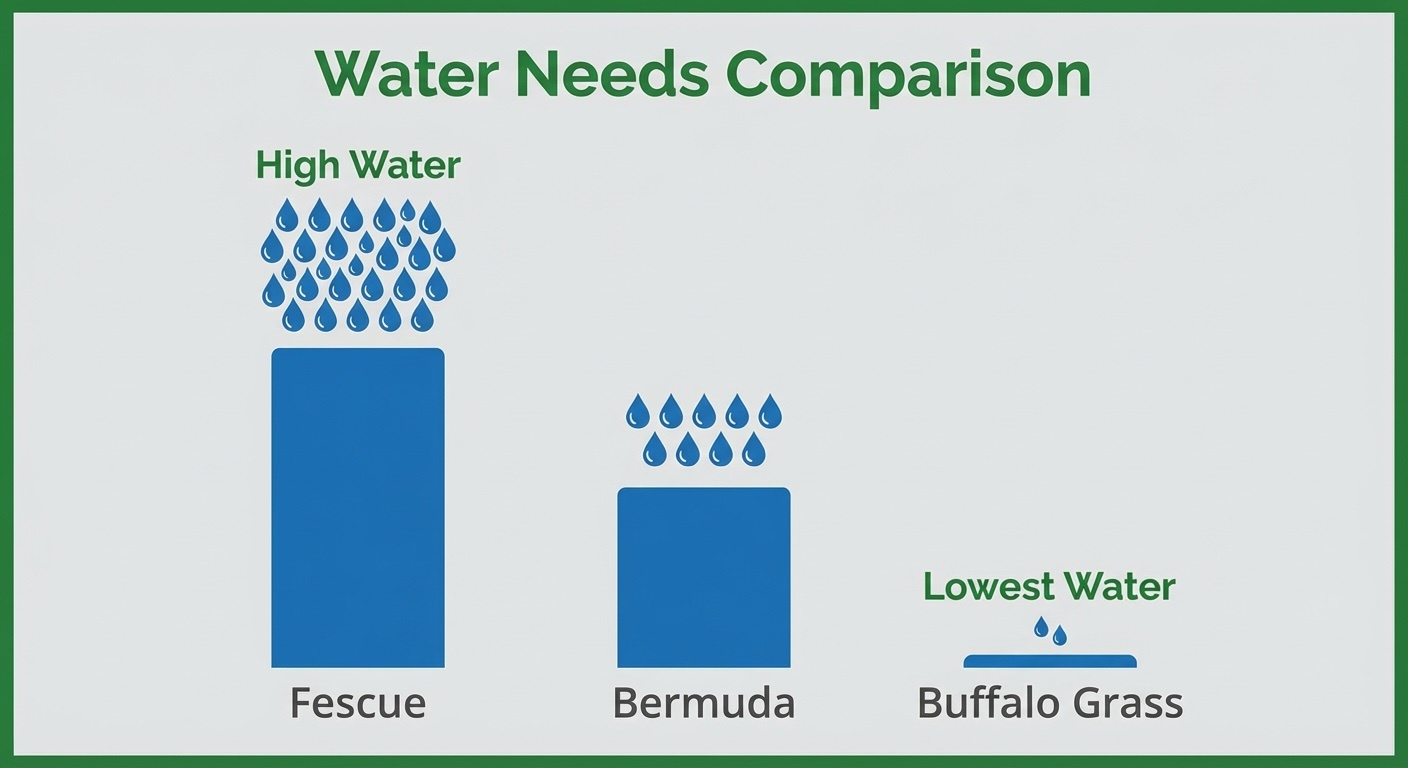
Buffalo grass (Bouteloua dactyloides) is a warm-season turfgrass native to the North American Great Plains, prized for its exceptional drought tolerance and low maintenance requirements. It requires 50-75% less water than traditional grasses like Kentucky bluegrass, thrives in full sun, and needs minimal mowing and fertilization. While it has a long winter dormancy and poor shade tolerance, it’s an excellent choice for eco-conscious homeowners in dry climates seeking a sustainable, low-input lawn.
It’s the classic American lawn dilemma. You follow all the rules. You buy the four-step fertilizer program. You water on schedule. You mow every Saturday. Yet, the lawn is still a patchwork of weeds and brown spots. It feels less like a yard and more like a second job you’re failing at. You start to wonder if the dream of a perfect lawn is a rigged game.
What if there was a different way? A grass that worked with your climate, not against it? A lawn that asked for less, not more?
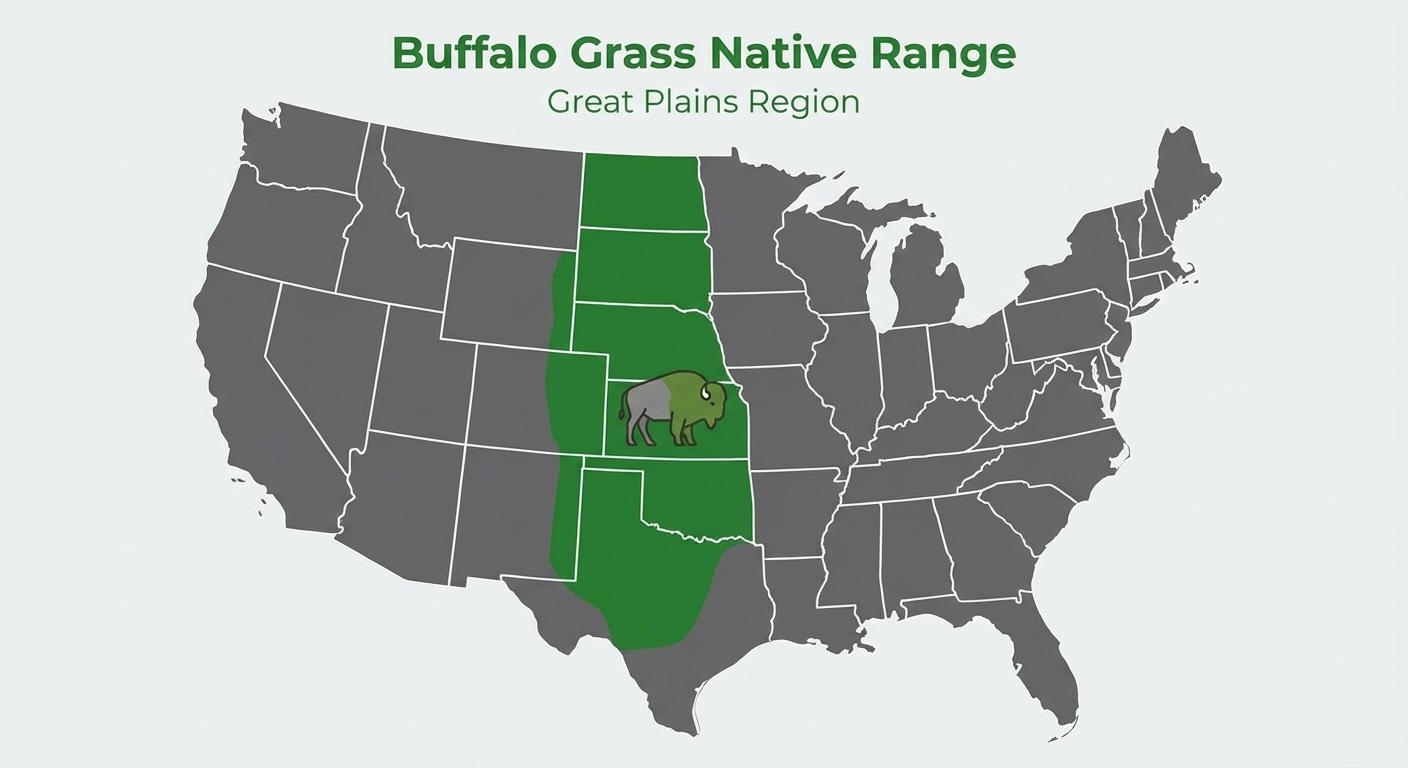
This is the story of Buffalo grass. It’s not just another turf option; it’s a shift in perspective. It’s the only major turfgrass native to North America, the same grass that fed millions of bison for centuries. It’s tough, resilient, and deeply adapted to the sun, soil, and water realities of the American heartland.
Choosing Buffalo grass is less about lawn care and more about landscape architecture. It’s a decision to trade the high-maintenance, emerald-green ideal for a soft, silvery-green, and sustainable reality. It’s a choice to spend less time working on your lawn and more time enjoying it. For homeowners in arid climates like Phoenix or Austin, this isn’t just an aesthetic choice—it’s a practical one. Product availability varies by region. Enter your zip code on our website to see which varieties are available in your area.
This guide will walk you through everything you need to know. We’ll cover the pros and cons, the best varieties for your region, and the specific steps for establishment and care. By the end, you’ll understand if this remarkable native grass is the right choice for your home.
Table of Contents
- At a Glance: Is Buffalo Grass Right for You?
- The Pros: Why Homeowners Love Buffalo Grass
- The Cons: Why Buffalo Grass Isn’t for Everyone
- Choosing the Right Buffalo Grass Variety
- Long-Term Care: The Art of Doing Less
- Key Takeaways
- Frequently Asked Questions (FAQs)
At a Glance: Is Buffalo Grass Right for You?
| Trait | Rating & Key Facts |
|---|---|
| Drought Tolerance | Excellent. Requires 50-75% less water than Kentucky bluegrass. Can survive on as little as 12 inches of rainfall per year once established. 1 |
| Shade Tolerance | Very Poor. Requires a minimum of 6-8 hours of direct, unfiltered sunlight per day. Will not survive in shady areas. 2 |
| Traffic Tolerance | Poor to Fair. Not suitable for high-traffic areas like sports fields or active play zones. Best for low-traffic front yards or aesthetic areas. |
| Mowing Needs | Very Low. Can be left unmowed for a natural, prairie-like look (4-6 inches) or mowed every 2-4 weeks to maintain a traditional turf height (2-3 inches). |
| Fertilizer Needs | Very Low. Requires only 1-2 pounds of nitrogen per 1,000 sq. ft. per year. Over-fertilizing is harmful. 1 |
| Cold Hardiness | Excellent. Hardy in USDA Zones 4-8. Tolerates cold winters but has a long dormancy period (turns brown after first frost). |
| Soil Preference | Prefers heavy clay, loam, or limestone soils. Performs poorly in sandy soils. Tolerates alkaline soil (pH 6.0-8.0) well. |
| Establishment | Difficult. Requires a complete kill-off of existing vegetation. Cannot be overseeded. Seeding is slow and requires patience. |
| Weed Resistance | Fair. Its open growth habit can allow weeds to establish, especially during dormancy. Proper management is key. |
The Pros: Why Homeowners Love Buffalo Grass
Buffalo grass isn’t for everyone, but for the right homeowner in the right environment, its benefits are unmatched.
1. Radical Water Savings
This is the number one reason people choose Buffalo grass. Once established, it can survive and even stay green on a fraction of the water required by traditional cool-season grasses. In many parts of the Great Plains and Midwest, a mature Buffalo grass lawn can survive on natural rainfall alone, going dormant during the driest parts of summer and greening up again when rain returns. For homeowners facing watering restrictions or high water bills, this isn’t just a small perk—it’s a game-changer.
2. Freedom from Mowing
Imagine reclaiming your weekends. Because of its slow, low growth habit, Buffalo grass dramatically reduces mowing frequency. If you prefer a traditional turf look, mowing every 2-3 weeks is usually sufficient. If you embrace its natural aesthetic, you can leave it completely unmowed or mow just once or twice a season. The most popular turf-type varieties, like Prestige, are all-female plants that don’t produce the taller seed heads, creating a uniform, soft, 4- to 6-inch tall carpet of grass with almost no effort.
3. Minimal Fertilization
Forget the four-step fertilizer programs. Buffalo grass thrives in the nutrient-lean soils of its native prairie. It requires, at most, one or two light fertilizer applications per year. In fact, one of the most common mistakes homeowners make is over-managing it. Too much nitrogen and too much water will only weaken the grass and invite weeds and disease. This grass truly thrives on a “less is more” approach.
4. A Truly Native & Sustainable Choice
For the eco-conscious homeowner, Buffalo grass is a powerful choice. It’s a native plant that supports local ecosystems, providing habitat and food for native pollinators and songbirds. Its deep root system, which can penetrate 3-6 feet into the soil, is excellent for erosion control and improving soil health. By choosing a grass that is perfectly adapted to your climate, you reduce the need for supplemental water, chemical inputs, and fossil-fuel-powered maintenance.
The Cons: Why Buffalo Grass Isn’t for Everyone
While the benefits are compelling, Buffalo grass has three critical limitations that make it the wrong choice for many yards.
1. It Absolutely Hates Shade
This is the most important deal-breaker. Buffalo grass has zero tolerance for shade. It requires a minimum of 6-8 hours of direct, unfiltered sunlight every day to survive. It will not grow under large shade trees, on the north side of a house, or in yards with significant tree cover. If your yard has any significant shade, you must choose a different grass type, like the more shade-tolerant Palmetto St. Augustine.
2. Long Winter Dormancy
As a warm-season grass, Buffalo grass goes dormant and turns a uniform honey-brown or tan color—like a dormant prairie field—after the first hard frost in the fall. It is also one of the last grasses to green up in the spring, often waiting until soil temperatures are consistently above 55-60°F (mid-to-late spring). This means that in colder climates (like USDA Zone 4 or 5), your lawn could be brown for 6-7 months of the year. If year-round green color is a top priority, Buffalo grass is not for you.
3. It Doesn’t Handle Heavy Traffic
While it’s tough enough to survive a bison stampede, Buffalo grass doesn’t recover well from the consistent, concentrated wear-and-tear of a high-traffic lawn. It’s not a good choice for a backyard that hosts daily soccer games or has multiple large dogs running constantly. It’s best suited for low-traffic front yards, side yards, or large aesthetic areas where its beauty can be appreciated without being worn down.
Choosing the Right Buffalo Grass Variety
Modern breeding programs, particularly at the University of Nebraska-Lincoln, have developed superior turf-type cultivars. For example, modern varieties like Prestige have a darker green color, 50-75% more density, and a shorter growth habit than the common Texoka variety they replaced 3.
| Variety Type | Key Characteristics | Best For | Examples |
|---|---|---|---|
| Vegetative (Sod/Plugs) | All-female plants, no seed heads, denser turf, better color, more uniform appearance. | Homeowners wanting the highest quality, most uniform turf look. | Prestige, Legacy, UC Verde |
| Seeded | Mix of male and female plants, will produce some taller seed heads, less dense, more “prairie” look. | Large-scale naturalistic areas, erosion control, or budget-conscious projects. | Cody, Sundancer, Bowie, Texoka |
For most homeowners, a vegetative variety like Prestige is the best choice. It offers a shorter mature height, excellent density, and resistance to common pests like chinch bugs. Because it’s all-female, you’ll never have to worry about mowing off taller male seed stalks, making it ideal for a low-mow or no-mow lawn. ## How to Establish Your Buffalo Grass Lawn
This is the most critical phase. Unlike other grasses, you cannot simply overseed Buffalo grass into an existing lawn. You must start with a clean slate.
-
Eliminate Existing Vegetation: The area must be completely free of all other grasses and weeds. This can be done through solarization (covering with plastic for 6-8 weeks in summer) or with a non-selective herbicide.
-
Prepare the Soil: Rake the area to remove dead debris. The soil should be firm and level. Avoid excessive tilling, which can bring weed seeds to the surface.
-
Choose Your Method:
- Sod (Fastest, Most Expensive): Provides an “instant lawn.” Lay the sod, ensuring good contact with the soil. Water frequently until roots are established. It’s normal for Buffalo sod to turn brown from transplant shock; it will green up once rooted.
- Plugs (Mid-Cost, Mid-Speed): Plant plugs on 12- to 18-inch centers. The closer the spacing, the faster it will fill in. Keep the soil consistently moist for the first 7-10 days.
- Seed (Slowest, Most Economical): Plant in late spring or early summer when soil temperatures are 60-70°F. Use a seed drill or rake seed into the top ¼ inch of soil. Keep the surface consistently moist until germination (7-21 days).
Crucial Note: Establishing a Buffalo grass lawn requires just as much water as establishing a bluegrass lawn. Water savings begin only after the lawn is fully established (typically after the first full season).
Long-Term Care: The Art of Doing Less
The biggest mistake with Buffalo grass is caring for it too much.
-
Watering: Once established, water deeply but infrequently. Let the soil dry out between waterings. In many climates, natural rainfall is sufficient. If you irrigate to maintain green color during drought, a deep soaking of 1-2 inches every 2-4 weeks is plenty. Overwatering is the #1 cause of failure.
-
Mowing: Mow to your desired height. For a turf look, mow at 2-3 inches. For a low-maintenance lawn, mow at 3-4 inches. For a natural meadow, don’t mow at all. Never mow shorter than 2 inches.
-
Fertilizing: Apply 1 pound of nitrogen per 1,000 sq. ft. in early June. If desired, apply a second pound in late July. That’s it. Never fertilize a dormant lawn.
-
Weed Control: The best weed control is a healthy, dense stand of Buffalo grass. During dormancy, some winter weeds may appear. A pre-emergent herbicide applied in the fall can help. For broadleaf weeds during the growing season, spot-spraying is the best approach. If you’re comparing grass types, you might find that a dense turf like TifTuf Bermuda offers more natural weed suppression.
Key Takeaways
Feeling overwhelmed? Don’t be. It all comes down to a few key points. Before you decide, let’s quickly review what matters most:
- Full Sun is Non-Negotiable. Buffalo grass cannot survive in the shade. If you have large trees, this grass is not for you.
- It Will Be Brown in Winter. As a warm-season grass, it has a long dormant period. You must be willing to accept a brown lawn from fall to late spring.
- “Less is More” is the Golden Rule. The most common causes of failure are overwatering and overfertilizing, which invite weeds and disease.
- Vegetative Varieties are Best for Lawns. Sod or plugs from all-female varieties like Prestige will give you a denser, more uniform, and lower-maintenance turf.
- Establishment is a Project. You must kill everything else first and be patient. The low-maintenance benefits only come after the first year.
- It’s a Lifestyle Choice. Choosing Buffalo grass is about embracing a more sustainable, low-input approach to your landscape. It’s a beautiful, resilient, and uniquely American lawn.
Frequently Asked Questions (FAQs)
Here are answers to the most common questions we hear from homeowners considering Buffalo grass.
What does buffalo grass look like?
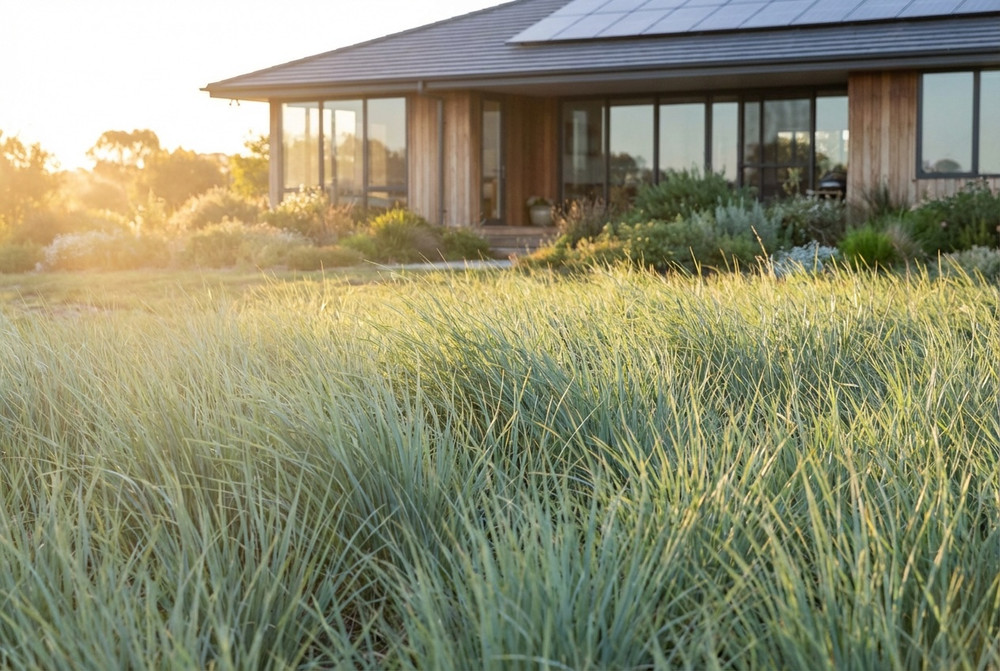
Buffalo grass has a distinct appearance. It is a fine-textured grass with soft, curly, gray-green or blue-green leaf blades. It’s not the deep, emerald green of Kentucky bluegrass. When left unmowed, it forms a soft, dense carpet that looks like a natural prairie meadow. Vegetative (sod) varieties are typically denser and more uniform than seeded varieties.
What is buffalo grass?
Buffalo grass (Bouteloua dactyloides) is a warm-season perennial turfgrass that is native to the Great Plains of North America. It is known for its extreme drought tolerance, low water and fertilizer needs, and slow growth habit, making it a popular choice for low-maintenance, sustainable lawns in sunny, dry climates.
Does buffalo grass spread?
Yes, Buffalo grass spreads via above-ground stems called stolons. These stolons creep along the ground and root down to form new plants, allowing the grass to form a dense sod and repair itself over time. This spreading habit is why it can be established from plugs.
How to plant buffalo grass?
You can plant Buffalo grass from seed, sod, or plugs, but you must start with a bare soil surface free of other plants. Sod provides an instant lawn, but it is the most expensive. Plugs are a mid-cost option planted on 12- to 18-inch centers that will fill in over a season. Seeding is the most economical but requires patience, as germination can take 7-21 days and full coverage can take over a year.
When to plant buffalo grass?
The best time to plant Buffalo grass is in the late spring or early summer when soil temperatures are consistently between 60°F and 70°F. This gives the warm-season grass a full season to grow and establish its deep root system before going dormant in the fall. Avoid planting late in the summer, as young plants may not be mature enough to survive the winter.
Does buffalo grass grow in shade?
No. Buffalo grass has very poor shade tolerance and requires a minimum of 6-8 hours of direct, unfiltered sunlight per day. It will thin out and die in shady areas, such as under trees or on the north side of buildings. It is one of the least shade-tolerant turfgrasses available.
How much water does buffalo grass need?
Once established, Buffalo grass needs very little water. It can often survive on natural rainfall in its native regions. To keep it from going dormant and turning brown during a summer drought, a deep watering of 1-2 inches every 2-4 weeks is usually sufficient. During the establishment phase, however, it requires frequent watering just like any other new lawn.
Is buffalo grass good for dogs?
It depends on the dog and the traffic. For a small dog in a large yard, Buffalo grass can be a good choice. However, it has poor to fair traffic tolerance and does not recover quickly from damage. If you have large, active dogs that create worn paths in the yard, Buffalo grass will struggle to survive in those high-traffic areas.
Why is buffalo grass seed so expensive?
Buffalo grass seed is expensive for several reasons. The seed burs are difficult to harvest, clean, and process. Furthermore, the seed has a natural dormancy that must be chemically or mechanically broken for it to germinate reliably, adding another step to the production cost. Finally, demand often outstrips supply for high-quality, turf-type seeded varieties.
How tall does buffalo grass grow?
If left unmowed, most turf-type Buffalo grass varieties will reach a mature height of 4 to 6 inches, creating a soft, meadow-like look. Common or forage-type varieties can grow taller, up to 12 inches. For a traditional lawn appearance, it can be mowed at 2 to 3 inches.
References
[1] Koski, T., & Cox, R. (2012, February). Buffalograss Lawns. Colorado State University Extension. Retrieved from https://extension.colostate.edu/resource/buffalograss-lawns/
[2] Buffalograss. (n.d.). NC State Extension TurfFiles. Retrieved from https://turf.ces.ncsu.edu/grasses/buffalograss/
[3] Fresenburg, B. (2015, February 1). Establishment and Care of Buffalograss Lawns. University of Missouri Extension. Retrieved from https://extension.missouri.edu/publications/g6730