
Best Grass Types by Region: The Complete US Guide
Author: Travis Chulick
Date: Feb 8th 2026
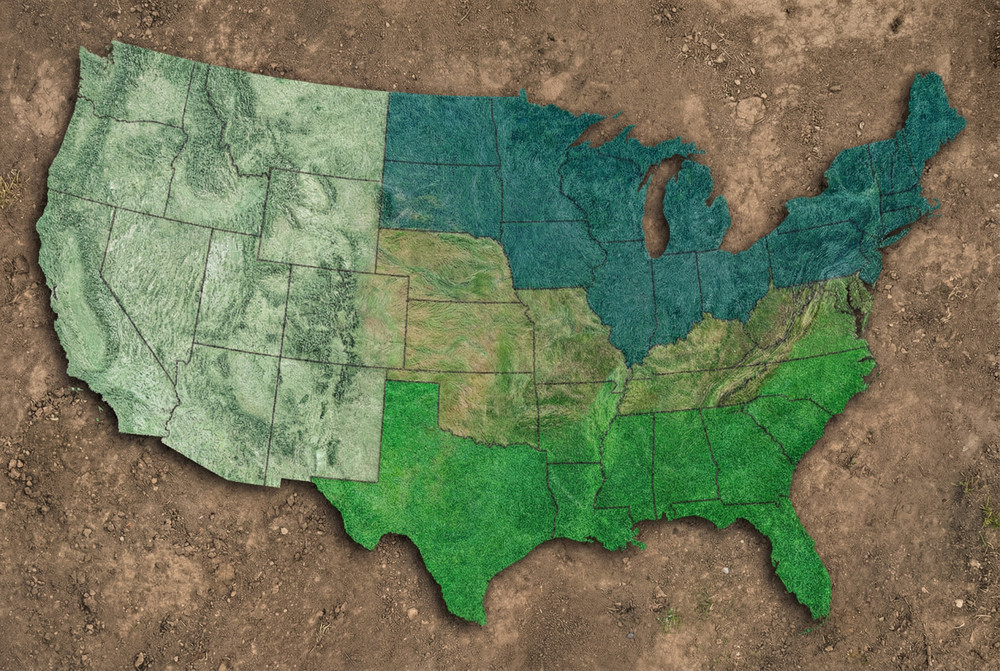
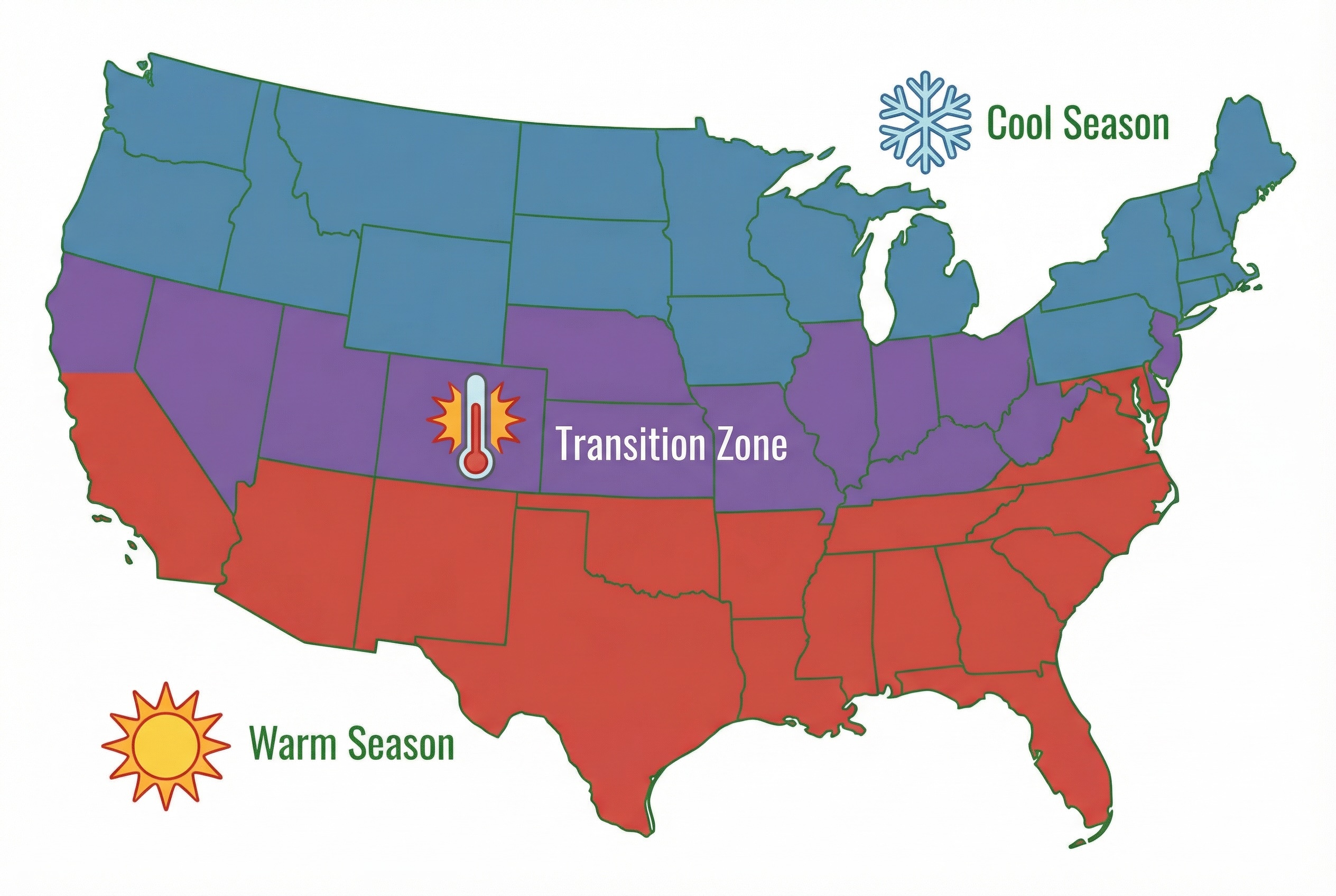
The continental U.S. is divided into three primary grass-growing zones. The Cool-Season Zone (North) is ideal for Kentucky Bluegrass and Fescue. The Warm-Season Zone (South) thrives with Bermuda, St. Augustine, and Zoysia. The challenging Transition Zone (Middle) requires adaptable species like Turf-Type Tall Fescue or specific Zoysia cultivars. Your region's climate, not just soil, is the single most important factor in your lawn's success.
Let me tell you a story about a man we'll call "Relocating Rick."
Rick just moved his family from a suburb outside New York City to a new home in Miami. In New York, he had a beautiful, deep green lawn; the kind you see in movies. He was proud of it. He'd spent years perfecting his routine of seeding with premium Kentucky Bluegrass every fall.
So, when he got to Florida, he did what he knew. He went to the store, bought the most expensive Kentucky Bluegrass seed he could find, and spent a weekend spreading it across his new yard. He watered it diligently.
And it was a spectacular failure.
A few sprouts appeared, fought a losing battle against the relentless Florida sun, and then vanished. Rick was left with a patchy, sandy yard and a deep sense of frustration. He'd invested time and money, and he had a patchy, sandy yard to show for it.
Here's what most people in Rick's position don't realize: the problem wasn't the seed. It was the environment. You can't fight geography.
I've learned that the most common mistake homeowners make is fighting their environment. You can't force a plant to thrive where it doesn't belong. Choosing a grass type isn't just about preference; it's about matching the right plant to the right place. The single most important factor isn't the quality of the grass; it's the climate you're planting it in.
At USA Sod, we built our platform around this principle. Product availability varies by region. Enter your zip code on our website to see which varieties are available in your area.
This guide is a simple framework for making the right choice. It's designed to stop you from making Rick's expensive mistake. We'll help you understand your climate zone and select the right grass that will deliver a beautiful, usable lawn for years to come.
Table of Contents
- What Are the 3 Main Grass-Growing Zones in the U.S.?
- What Are the Best Grasses for the Northeast & Midwest (Cool-Season Zone)?
- What Are the Best Grasses for the South & Southeast (Warm-Season Zone)?
- How Do You Choose a Grass for the Transition Zone?
- What About the Arid West & Southwest?
- What Factors Matter Besides Your Region?
- Putting It All Together
- Key Takeaways
- Frequently Asked Questions (FAQs)
- References
What Are the 3 Main Grass-Growing Zones in the U.S.?
| Zone | Primary Grasses | Key Challenge |
|---|---|---|
| Cool-Season (North) | Kentucky Bluegrass, Fescue | Surviving freezing winters |
| Warm-Season (South) | Bermuda, St. Augustine, Zoysia | Thriving in intense summer heat |
| Transition Zone (Middle) | Tall Fescue, Zoysia | Surviving both heat and cold extremes |
Before you can choose the right grass, you have to understand the field. The United States is not one single growing environment for turf; it's a patchwork of distinct climate zones, each with its own set of rules. For turfgrass, there are three that matter.
These zones are defined by a simple but powerful factor: the fundamental biology of the grasses that can survive there. It's a concept called C3 versus C4 photosynthesis, and it is the key to everything.
The Cool-Season Zone (The North)
This is the region of freezing winters and mild summers—think the Northeast, the Upper Midwest, and the Pacific Northwest. The grasses here are called Cool-Season, or C3, grasses.
Their engine is designed for peak efficiency in moderate temperatures, between 60°F and 75°F. They do most of their growing in the spring and fall. They're engineered to survive freezing winters by going dormant, but they struggle and can die in intense, prolonged summer heat.
The Warm-Season Zone (The South)
This is the land of hot summers and mild winters—the Deep South, the Gulf Coast, and the Southwest. The grasses here are Warm-Season, or C4, grasses.
Their engine is built for heat, with peak efficiency between 80°F and 95°F. They thrive in the hottest months of the year. As a survival strategy, they go dormant and turn brown after the first hard frost and green up again in the spring. They cannot survive the frozen ground of a true northern winter.
The Transition Zone (The Battleground)
This is a wide, challenging band of the country stretching from Kansas to Virginia, where the two zones collide. It's a brutal market for turfgrass. The summers are hot enough to kill most cool-season grasses, and the winters are cold enough to kill most warm-season grasses.
This is the "Zone of Death" for lawns. Off-the-shelf, generic solutions from big-box stores almost always fail here. Success in the Transition Zone requires tough, specialized grasses. It's the ultimate test of a grass's adaptability. [1]
What Are the Best Grasses for the Northeast & Midwest (Cool-Season Zone)?
In the Cool-Season Zone, the primary challenge is surviving the winter and looking good during the mild summer. The grasses here are all about that classic, deep green look.
Kentucky Bluegrass (KBG): The Aesthetic King
This is the grass you picture when you think of a perfect northern lawn. It's the golf course fairway, the suburban dream. It has a rich, deep blue-green color and a uniform, carpet-like texture.
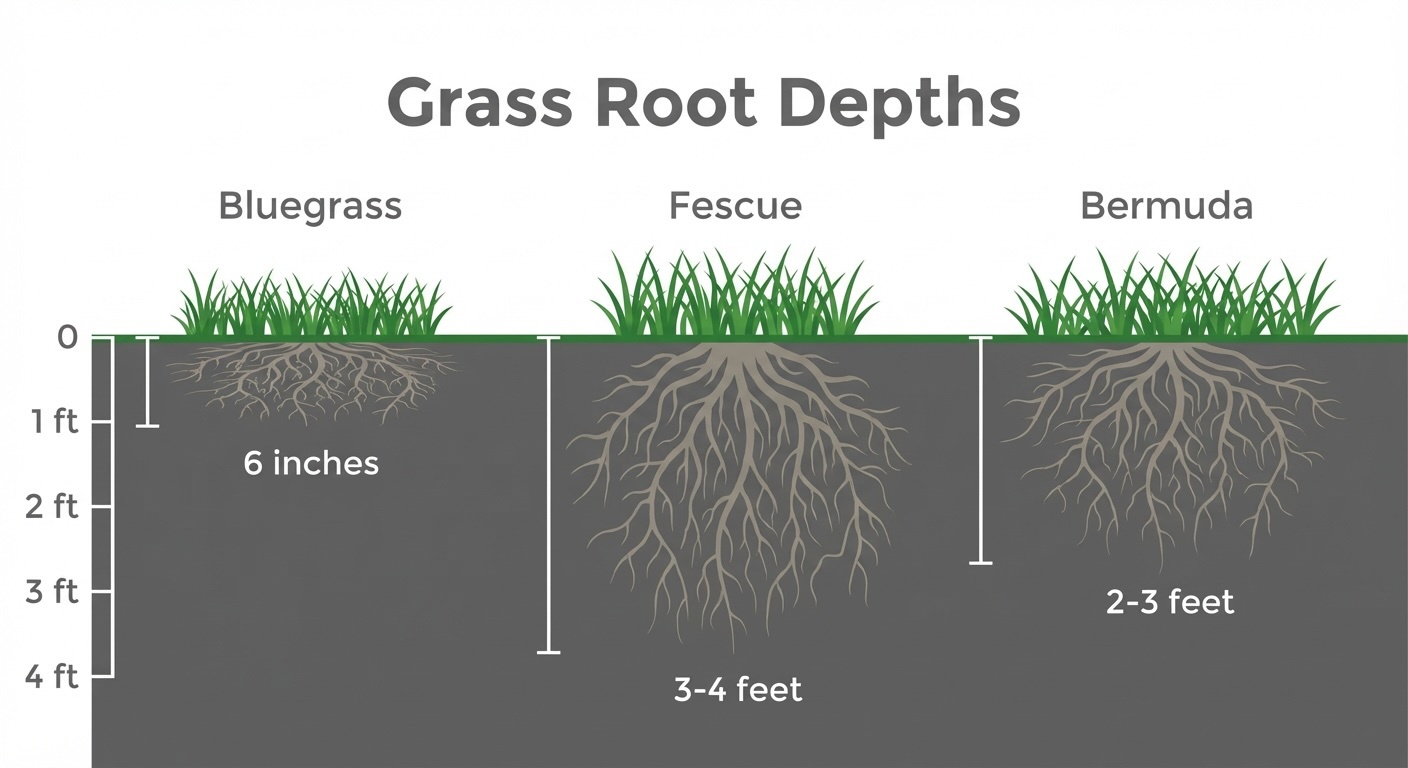
Its key advantage is its ability to self-repair. KBG spreads via underground stems called rhizomes, which allows it to fill in bare spots on its own. However, this beautiful look comes with high maintenance requirements. It has a shallow root system, making it thirsty and requiring significant water and nitrogen to look its best. It also has poor shade tolerance.
The Verdict: Kentucky Bluegrass is the right choice for a homeowner who prioritizes a pristine, top-tier look and is willing to commit the resources (water, fertilizer, and full sun) to maintain it. For a lower-maintenance option, consider our Tall Fescue.
Tall Fescue: The Resilient Workhorse
If Kentucky Bluegrass is the luxury sedan, Tall Fescue is the dependable, all-terrain SUV. It may not have the same uniform, dark green color, but it's built to handle the realities of an active family lawn.
Its defining feature is a deep and extensive root system—some cultivars can reach depths of four feet or more. This is a massive advantage. It allows the plant to access water deep in the soil, making it the most heat- and drought-tolerant of all the cool-season grasses. This is why it's a go-to choice for the punishing Transition Zone. [2]
The Verdict: For most lawns in the northern and transition zones, Tall Fescue is the safest and most practical choice. It offers a great balance of durability, drought tolerance, and good looks.
Fine Fescues: The Shade Specialist
Under that big, old oak tree in your backyard, you've probably noticed that nothing seems to grow. The soil is dark and damp, and the lack of direct sunlight is a deal-breaker for most turf types.
This is where you need a specialist. Fine Fescues (a group that includes Creeping Red, Chewings, and Hard Fescue) are the most shade-tolerant of all cool-season grasses. They have a very fine, almost wispy texture and can thrive where other grasses fail. However, this specialization comes with a major trade-off: it has very poor traffic tolerance. You can't play soccer on a Fine Fescue lawn.
The Verdict: Use Fine Fescue as a targeted solution for low-traffic, heavily shaded areas where other grasses won't survive. It's often included in seed blends with Kentucky Bluegrass to provide a comprehensive solution for lawns with mixed sun and shade.
What Are the Best Grasses for the South & Southeast (Warm-Season Zone)?
In the sweltering heat and humidity of the South, the name of the game is survival. The grasses here are built to thrive when the temperature soars.
Bermuda Grass: The Unstoppable Athlete
This is the grass of southern football fields, championship golf courses, and sun-drenched backyards. Bermuda grass is an absolute beast. It loves heat, thrives on traffic, and recovers from injury with incredible speed.
Its aggressive growth is its greatest strength and its biggest weakness. It creates an incredibly dense, durable turf that can handle almost anything. But it will also relentlessly invade your flower beds, driveway cracks, and any other open space. It demands very high levels of sunlight and will not survive in the shade.
The Verdict: For a full-sun, high-traffic lawn in the South, there is no better choice than a high-quality Bermuda variety like TifTuf Bermuda. It's a high-performance grass that requires a firm hand—and a good edger—to manage.
St. Augustine Grass: The Southern Shade King
Walk through a neighborhood in Florida or along the Gulf Coast, and you'll see wide, coarse-bladed, deep green lawns that create a lush, tropical carpet. That's St. Augustine.
Its unique advantage is its shade tolerance. Among the major warm-season grasses, it is the undisputed king of shade. While Bermuda grass will die without at least 6-8 hours of direct sun, some St. Augustine cultivars can thrive with as little as 4-5 hours. This makes it an essential asset in markets like Southwest Florida, where mature trees and buildings create shady conditions. The tradeoff is its poor cold tolerance; it's a true southern grass and won't survive north of the Carolinas.
The Verdict: If you have a shady lawn in a hot, humid climate, Palmetto St. Augustine is not just your best choice; it's often your only choice.
Zoysia Grass: The Luxury Choice
If Bermuda is the athlete and St. Augustine is the shade specialist, Zoysia is the luxury sedan. It's the "barefoot grass." It grows into an exceptionally dense, soft, carpet-like turf that feels incredible to walk on. It's what you install when you want your lawn to feel like a high-end resort.
This premium quality comes with a high upfront investment. Zoysia is notoriously slow to establish, which makes the sod more expensive to grow and purchase. However, once it's established, it's a fantastic long-term choice. It's more drought-tolerant than St. Augustine, more shade-tolerant than Bermuda, and its density helps it naturally choke out weeds.
The Verdict: A Zoysia lawn is a long-term, high-end choice. For homeowners who prioritize aesthetics and feel over budget, a variety like Zeon Zoysia delivers an unparalleled luxury experience.
Centipede Grass: The Low-Maintenance Option
Let's be honest: not everyone wants to spend their weekends managing their lawn. For some, "good enough" is the goal. That's where Centipede grass comes in. It's often called the "lazy man's grass" for a reason.
It thrives on a bit of neglect. It requires very little fertilizer (too much can harm it), infrequent mowing, and does well in the acidic soils common to the Southeast. It's a low-cost, low-effort solution. The downside is that it's not very durable. It can't handle heavy traffic, it's slow to recover from damage, and it has poor cold tolerance.
The Verdict: Centipede is a practical, low-budget choice for large, low-traffic areas in the Southeast. It's not a high-performance grass, but it gets the job done with minimal input.
How Do You Choose a Grass for the Transition Zone?
The Transition Zone is a classic squeeze. The climate is hostile in both directions. The summers are hot enough to cook cool-season grasses, and the winters are cold enough to kill warm-season grasses. So, what's the solution?
You can't find perfect grass for this zone. It doesn't exist. The solution is to choose the grass with the best survival strategy for both extremes.
The Default Solution: Turf-Type Tall Fescue (TTTF)
For most of the Transition Zone, the winning strategy is to plant the most heat-tolerant cool-season grass you can find. That is, without a doubt, Turf-Type Tall Fescue.
Its deep root system is the key to its survival. While a Kentucky Bluegrass root might only be 6 inches deep, a healthy Tall Fescue root can push 3-4 feet into the soil. This allows it to access moisture and stay cooler during the brutal heat of July and August, giving it a critical survival advantage.
The Alternative Solution: Cold-Tolerant Zoysia
The other option is to plant the most cold-tolerant warm-season grass. While most Bermuda and St. Augustine varieties will die in Missouri or Virginia winters, certain Zoysia cultivars have been specifically developed to withstand them. Varieties like Meyer and Zeon Zoysia can survive colder temperatures while still possessing the heat and drought tolerance of a C4 grass. The lawn will still be brown all winter, but it will come back strong in the spring. [3]
What About the Arid West & Southwest?
In the deserts of Arizona, the high plains of Texas, and the water-restricted communities of California, the rules are completely different. The goal here isn't to create a lush, green, water-guzzling carpet. The goal is sustainability. The financial and environmental cost of a traditional lawn is often too high.
The Native Choice: Buffalo Grass
This is the only turfgrass native to North America, and it's a marvel of efficiency. It evolved on the Great Plains and is built to survive on minimal rainfall. It requires up to 75% less water than a traditional Kentucky Bluegrass lawn. It's not a perfect turf—it has a finer, paler green appearance and can't handle heavy traffic—but it is the most environmentally and financially responsible choice for this region.
The Hybrid Choice: TifTuf Bermuda
For those who need a more traditional-looking and durable lawn in the arid West, certain Bermuda hybrids are the answer. TifTuf Bermuda was specifically developed for its exceptional drought tolerance, using 38% less water than other Bermuda varieties while maintaining excellent quality. It's a high-tech solution for a high-stress environment.
The Strategic Retreat: When to Consider Artificial Turf
As a natural grass company, it pains me to say this, but sometimes the smartest choice is no lawn at all. If you live in an area with extreme water restrictions or prohibitively high water costs, and you need a durable, high-traffic surface, artificial turf can be a logical choice. It's an acknowledgment that the climate is simply too hostile for a natural grass lawn to thrive.
What Factors Matter Besides Your Region?
Your region sets the menu of possible grass types. But your specific yard determines what you should order.
- Sun vs. Shade: This is a simple, binary choice. In the South, Bermuda is for full sun, and St. Augustine is for shade. In the North, most cool-season grasses prefer sun, but Fine Fescue is the specialist for shady areas.
- Water Availability: This is a budget question. Do you have access to affordable water? If so, your options are wide open. If not, you need a water-wise grass like TifTuf Bermuda or Buffalo Grass.
- Soil pH: Most grasses prefer a neutral pH, but some are specialists. Centipede, for example, thrives in the acidic soils of the Southeast. A simple soil test can tell you if you need to amend your soil for your chosen grass type.
Putting It All Together
Choosing a grass type isn't a matter of preference. It's a practical decision based on your climate, yard, and budget. The most expensive mistake you can make is to fight your environment.
Your climate has already chosen the right grass for you. We just help you get the freshest, healthiest version of it, delivered directly to your door.
Ready to make the right choice? Shop our full selection of premium sod varieties, sorted by state.
Key Takeaways
- The "Transition Zone" (from Kansas to Virginia) is the hardest area to grow grass because summers are too hot for cool-season grasses and winters are too cold for warm-season ones.
- St. Augustine grass is the top choice for the Deep South (Florida, Gulf Coast) due to its high tolerance for heat, humidity, and shade, but it cannot survive freezing temperatures.
- Kentucky Bluegrass is the aesthetic standard for Northern lawns, but requires significant water and full sun to thrive.
- For the arid Southwest, Buffalo Grass is a native, water-wise choice, requiring up to 75% less water than traditional lawns.
- Turf-Type Tall Fescue is the most versatile grass for the Transition Zone, thanks to its deep root system that helps it survive both heat and cold.
Frequently Asked Questions (FAQs)
What is the most durable grass for dogs?
For the South, Bermuda grass is the champion. It recovers from traffic and digging with incredible speed. For the North and Transition Zone, a Turf-Type Tall Fescue is the best choice for its durability.
What grass stays green all year?
In the Cool-Season Zone, grasses like Fescue and Bluegrass will stay green year-round, though they may go dormant in extreme heat. In the Warm-Season Zone, no grass stays green all year. They all go dormant and turn brown in the winter unless you overseed with annual Ryegrass.
Can I grow Zoysia in New York?
You can, but it's a poor investment. As a warm-season grass, it will be brown and dormant for at least 7 months of the year. You're far better off choosing a high-quality Cool-Season grass like Kentucky Bluegrass or Tall Fescue.
What is the best grass for shade in Texas?
St. Augustine is the clear winner. Varieties like Palmetto St. Augustine are specifically adapted to thrive in the shady, humid conditions common in eastern Texas.
What is the cheapest grass to install?
Generally, Bermuda grass is the most affordable sod, while Tall Fescue is the most affordable high-quality seed. However, the "cheapest" grass is the one best suited to your climate and won't need replacing in two years.
How do I know what zone I am in?
The USDA Plant Hardiness Zone map is a good starting point. Generally, zones 4-6 are Cool-Season, zones 8-10 are Warm-Season, and zone 7 is the heart of the Transition Zone.
Can I mix grass types?
Only in the North. Cool-season grasses are often sold in blends (e.g., Fescue, KBG, and Ryegrass) that work well together. Never mix warm-season grasses like St. Augustine and Bermuda. They have different textures and growth habits and will create a patchy, inconsistent-looking lawn.
What is the best low-maintenance grass?
In the South, Centipede grass requires the least amount of fertilizer and mowing. In the North, a Fine Fescue in a shady, low-traffic area is also very low-maintenance.
Why did my Fescue die in July?
It likely didn't die. It went dormant as a survival mechanism against the heat and drought. Cool-season grasses need about 1.5 inches of water per week to stay green through the summer. Without it, they will turn brown to conserve energy, but will green up again when cooler temperatures and rain return.
Is Buffalo grass good for high traffic?
No. It's a beautiful, sustainable grass, but it is not built for heavy traffic. It's best for low-traffic front yards or landscape areas, not for a backyard where kids and dogs will be playing.
References
- Grijseels, N. H., et al. (2023). Evapotranspiration of Residential Lawns Across the United States. USDA Forest Service/Water Resources Research. https://doi.org/10.1029/2022WR032893
- Miller, G. & Billeisen, T. (2023). Turfgrasses. NC State Extension. https://www.turffiles.ncsu.edu/grasses/
- Barton, S. & Emerson, J. (2024). Turfgrass Selections for Delaware. University of Delaware Cooperative Extension. https://www.udel.edu/academics/colleges/canr/cooperative-extension/fact-sheets/turfgrass-selection-delaware/